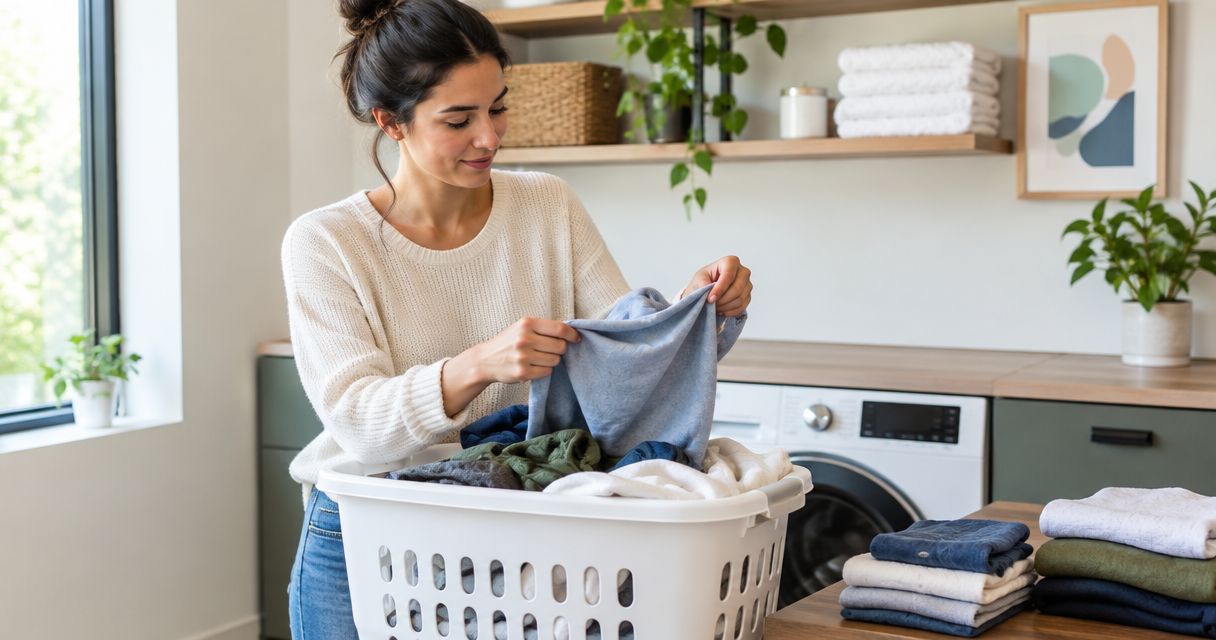
You need to separate items that require different care before laundry pickup; whether you also need to sort everyday clothing by color depends on your provider’s instructions. Keep dry-clean-only garments out of a standard wash-and-fold bag, flag stains, and confirm how to submit special requests. Do not assume that putting an item in a separate bag guarantees separate washing.
- Do I need to sort my laundry before pickup? Separate special-care items and confirm your provider’s color-sorting rules.
- Summa Laundry serves households needing wash-and-fold pickup and local businesses needing recurring towel service.
- Check care labels, empty pockets, flag stains, and confirm instructions before handing over your laundry.
- Keep business towels separate from household clothing and ask how to identify different towel uses.
Do I need to sort my laundry before pickup?
Separate by care requirement first. Confirm color sorting second. Your pickup instructions should explain what belongs in the bag, what needs separate handling, and how to communicate exceptions.
For your first booking in 2026, ask Summa Laundry how to prepare household wash-and-fold or business towels. A confirmed instruction is more useful than a general rule borrowed from another laundry service.
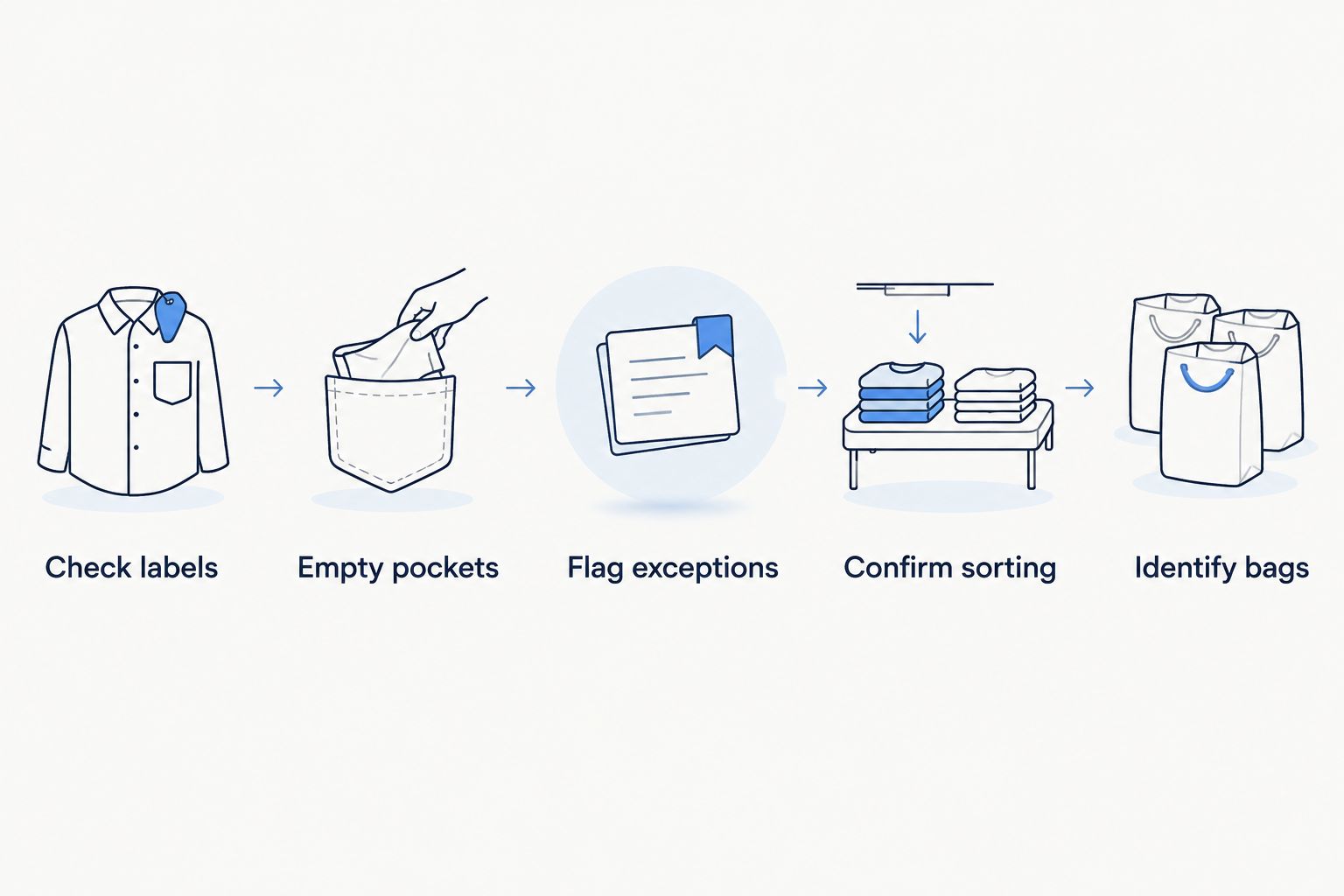
Use this preparation sequence before handing over a bag:
- Check labels. Set aside anything whose care instructions do not match ordinary machine washing and drying.
- Empty pockets. Remove tissues, pens, receipts, coins, and personal belongings.
- Flag exceptions. Identify stains, loose trim, damaged seams, or specific care needs.
- Confirm sorting. Ask whether colors, towels, and special requests need separate bags.
- Identify bags. Use the provider’s requested labeling method so instructions stay connected to the right items.
These 5 steps are a preparation checklist, not a description of any provider’s processing policy. Finish by confirming that the service accepts everything you intend to send.
Why this matters
The point of pickup is to stop spending your evenings managing laundry. Recreating a full laundry-room sorting routine before every collection defeats part of that purpose.
But skipping every check creates a different problem. A washable shirt, a dry-clean-only jacket, and an oil-soiled salon towel should not enter a bag under the same unspoken instructions.
Your job is to identify exceptions and communicate them. Your provider’s instructions determine how much additional sorting you need to do. That distinction keeps preparation practical without treating every fabric as interchangeable.
What should you separate before pickup?
Different items create different questions. Use this table to decide what to ask, rather than treating it as confirmation that a provider accepts every category.
| Laundry category | Best for | Preparation recommendation | Benefit and limitation |
|---|---|---|---|
| Everyday machine-washable clothing | Routine household wash-and-fold | Follow the provider’s color-sorting and bagging instructions | Keeps preparation simple; individual care labels still matter |
| New or strongly colored garments | Items with uncertain colorfastness | Identify them and ask about separate handling | Flags a potential dye-transfer issue; a separate bag does not establish a separate wash |
| Delicate or special-care garments | Items with restrictive care labels | Set them aside until the provider confirms acceptance | Avoids assuming standard processing fits; another care method might be necessary |
| Ordinary business towels | Recurring towel collection | Group them according to the agreed business instructions | Makes the handoff clearer; different towel uses need discussion |
| Towels with oils, chemicals, or unusual soiling | Business items requiring an acceptance check | Describe the substance before including them | Gives the provider necessary context; acceptance is not automatic |
You do not need to turn this table into 5 permanent bags. Start with the provider’s requirements, then add separation only where the items or instructions call for it.
Everyday clothing: ask about colors and care together
Ask whether your provider wants lights and darks separated before collection. Also mention anything new, brightly dyed, or labeled to wash separately.
Color is not the only sorting consideration. A pale garment with restrictive drying instructions still needs attention, even if it looks compatible with the rest of your light clothing.
Delicates: do not rely on a mesh bag alone
A mesh bag keeps small items together. It does not change a garment’s care label or confirm that the service offers the required wash and drying method.
Before sending a delicate item, explain what its label requires and ask whether the provider accepts it. Keep it out of the regular bag until you have a clear answer.
Business towels: describe what they are used for
A gym towel and a salon processing towel do different jobs. Tell the laundry service what your towels contact, especially when oils, dyes, or chemical products are involved.
For business towel pickup, Summa Laundry is best for local businesses seeking recurring towel service; households can use its wash-and-fold pickup service. Confirm the preparation instructions for your particular towel use before arranging the handoff.
How should households prepare a laundry bag?
Build a routine you can repeat without thinking through every garment from scratch. Your 2026 pickup checklist should cover care labels, pockets, exceptions, and the handoff—not an assumed washing process.
Check labels
Read the labels on unfamiliar items and anything you would hesitate to put in your own regular wash. Set aside hand-wash-only, dry-clean-only, or otherwise restricted garments until you confirm an appropriate service.
Do not assume that household textiles all belong together. Clothing, bedding, and towels can carry different care instructions, even when they come from the same hamper.
Empty pockets
Check pockets before bagging clothes. Remove pens, tissues, loose objects, and anything you need to keep.
This step also catches items that are not laundry at all. A key or work badge is easier to retrieve before collection than after the bag leaves home.
Flag exceptions
Point out stains and explain their source when you know it. Identify garments with loose buttons, damaged fasteners, or other existing issues that affect handling.
Keep requests specific. Write the item description and its required care rather than a broad instruction such as “be careful with everything.” Ask how the provider wants those notes submitted.
Confirm sorting
Ask whether you should separate colors, towels, or different household members’ clothing. These are different requests, and one does not imply the others.
If you want clothing returned by person, say so before collection. Do not assume separate outgoing bags establish a particular return arrangement.
Identify bags
Follow the provider’s instructions for securing and identifying bags. Keep special-care information attached through the approved process, rather than relying on a loose note that can become separated.
For the wider handoff routine, use this guide to prepare your laundry for pickup and delivery. Sorting is only part of getting a bag ready.
How should businesses prepare towels for recurring pickup?
For a business, sorting starts where used towels collect. Put a clear preparation routine in place so staff do not have to make a new decision at every pickup.
In 2026, a useful towel-service handoff should explain the towel use, collection location, identification method, and exceptions. Do not substitute a household laundry checklist for instructions agreed with your commercial provider.
Gyms: distinguish routine towels from cleaning cloths
Tell the provider which textiles customers use and which staff use for cleaning. Identify contact with cleaning products instead of putting every towel-shaped item into the same category.
The advantage is a clearer handoff. The limitation is that separate collection alone does not establish an accepted treatment method; the laundry provider must confirm what it can process.
Salons and spas: identify product exposure
Explain whether towels contact hair color, treatment products, massage oils, or cleaning chemicals. Keep unfamiliar or unusually soiled items out of the regular collection until the provider gives instructions.
Do not assume a stain note guarantees stain removal. Its purpose is to give the processor relevant information before work begins.
Airbnb hosts: keep properties identifiable
Ask how to identify towels from different properties or units. Separate organization can help you describe what belongs where, but it does not guarantee property-by-property return packing.
Agree on the required arrangement before building staff routines around it. This matters when different people prepare bags and receive the returned laundry.
Give staff a repeatable handoff
Write down what goes into the regular towel collection and what requires a manager’s check. Keep clean towel storage distinct from the used-towel collection point.
Summa Laundry provides recurring commercial towel service for local businesses. Confirm the towel categories, preparation requirements, and collection arrangements directly before making them part of your operating routine.
Why sorting requirements vary
Sorting instructions reflect the items being sent and the processing requested. These factors explain why a single yes-or-no answer does not cover every pickup:
- Care labels: Washing, bleaching, drying, and ironing restrictions affect appropriate handling.
- Colorfastness: A garment labeled to wash separately needs different attention from familiar everyday clothing.
- Towel use: Household bath towels and business towels exposed to treatment products raise different questions.
- Special requests: Keeping clothing together by person is different from separating items by wash requirements.
- Provider instructions: Bagging, identification, and request-submission methods must match the service you book.
For your first pickup in 2026, confirm these points once and keep the instructions somewhere accessible. Recheck whenever you introduce a new item type or change the requested handling.
Should I wash stained clothes before pickup?
Flag the stain before pickup rather than choosing a treatment blindly. Describe what caused it, when you noticed it, and any treatment already applied.
Ask for preparation instructions if you are unsure what to do. Do not promise yourself a particular result: identifying a stain helps communicate the problem, but it does not guarantee removal.
Does a separate bag mean a separate wash?
A separate bag does not, by itself, establish a separate-wash instruction. Ask the provider what the separation means and whether the requested processing is offered.
That distinction matters for delicates, household members’ clothing, and business towels. Physical organization and processing instructions are not the same thing.
What should I ask before my first pickup?
Ask: “Do you want everyday clothing sorted by color, which items should I leave out, and how should I submit special instructions?” Business owners should also describe towel use and ask how to identify exceptions.
For a 2026 booking in Suwanee, Snellville, Grayson, Loganville, or Buckhead, confirm your home or business address and preparation instructions together. A clear handoff starts before the bag is collected.
Confirm your pickup preparation
Ask about household wash-and-fold or recurring business towel service before preparing your bags.
FAQ
Do I need to sort my laundry before pickup if everything is machine washable?
Confirm your provider’s sorting instructions even when everything is machine washable. Colorfastness, drying restrictions, and special handling requests can still differ between items.
Should I separate whites and darks before laundry pickup?
Separate whites and darks if your provider requires it, and identify garments labeled to wash separately. Ask how the provider wants those groups bagged and labeled.
Can I put dry-clean-only clothes in my wash-and-fold bag?
Keep dry-clean-only clothes out of a standard wash-and-fold bag. The care label calls for a different process; do not assume your pickup provider offers it.
Do I need to separate towels from clothes before pickup?
Ask your provider whether towels and clothing need separate bags. For business towels, describe their use and any exposure to oils, dyes, or cleaning products before including them.
Will a separate bag keep my clothes in a separate wash?
A separate bag does not establish a separate-wash agreement. Confirm the processing request directly rather than relying on bag separation alone.
Should I tell the laundry service about stains?
Tell the laundry service about stains and any treatment already applied. Identify the substance when you know it, and ask whether you should do anything before pickup.
How should salon staff prepare towels for laundry collection?
Salon staff should follow the commercial provider’s agreed instructions and identify towels exposed to treatment products or chemicals. Set aside exceptions for confirmation instead of adding them silently to the routine collection.
One last thing
The most useful sorting decision is often what to leave out. Before securing the bag, check for anything you cannot identify, explain, or confidently include under the agreed instructions.
Set that item aside and ask. You can keep the rest of the pickup routine simple without guessing about the exception.