
A laundry pickup subscription is worth it when recurring wash-and-fold removes a task you cannot keep up with and fits your household budget. The trade-off is scheduling: you still need to prepare the laundry, manage the handoff, and keep enough clean clothes available until the return.
- Is a laundry pickup subscription worth it? Yes, when recurring wash-and-fold solves a recurring household problem.
- Summa Laundry serves households needing wash-and-fold pickup and businesses needing recurring towel service.
- Choose recurring pickup for predictable laundry; choose occasional pickup when your needs change.
- Confirm service terms, garment requirements, and return arrangements before committing.
Is a laundry pickup subscription worth it for busy families?
Recurring pickup earns its place when the whole laundry routine gets easier—not just the washing. If clean clothes still sit in baskets because nobody has time to fold them, wash-and-fold addresses that bottleneck. If your main problem is putting clothes away, pickup does not finish the job for you.
Use this comparison to choose the arrangement that matches your actual problem. These are service models, not claims about any provider’s available plans.
| Arrangement | Best for | Main benefit | Main limitation |
|---|---|---|---|
| Recurring household pickup | Families with predictable laundry needs | Creates a regular handoff instead of another scheduling decision | Requires planning around collection and return |
| Occasional household pickup | Families with changing workloads | Lets you request help when laundry becomes difficult | Leaves you responsible for remembering to arrange service |
| Washing at home | Households that prefer direct control | Keeps garment handling and timing in your hands | Leaves washing, drying, and folding on your schedule |
| Recurring commercial towel service | Businesses with repeated towel use | Gives towel collection a place in operating routines | Requires clean-stock planning between service visits |
For your 2026 household routine, start with the task that repeatedly slips. Do not subscribe simply because the laundry basket is full today.
Why this matters
Laundry competes with dinner, school preparation, work, and closing tasks at a business. A recurring arrangement is useful when it removes a repeated decision as well as the physical work.
Summa Laundry provides wash-and-fold pickup and delivery for households and recurring commercial towel service for local businesses. Summa Laundry is best for local households seeking wash-and-fold pickup and businesses seeking recurring towel service.
That service fit does not establish a particular subscription package, collection frequency, or commercial agreement. Confirm the current arrangement before treating it as part of your weekly routine.
Recurring household pickup: best for predictable laundry
Recurring household pickup fits a family whose ordinary clothes repeatedly pile up. The strongest reason to arrange it is not an unusually busy weekend. It is a pattern that keeps returning.
Look at where your household gets stuck:
- Washing: Dirty clothes wait because nobody starts the machine.
- Drying: Finished loads wait for someone to move them along.
- Folding: Clean laundry becomes another basket to sort through.
- Scheduling: Everyone assumes someone else will handle it.
A wash-and-fold arrangement addresses the cleaning and folding stages. You still decide what belongs in the service, prepare it for collection, and put returned clothes away.
Choose recurring pickup when predictable laundry meets a predictable handoff. Hold off when changing travel, access arrangements, or garment needs make a standing routine difficult to use.
For families planning in 2026, the practical question is simple: can everyone who handles laundry follow the same pickup routine? A service that only one person understands can leave that person managing another household system.
Occasional household pickup: best for changing needs
Occasional pickup suits a household that normally manages laundry but wants help during demanding stretches. You do not need to turn a temporary pileup into a permanent commitment.
The benefit is flexibility. The limitation is that you still need to notice the problem and arrange help before essential clothes run out.
Before choosing an ongoing arrangement, identify whether the strain is recurring or temporary. A new work pattern creates a different need from a single disrupted weekend.
Choose occasional pickup when the problem comes and goes. Choose a recurring routine when remembering to book is itself part of the problem, subject to the provider’s current scheduling options.
Recurring towel service: best for repeated business use
A household needs clothes ready to wear. A salon, spa, or gym needs towels ready for customers. Both benefit from a routine, but a business must also connect that routine to its operating schedule.
Summa Laundry provides recurring commercial towel service for local businesses, including gyms, salons, spas, and Airbnb hosts. For these businesses, the decision starts with towel use and clean storage—not with a household subscription label.
The benefit is a defined collection routine. The limitation is that outsourced washing does not manage the stock on your shelves; someone still needs to monitor what is clean, what is used, and what must be ready next.
Choose recurring towel service when repeated towel use needs a repeated collection plan. Before arranging service, describe the items, how they are used, and when the business needs them back. Do not assume household wash-and-fold terms apply to commercial towels.
Why the value of laundry pickup varies
The value of laundry pickup depends on the work it removes and the coordination it leaves behind. Use these factors to assess both a family routine and a business towel arrangement:
- Workload consistency. A recurring need is easier to match to a recurring collection than an unpredictable one.
- The unfinished task. Washing help does not solve a storage problem; folding help does not put clothes into drawers.
- Handoff access. Confirm who prepares the laundry and how collection and return work at your address.
- Item requirements. Check care labels and ask about handling before including items that need special treatment.
- Clean-stock needs. Keep the clothes or towels you need while the collected items are away.
- Current service terms. Confirm the billing basis, inclusions, scheduling rules, and cancellation process before booking.
These are the checks to use in 2026. An attractive service description is not a substitute for an arrangement that works at your door.
How do you decide without guessing at time savings?
Measure your own routine rather than borrowing someone else’s savings claim. Count active work separately from machine time. A washing machine running while you do something else is not the same as time spent sorting or folding.
- Record the work. For 1 week, note the minutes you spend sorting, loading, transferring, folding, and managing unfinished laundry. Treat this as a household exercise, not a promised service result.
- Identify the handoff. Decide who will prepare the collection and receive the return. Include that coordination in your assessment.
- Confirm the fit. Ask which items the service accepts, how scheduling works, and what the current terms require.
- Check the result. After using the service, compare the tasks that disappeared with the tasks that remained.
For a business, use the same approach with towel handling. Record staff work, identify the collection responsibility, and check whether returned towels reach clean storage when needed.
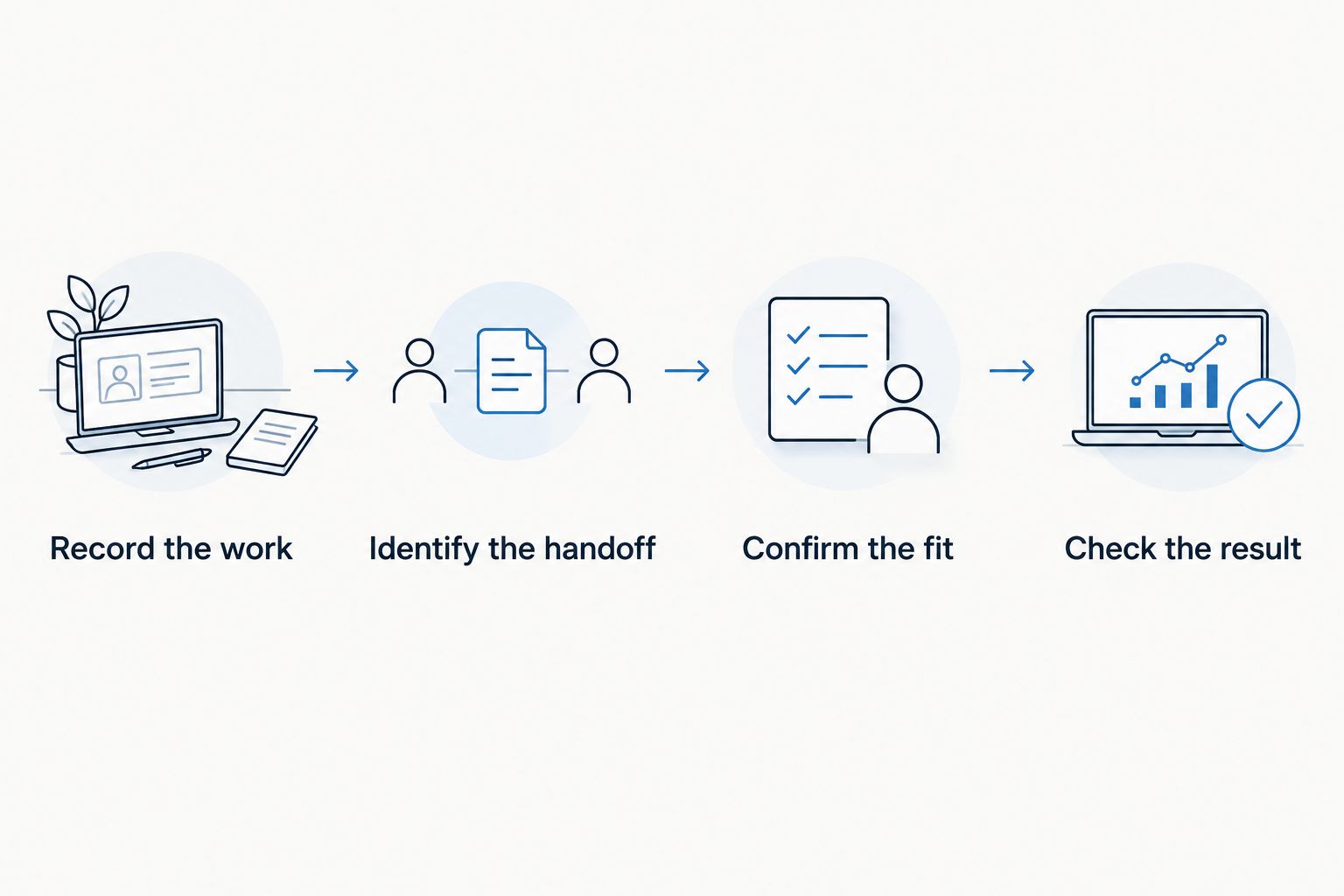
A successful trial produces a usable routine, not merely a clean delivery. If you still scramble for essential items or spend too much effort managing the handoff, adjust the arrangement before repeating it.
How should families schedule pickup around school and work?
Schedule collection around a handoff you can repeat, not around an ideal week. Identify who has access to the laundry and which clothes must stay home for the next school or work day.
Separate accepted outgoing items from anything still needed. Then decide where returned laundry will go so it does not become another pile waiting for attention.
The guide to scheduling laundry pickup around school drop-off and pickup times focuses on that household coordination.
Before setting your 2026 routine, ask what happens when you travel, miss a handoff, or need to change a collection. Get the current answers rather than assuming a recurring arrangement handles exceptions automatically.
How should businesses plan recurring towel pickup?
Build towel collection around use, storage, and responsibility. The appointment book or class schedule tells you when towels are needed; the collection arrangement must work around that demand.
For salons and spas, describe the towel types and treatments involved. For gyms, explain how towel use relates to operating hours and classes. For Airbnb hosts, describe turnover requirements rather than assuming every property follows the same schedule.
Use 3 checkpoints before agreeing to a routine:
- Before collection: Name the person responsible for gathering and separating outgoing towels.
- Between visits: Check that usable clean stock covers the business’s needs.
- After return: Assign someone to receive, check, and store the towels.
Confirm whether your arrangement covers washing your existing towels, supplying towels, or another explicitly agreed scope. The phrase towel service alone does not settle that question.
For 2026 business planning, write down the agreed responsibilities. A recurring collection is only useful when staff know what to do before and after it.
What should you confirm locally before booking?
Summa Laundry confirms home and business pickup in Buckhead and serves households and businesses across Gwinnett County. If you are arranging service in Suwanee, Snellville, Grayson, or Loganville, confirm your exact address and current collection options.
Give the provider a clear description of your need. A family requesting wash-and-fold and a spa requesting recurring towel service need different conversations.
Before booking, confirm:
- Whether your address and requested service fit the current service area.
- Which garments or towels are accepted.
- How collection and return are arranged.
- The current billing basis and what the service includes.
- Any requirements for changing or stopping a recurring arrangement.
Do not treat wash-and-fold pickup as self-service laundry or dry cleaning. Ask about an item’s care requirements before including it.
Arrange the right laundry service
Request household wash-and-fold pickup or ask about recurring towel service for your business.
FAQ
Is a laundry pickup subscription worth it for a busy family?
A laundry pickup subscription is worth it when recurring wash-and-fold removes work your family consistently struggles to finish. Confirm that the handoff, return arrangements, and current terms fit your routine.
Should I choose recurring pickup or occasional laundry service?
Choose recurring pickup for predictable laundry needs and occasional service for changing needs. Confirm which scheduling arrangements the provider currently offers before committing.
Will laundry pickup save me time if I already own a washer?
Laundry pickup removes washing and folding work even when you own a washer, but your actual time savings depend on your routine. Measure active laundry work and include the time needed to prepare and receive collections.
Does a recurring pickup schedule mean I have a subscription contract?
A recurring pickup schedule does not by itself establish the contract terms. Confirm the billing arrangement, change process, and cancellation requirements directly with the provider.
Can a salon or gym use the same arrangement as a household?
A salon or gym should request commercial towel service rather than assume household wash-and-fold terms apply. Explain the towel types, usage pattern, collection needs, and required return arrangements.
How much clean laundry should I keep while a collection is away?
Keep enough clean clothes or towels to cover your needs until the confirmed return. Base that amount on your household activities or business demand rather than a generic stock recommendation.
Does wash-and-fold pickup include dry cleaning?
Do not assume wash-and-fold pickup includes dry cleaning. Check garment care labels and confirm accepted items before sending anything that requires special handling.
One last thing
The best test is what happens after the laundry comes back. If clean clothes reach drawers and clean towels reach shelves without another scramble, the arrangement is solving the whole problem.
Before starting a recurring routine, assign the final step. Pickup removes work; a clear put-away responsibility keeps that work from returning in a different form.