
Instead of rearranging laundry around every late meeting or busy shift, build a recurring wash and fold schedule around when you need clean clothes or towels back. Confirm pickup and return arrangements first, then add preparation reminders and a backup plan to your work calendar.
- Summa Laundry serves households needing wash-and-fold pickup and local businesses needing recurring towel service.
- Build your recurring wash and fold schedule backward from when clean items must be ready.
- Confirm laundry pickup and return arrangements before repeating events in your calendar.
- Keep household laundry reminders separate from business towel counts and staff handoffs.
Start with Summa Laundry to discuss home pickup or recurring commercial towel service. A repeating calendar event is a reminder, not a confirmed service booking. Keep those two things separate throughout setup.
Why this matters
A laundry routine fails when clean items return after you need them. Your pickup day matters less than the work shift, school morning, appointment block, or guest arrival that depends on the return.
For your 2026 routine, work backward from that deadline. Households need enough clothing to cover the service interval; businesses need enough clean towels to keep serving customers while another batch is away.
Summa Laundry is best for households seeking wash-and-fold pickup and local businesses seeking recurring towel service. The service handles the washing task; you still need a clear handoff and a confirmed schedule.
Before you start
- Gather your schedule and a place to record it. Use a paper planner or an existing calendar, plus your work shifts, household commitments, class timetable, appointments, or guest turnover dates.
- Confirm the service details directly. Discuss your address, requested pickup pattern, return arrangements, accepted items, preparation requirements, and how to request changes. For home or business pickup in Suwanee, Snellville, Grayson, Loganville, or Buckhead, confirm the arrangements for your specific address.
- Check the hidden dependency: usable items during service. Clothes and towels sent out are unavailable until returned. Count what stays behind before committing to a pickup pattern; never build a routine around an unconfirmed return time.
You do not need an automation app to start. A written plan that everyone follows is more useful than several reminders attached to an unconfirmed booking.
Your laundry requirements
- Write down the clean-item deadline. Identify the next occasion that depends on the laundry: a work shift, school morning, gym opening, salon appointment block, or guest arrival. Record the day and the time items must be ready to use.
- List the items that belong in the service batch. For a household, separate everyday wash-and-fold items from anything requiring different care. For a business, identify the towels you want serviced and confirm acceptance before including them.
- Count what must remain on hand. Put aside the clothes or towels needed while the batch is away. Base this on your actual use, not a standard quantity borrowed from another household or business.
- Choose the person responsible. Assign one person to prepare the batch and communicate changes. At a business, name a backup for days when that person is off.
Expected result: You have a clear deadline, a defined batch, and someone responsible for the handoff. You also know which items must stay out of the pickup.
Choose the right planning method
Households and businesses share the same basic workflow, but they need different checks. Use the row that matches your situation rather than applying a household reminder to a customer-facing towel operation.
| Workflow | Best for | Main advantage | Main limitation | Check before pickup |
|---|---|---|---|---|
| Household wash-and-fold routine | Families and professionals with repeat laundry needs | Moves washing and folding out of your personal task list | Requires enough clothing to cover the agreed service interval | Work clothes, school clothes, and other essentials remain at home |
| Recurring commercial towel routine | Gyms, salons, spas, and hosts with repeat towel use | Connects towel collection to business operations | Requires ongoing counts and a staff handoff | Clean towels cover operations until the confirmed return |
Neither workflow removes planning completely. The benefit is fewer repeated decisions, not permission to stop checking what you need.
Pickup and return arrangements
- Request a pickup pattern that fits your deadline. Tell Summa Laundry when clean items are needed, not just when you want the dirty batch collected. Ask which arrangements fit your address and service requirements.
- Confirm the return separately. Record the agreed return arrangements alongside the pickup. Do not assume a pickup day automatically guarantees the return day you have in mind.
- Agree on the handoff. Clarify where the batch should be placed, who handles building access, and what happens if the usual contact is absent. Follow the provider's instructions rather than assuming an unattended collection is acceptable.
- Ask how changes work. Confirm how to report travel, office closures, altered opening hours, or a changed batch. Keep the communication method with the schedule so another household member or employee can find it.
Expected result: Your requested routine has become an agreed service arrangement. Pickup, return, access, and change requests each have a clear instruction.
Keep a short service record
Write the confirmed details in one place. Use these headings in your own note; they are planning labels, not claims about a booking interface:
- Pickup: Agreed collection arrangements.
- Return: Confirmed return arrangements and your clean-item deadline.
- Access: Location and handoff instructions.
- Owner: Person responsible and business backup.
- Changes: How to communicate an exception.
For your 2026 schedule, keep this record separate from old messages. A calendar should point to the current arrangement, not make you search a conversation each pickup day.
Calendar reminders and handoffs
- Add the confirmed pickup to your calendar. Repeat the event only according to the arrangement you have confirmed. If the arrangement is still a request, label the entry as unconfirmed rather than treating it as booked.
- Add 2 preparation reminders. Use one reminder to gather and check the batch, and another to complete the agreed handoff. These are your reminders; they do not change the service booking.
- Record the return and put-away task. Make the final task usable clothes or stocked towel shelves, not merely a delivered batch. Assign someone to put items where they belong.
- Share only what others need. Household members need the collection point and preparation deadline. Business staff also need responsibility for towel counts, access, and shelving.
Expected result: Everyone can see what happens before pickup, during the handoff, and after return. The routine no longer depends on one person remembering every detail.
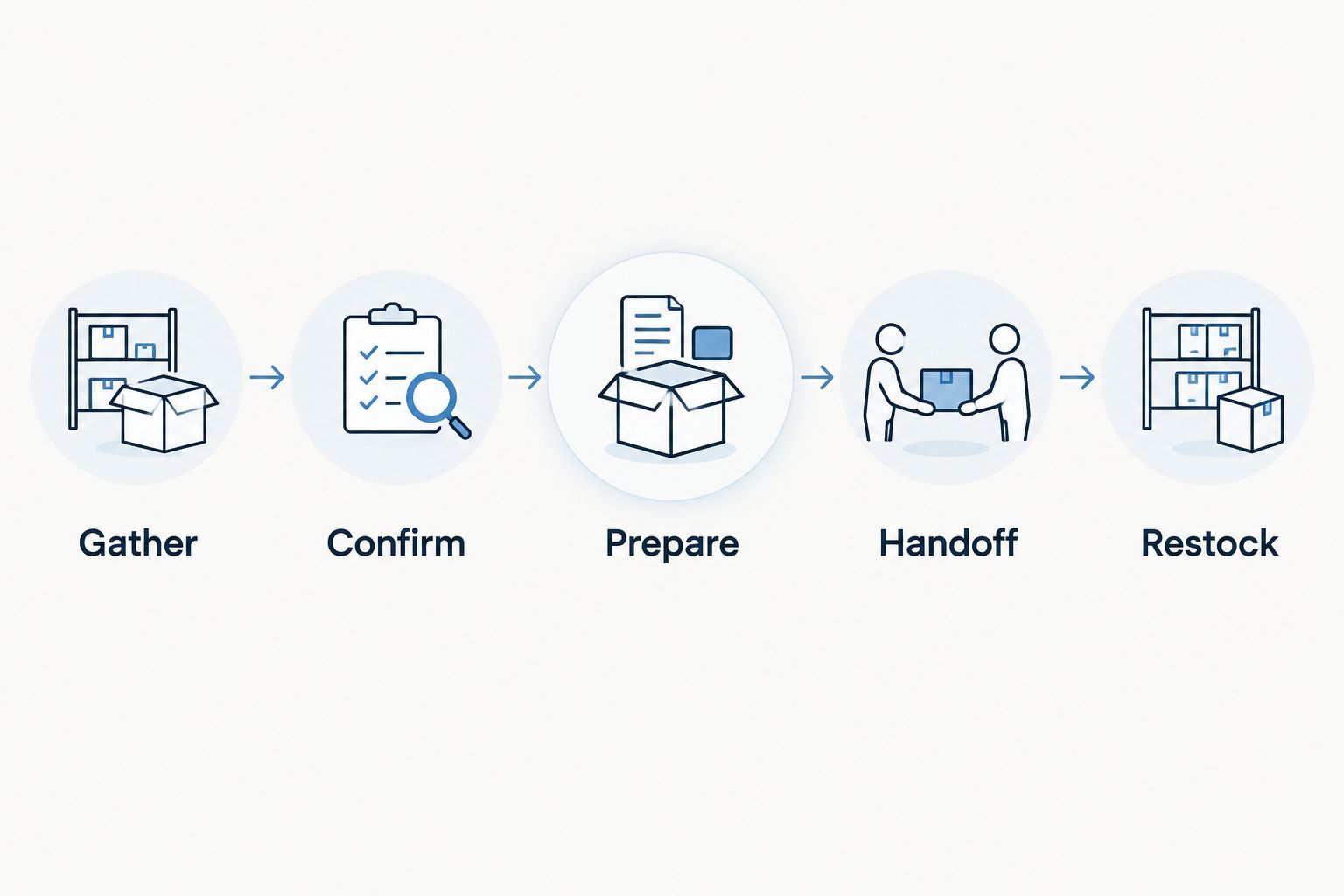
The workflow is simple: Gather, Confirm, Prepare, Handoff, Restock. Keep those stages visible wherever you manage the schedule.
An illustrative work-week setup
Suppose your household plans in 7-day blocks. Review the coming week before choosing which items go out, then compare the clean-item deadline with the return arrangements the provider confirms.
For a business, use the same planning block to review opening hours and expected activity. A changed class timetable or appointment book is a reason to check the towel plan, not proof that the existing pickup must change.
First-cycle checks
- Reserve 10 minutes for a preparation check. This is a suggested planning task, not a service-duration estimate. Check pockets, identify anything that should stay behind, and follow the agreed packing instructions.
- Watch the handoff. Check whether the named person, access instructions, and collection point work as intended. Correct unclear instructions before repeating them.
- Check what remained available. Note whether your household had the clothes it needed or your business had sufficient clean towels. Record the specific shortage rather than writing that the routine felt inconvenient.
- Review the return and restocking. Check whether items reached the right drawers or shelves before the deadline. Adjust your internal tasks separately from any service changes that require confirmation.
Expected result: You know whether the routine works in practice, where responsibility breaks down, and which changes to discuss.
Keep the first confirmed cycle visible in your 2026 calendar until the returned items are put away. Do not repeat an assumption just because the calendar can repeat an event.
Adjust towel planning when your business schedule changes
A household often plans around personal commitments. A business needs another trigger: a change in towel demand. Connect the towel review to the timetable, appointment book, or turnover schedule that staff already maintain.
- Identify the operational change. Examples include an added gym class, a fuller salon appointment block, or a revised guest arrival date. These are review triggers, not automatic instructions to increase service.
- Count usable clean towels. Compare towels on hand with the work ahead and the confirmed return arrangements. Keep used towels out of the usable count.
- Request any needed service change. Tell Summa Laundry what changed and when clean towels are needed. Treat the existing arrangement as unchanged until a different arrangement is confirmed.
- Update staff instructions afterward. Once confirmed, change the calendar and tell the people preparing, handing off, and restocking the towels.
Expected result: Your recurring towel routine responds to actual operations without staff mistaking a calendar edit for provider approval.
For your 2026 booking calendar, add a towel review whenever you revise the operating schedule. Keep the review attached to the business event that creates demand, rather than creating an unrelated reminder nobody owns.
Troubleshooting
The reminder fired, but pickup was not confirmed
Check the original service confirmation. A personal calendar event does not reserve collection; contact the provider and establish the actual arrangement before resetting the reminder.
You run short before the return
Separate a preparation mistake from a scheduling problem. If essential items went out unnecessarily, change the batch checklist; if the agreed interval does not fit your needs, discuss a different arrangement and adjust what remains on hand.
Nobody knows who should hand over the batch
Put a named owner and backup in the service record. For a business, include the handoff in shift instructions so responsibility does not disappear when the usual employee is absent.
The recurring reminder clashes with travel or closure
Communicate the exception through the agreed method. Editing or deleting your calendar entry changes your reminder only; it does not tell the laundry provider about the closure.
Towels return but the usable shelf stays empty
Assign the restocking task. Collection and return do not replace the internal job of moving clean towels into the locations staff use during service.
Customize your workflow
Change the part that failed, not the entire routine. A missed reminder needs a clearer preparation task; a poor handoff needs an owner; an unsuitable service interval needs a conversation with the provider.
For households, review the routine when work shifts, school commitments, or travel change. For businesses, review it when opening hours, appointment patterns, or guest turnover plans change.
Keep your 2026 routine practical: one current service record, clear responsibilities, and confirmed arrangements. Start with home wash-and-fold pickup or discuss recurring towel service according to what you actually need.
Set up your laundry routine
Discuss household wash-and-fold pickup or recurring commercial towel service.
FAQ
What's the best recurring wash and fold schedule for a busy work week?
The best recurring wash and fold schedule works backward from when you need clean items. Confirm pickup and return arrangements, then add preparation and put-away reminders around them.
Does a repeating calendar reminder book my laundry pickup?
No. A repeating calendar reminder manages your own tasks; confirm service arrangements directly with the provider before treating pickup as booked.
Can I use the same routine for household laundry and business towels?
Use the same basic stages, but different checks. Households should protect essential clothing, while businesses should count usable clean towels and assign staff responsibility for handoff and restocking.
How often should I schedule wash-and-fold pickup?
Choose a frequency that matches your laundry use, essential items on hand, and confirmed service arrangements. Discuss the pattern with the provider rather than assuming a standard weekly interval fits everyone.
What should I do if my work schedule changes?
Review your clean-item deadline and contact the provider if the service arrangement needs to change. Update your calendar after the revised arrangement is confirmed.
Does Summa Laundry serve homes and businesses in Buckhead?
Yes. Summa Laundry offers home and business pickup in Buckhead; confirm arrangements for your specific address and laundry needs.
How do I connect towel service to gym classes or salon appointments?
Review towel needs whenever the class timetable or appointment schedule changes. Count usable clean towels, compare them with the confirmed return arrangements, and request a service adjustment if needed.
One last thing
Schedule the put-away task before you repeat the pickup reminder. Clean clothing in the wrong room and clean towels outside the treatment area still leave someone searching when work starts. Give the return a destination and an owner.