

Your household’s weekly laundry weight is the total weight of its dry, washable clothes, towels, and bedding collected over 7 days, minus the weight of the containers. Weigh everything before washing, keep unusually bulky items separate, and use your own measured total rather than a pounds-per-person estimate.
- How many pounds of laundry does a household produce? Weigh seven days of dry laundry to find your total.
- Subtract empty basket weight and track bedding separately so your weekly estimate stays useful.
- Summa Laundry serves households needing wash-and-fold pickup and local businesses needing recurring commercial towel service.
- For business planning, record towel weight alongside appointment, class, or guest-turnover activity.
Why this matters
A full hamper tells you that laundry needs doing. It does not tell you how much laundry you produce. A basket of lightweight clothing and a basket of bath towels can occupy similar space without weighing the same.
Your 2026 laundry plan should start with what actually leaves your home or business. That gives you a useful baseline for organizing storage, discussing service needs, and deciding when to arrange pickup. Before your first collection, review how to prepare your laundry for pickup and delivery.
Measure the laundry you intend to send, not everything you own. Clothes waiting for repair, items marked for separate care, and clean linens in storage do not belong in that total.
How many pounds of laundry does a household produce weekly?
There is no single weekly weight that describes every household. The useful answer is your household’s measured dry-laundry output over a complete week, including the categories you actually wash during that period.
Use this process to build your baseline:
- Set the window. Choose 7 consecutive days that reflect your normal routine. Start without an old backlog mixed into the collection.
- Define the contents. Decide whether the total includes clothing, household towels, bedding, and washable kitchen linens. Record the categories.
- Weigh the container. Record the empty basket or bag weight using the same scale you will use throughout.
- Weigh the laundry. Weigh each container with its dry contents before washing. Subtract that container’s empty weight.
- Record the total. Add the net weights of all batches collected during the week. Note anything unusual beside the result.
- Check another week. Repeat for a second week if the first included travel, guests, illness, or a catch-up wash.
Weekly laundry weight = total filled-container weight − total empty-container weight.
If you wash several times during the week, weigh each batch before it goes into the machine. Do not wait until the final day and weigh only what remains in the hamper. That misses everything already washed.
The same principle applies to business towels. Weigh each outgoing batch once, record it, and add the batches for the reporting period. Avoid counting a returned clean batch as additional dirty-laundry output.
Which weighing method should you use?
Choose a method that suits your scale and the load you can handle safely. The best method is one you can repeat without changing the procedure midway through your measurement week.
| Method | Best for | Advantage | Limitation |
|---|---|---|---|
| Filled basket minus empty basket | Households with a scale that reads the basket reliably | Measures the collected batch directly | The basket must sit securely without touching surrounding surfaces |
| Person holding laundry minus person alone | Households using a suitable bathroom scale | Uses a scale you already have | Requires safe lifting and consistent readings |
| Smaller weighed batches | Businesses or households with bulky collections | Keeps each measurement manageable | Every batch must be logged to avoid omissions or duplicates |
For the person-holding method, subtract your weight without the laundry from your weight while holding it. Keep both readings close together and use the same scale position. Skip this method if lifting the load is unsafe or the scale readings are inconsistent.
For smaller batches, keep the unit consistent. If your 2026 tracking sheet uses pounds, record every batch in pounds rather than mixing units and converting from memory later.
Do not use a washer’s advertised capacity as your household’s actual output. Capacity describes what a machine is designed to handle under its stated conditions. It does not establish what your particular basket weighs.
Build a household laundry log you can actually maintain
Keep the record short. You need enough detail to understand changes, not an inventory of every sock. A note on your phone or a sheet beside the hamper works.
Use these fields:
- Collection date: When you weighed the batch.
- Laundry category: Clothing, towels, bedding, or another clearly defined group.
- Net dry weight: Contents only, after subtracting the container.
- Routine notes: Guests, sports, travel, or another reason the batch differs.
Keep ordinary weekly laundry separate from occasional projects. A curtain wash or a stored blanket cleanout belongs in your record, but it should not silently become part of your normal weekly expectation.
If bedding is washed outside your measurement week, the week does not describe your full routine. Extend the log to 14 days and divide the recorded total by 2 weeks. Label the result as your measured weekly average, not a universal household benchmark.
For a 2026 baseline, save the measurement dates with the result. A total without dates is harder to interpret when your routine changes. You want to know whether the record reflects school days, a holiday break, or a guest-heavy period.
Estimate recurring towel volume for a local business
For a gym, salon, or spa, towel demand follows operations rather than household size. A measured weekly total is useful, but it is only part of the planning information. You also need to know when dirty towels accumulate and when clean towels are needed.
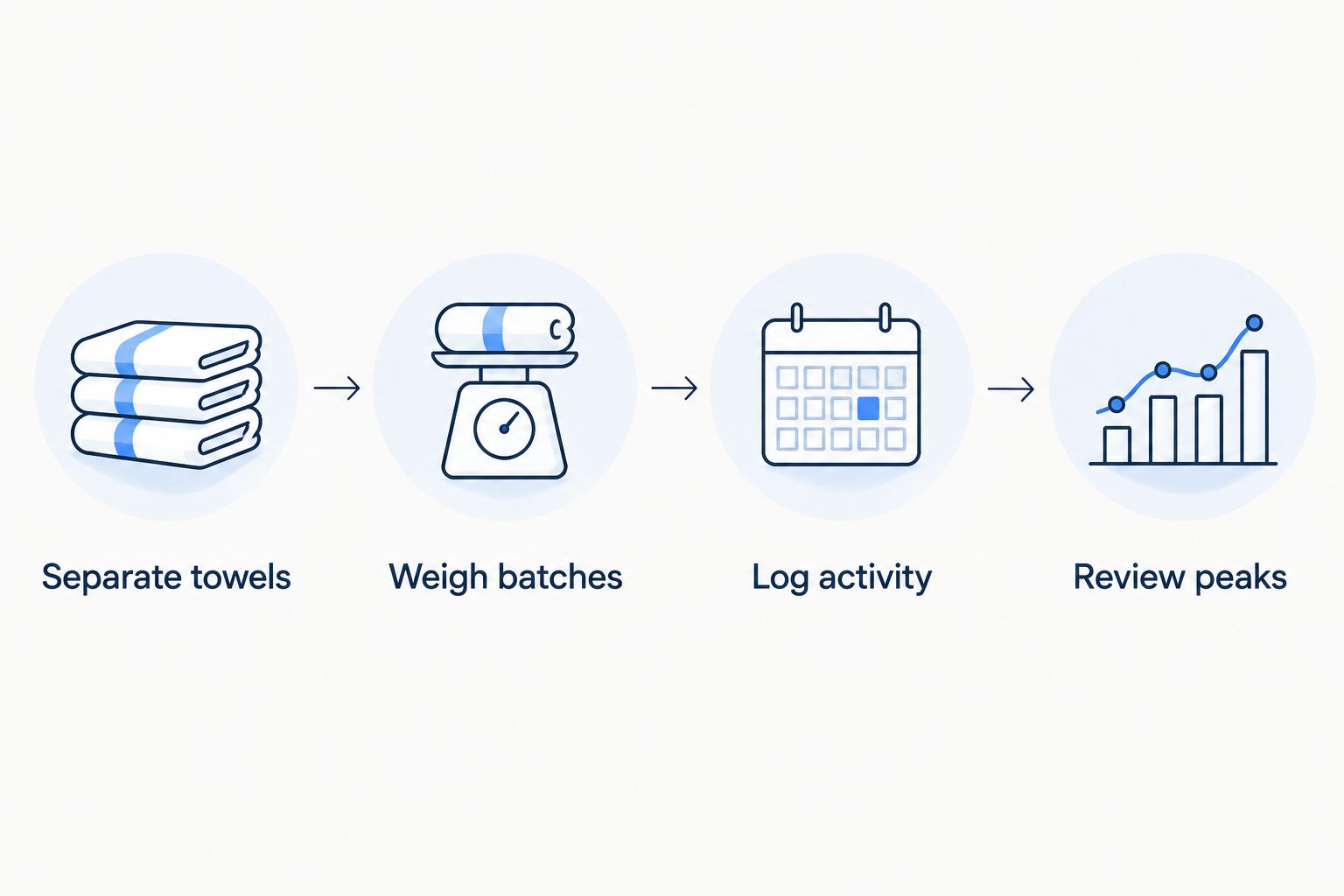
Start with these four steps:
- Separate towels. Keep business towels apart from personal laundry and other textiles so the total describes the service you want.
- Weigh batches. Record the net dry weight of each outgoing towel batch using a consistent method.
- Log activity. Note classes, appointments, or other relevant business activity beside each batch.
- Review peaks. Identify the periods when towel use is concentrated, rather than relying only on the weekly average.
Keep towel type in the record. Changing from one towel style or size to another changes what a measured pound total represents. Do not compare unlike batches and assume the business’s activity changed.
For an Airbnb host or property manager, connect each laundry entry to the actual turnover. Record whether the outgoing items were towels, bedding, or both. Ask about the specific items you need handled rather than assuming every textile belongs in the same service.
Your 2026 business log should distinguish ordinary operating weeks from closures, events, and unusually busy periods. Use the ordinary week to describe routine needs and the peak record to discuss scheduling. Neither figure replaces the other.
Why weekly laundry weight varies
Your weekly output changes when your routine or the items being washed change. These are the factors to record beside your measurements:
- People present: Visitors and household members away from home change the laundry collected during the week.
- Clothing changes: Workwear, uniforms, exercise, and children’s activities affect which garments enter the wash.
- Towel use: Household bathing routines and business towel use add different quantities and textile types.
- Bedding schedule: Sheet changes and occasional bulky bedding can make one week unlike the next.
- Business activity: Appointments, classes, and guest turnovers explain changes in commercial towel batches.
- Collection timing: A missed measurement or an old backlog changes the total without representing a normal week.
A heavier week is not automatically evidence of waste. First check what changed. Removing needed towels from use or postponing necessary washing just to lower a number defeats the purpose of measuring.
Compare like with like. A clothing-only week and a clothing-plus-bedding week answer different questions, even when both measurements are accurate.
How do you turn laundry weight into a pickup plan?
Use weight to explain your volume, then add the practical details: what you are sending, when it accumulates, where collection happens, and when you need the items again. Pounds alone do not describe the whole job.
Summa Laundry is best suited to local households seeking wash-and-fold pickup and businesses seeking recurring commercial towel service. The service fit is clear; your exact collection arrangements and item requirements still need to be confirmed before you schedule.
For home wash-and-fold pickup, send your measured weekly total and flag any separate-care items. Check garment labels first. Do not assume everything in a laundry basket is suitable for the same wash process.
For recurring commercial towel service, send the ordinary-week total, the peak-period notes, and the times your operation needs clean towels. Keep a clear distinction between measuring demand and agreeing to a service schedule.
You can contact Summa Laundry about household pickup or business towel needs in Suwanee, Snellville, Grayson, Loganville, and Buckhead. Provide your exact address and requested service so the next step matches your location and workload.
Plan your next laundry pickup
Share your household laundry volume or recurring business towel needs.
How many days should I measure laundry before planning pickup?
7 days is the starting measurement window for a weekly laundry plan. Use a complete week so the record includes both workdays and the weekend rather than whichever days happen to produce the fullest hamper.
Extend the record when the first week misses a regular category, such as bedding, or includes an unusual backlog. Keep the original notes so you can explain the difference.
Can I estimate household laundry from the number of people?
Headcount alone does not establish laundry weight. Two households with the same number of people can wash different clothing, towel, and bedding quantities.
Use household size as context, not as the calculation. Your measured dry weight is the number to use when discussing actual volume.
Should a business use average towel weight or peak demand?
Use both, for different decisions. Average towel weight describes routine output; peak-demand records show when the business needs particular attention to collection timing and clean-towel supply.
A salon with concentrated appointment days should explain that pattern rather than presenting only a weekly total. The same applies to gyms with busy class periods and rentals with clustered turnovers.
FAQ
How many pounds of laundry does a household produce each week?
Your household’s weekly laundry output is the net dry weight of everything collected over 7 days. Weigh your actual clothing, towels, and bedding rather than assigning a fixed amount per person.
Should I weigh laundry wet or dry?
Weigh laundry dry for a consistent household estimate. Water adds weight, so a wet batch does not provide a comparable dry-textile measurement.
Does the basket count toward laundry weight?
No, the basket does not count toward laundry weight. Subtract the empty basket or bag weight from every filled-container reading.
How do I include bedding that I do not wash every week?
Track 14 days when that window includes your regular bedding routine, then divide the total by 2 weeks. Keep occasional bulky-item projects separate from the ordinary weekly figure.
Can I estimate pounds from the number of laundry bags?
Bag count alone does not establish pounds because contents and fill levels differ. Weigh the contents if you need a weight estimate, and ask the provider how its service is measured.
How should a gym or salon estimate weekly towel volume?
A gym or salon should weigh each outgoing dry-towel batch and total the measurements for the week. Record busy periods alongside the weights so a recurring service discussion includes timing as well as volume.
Can Summa Laundry help with household laundry and business towels?
Summa Laundry offers household wash-and-fold pickup and recurring commercial towel service. Share your location, measured volume, item types, and scheduling needs to discuss the appropriate service.
When should I update my 2026 laundry estimate?
Update your 2026 laundry estimate when household routines, occupancy, towel types, or business activity change. A dated measurement is more useful than continuing to rely on a total from a different routine.
One last thing
A weekly total can hide a timing problem. You can measure the right amount and still plan poorly if all the laundry accumulates just before you need it again.
Write the next needed date beside each batch. That small addition turns a weight log into a practical pickup discussion, whether you need school clothes ready or clean towels for the next appointment day.