Do not assume wash-and-fold service separates colors and whites; confirm the provider’s sorting policy before you send your laundry. For your 2026 pickup, ask whether whites receive a separate wash, how new dark garments are handled, and whether special instructions require separate bags. Separating colors does not replace following each item’s care label.
- Does wash and fold separate colors and whites? Confirm the provider’s policy before pickup; do not assume.
- Keep new dark garments apart from whites, and flag care-label restrictions before washing.
- Summa Laundry serves household wash-and-fold and commercial towel needs; confirm sorting instructions before arranging service.
- For recurring towel service, agree on color separation and handling instructions before the first collection.
Does wash-and-fold service separate colors and whites?
Ask for an explicit answer about separate wash loads, not just separate bags. A bag keeps items together during collection. It does not, by itself, establish how the contents will be washed.
Use this checklist when discussing your order:
- Confirm separation. Ask whether whites, light colors, and dark colors are washed separately.
- Flag exceptions. Identify new dark garments, contrasting trim, stains, and restrictive care labels.
- Confirm packing. Ask whether the service wants separate bags or written instructions.
- Record instructions. Put agreed handling requests in the order rather than relying on an informal conversation.
The guide to preparing laundry for pickup and delivery covers the next step: getting the order ready for collection.
Why this matters
A white shirt and a dark towel do not necessarily belong in the same wash. Loose dye can transfer between fabrics, while different items can require different washing and drying conditions. Sorting by color addresses one risk, not every care requirement.
For households, the goal is fewer laundry decisions without losing control over clothing care. For businesses, the goal is a repeatable process that keeps towel groups and handling instructions clear. Both start with a specific agreement before pickup.
A useful 2026 booking checklist should distinguish what you want from what the provider has agreed to do. A request becomes useful when the service confirms it can follow it.
Whites: request a separate wash
If keeping whites apart matters to you, ask for a whites-only wash. Do not treat the phrase wash-and-fold as confirmation that this instruction is included. Also ask what the service counts as white: a plain white towel and a white shirt with dark trim present different questions.
White fabric does not automatically mean hot-water washing or chlorine bleach is appropriate. The care label controls those decisions. Elastic, decorative details, and fabric blends can limit treatment options even when an item looks entirely white.
Before collection, identify white items with unusual care requirements. Keep anything you are unsure about out of the regular bag until you receive an answer. That is simpler than trying to clarify instructions after processing starts.
Colors and darks: identify dye-transfer concerns
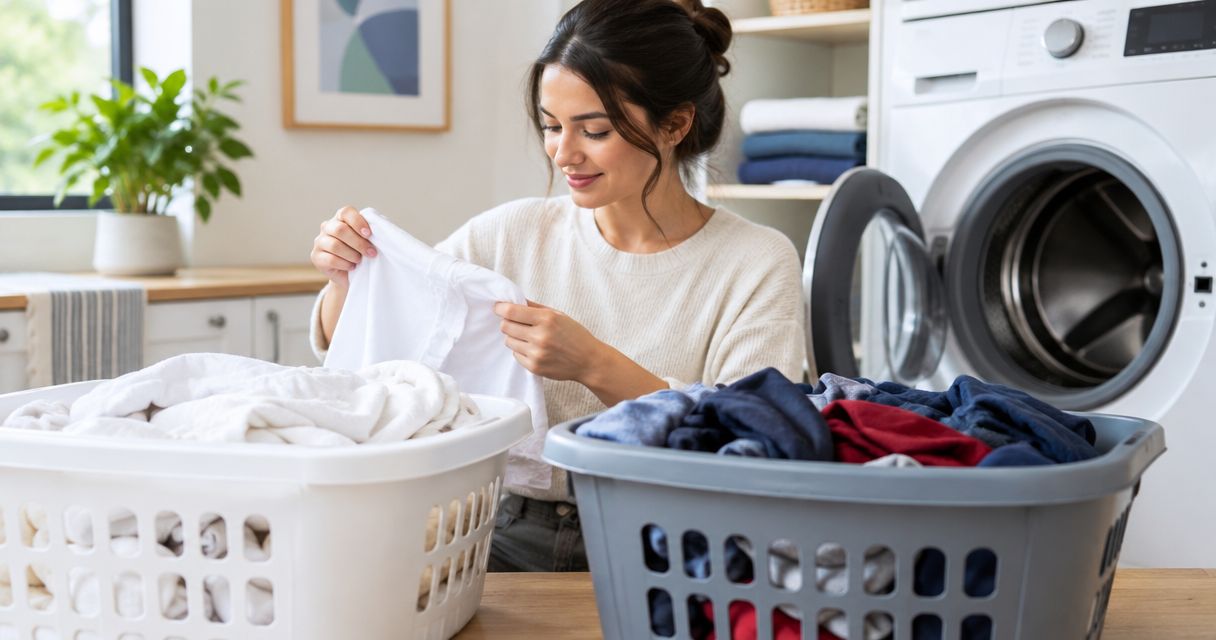
Keep new, deeply colored garments away from whites while preparing your order. A care label that says wash separately deserves attention. Do not assume a garment is safe to mix simply because it has already been worn.
Cold water does not guarantee that an unstable dye will stay in the fabric. A color-catching sheet also does not replace the garment’s washing instructions. Ask how the provider handles an item that needs its own wash before including it.
For a household order, point out the actual garment rather than writing a broad request such as be careful with colors. For a business order, identify the towel group involved. Specific instructions leave less room for misunderstanding.
Compare the sorting decisions before pickup
Color groups are a starting point. Fabric care, lint, and the item’s condition also affect whether pieces belong together. Use this table to organize your questions, not as a substitute for the provider’s confirmed process.
| Laundry group | Best for | Benefit of separating | Limitation to address |
|---|---|---|---|
| Plain whites | Keeping white garments and towels apart from colored items | Reduces exposure to dye from colored fabrics | White items can still require different care |
| Light colors | Keeping pale fabrics away from dark garments | Limits contact with deeply colored items | A light-colored item can still release dye |
| Dark colors | Grouping compatible dark fabrics | Keeps dark items away from whites | New or unstable dyes can still require individual handling |
| Care-label exceptions | Items marked wash separately or requiring special treatment | Makes handling restrictions visible | The item might not fit the provider’s standard wash-and-fold process |
| Business towel groups | Organizing recurring commercial laundry | Makes color and use categories easier to communicate | Color sorting alone does not resolve residue or contamination concerns |
Do not choose a sorting method on convenience alone. A simpler bagging arrangement helps only when it still supports the care instructions your items need.
Why color-separation requirements vary
The right sorting plan depends on the laundry you send. These factors explain why a provider needs more information than a request to separate colors:
- Care labels. Washing, bleaching, and drying restrictions take priority over color grouping.
- Dye stability. New dark clothing and items labeled wash separately need explicit attention.
- Fabric type. Heavy towels and lightweight garments can have different care needs.
- Lint. Towels can shed lint that becomes noticeable on other fabrics, especially dark clothing.
- Stains and residues. Makeup, hair products, oils, and other residues need disclosure rather than a generic sorting note.
- Order instructions. The provider needs to know which items require different handling and whether that handling is accepted.
For your 2026 household routine or commercial towel plan, revisit these instructions when the contents change. Adding new uniforms, dark towels, or unfamiliar garments changes the questions you need to ask.
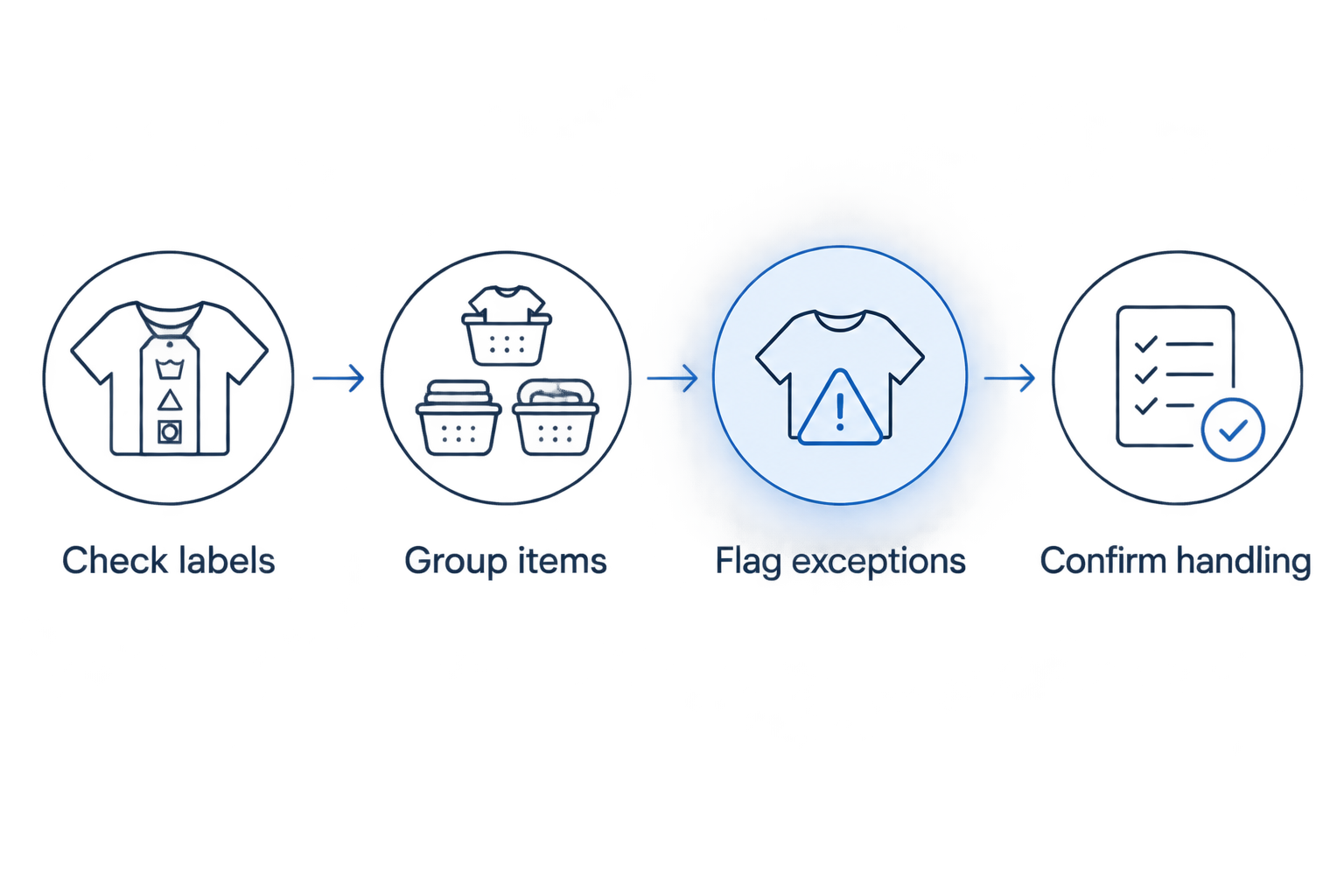
How should you prepare separate colors and whites?
Prepare the order so the person receiving it can understand your request without guessing. Do not create elaborate packing rules before checking the provider’s requirements. Start with the items, then confirm the packing method.
Check labels
Read the care labels on unfamiliar items. Pull aside anything marked wash separately, hand wash, or dry clean only until the service confirms whether it accepts that item. Standard wash-and-fold is not permission to ignore a restrictive label.
Group items
Keep whites, colors, and care-label exceptions visibly distinct while you prepare the order. If the provider requests separate bags, follow that instruction. Do not assume separate inner bags will be opened or processed according to an unwritten plan.
Flag exceptions
Identify the garment or towel group that needs attention and explain why. Say that a navy top is new or that a white shirt has dark trim. Avoid vague notes that leave the processor to identify the item.
Confirm handling
Ask the provider to confirm the requested treatment before collection. If the provider cannot accept an item or instruction, leave that item out. A clear boundary protects the rest of your order from confusion.
What should businesses ask about towel color separation?
Treat towel sorting as part of the service instructions, not an assumption. A gym, salon, spa, or rental property can have several towel types in circulation. Explain what each group is used for and which groups must stay apart.
Color separation is useful, but it does not establish sanitation, chemical suitability, or stain-removal results. Those are separate questions. Do not interpret a promise to separate white and dark towels as a promise about every aspect of processing.
Gyms and fitness studios
Tell the provider whether you use different towels for members, equipment, or cleaning tasks. Identify any cleaning-product residues and ask which items are accepted. A recurring pickup arrangement needs clear item categories as well as a collection schedule.
Salons and spas
Flag towels exposed to hair color, bleach, oils, or other treatment products. Describe the residue instead of assuming the towel’s color explains its handling needs. Ask whether affected towels are suitable for the service before sending them.
Airbnb hosts and property managers
Separate guest towels from cleaning cloths while organizing the order, then confirm the provider’s packing requirements. Identify decorative or contrasting-color towels that need different care. Keep the instructions consistent across properties so staff do not have to reinterpret them each turnover.
For a 2026 recurring towel plan, appoint someone to update the instructions when towel types or products change. Predictability comes from repeating an agreed process, not repeating an outdated note.
Choosing household pickup or recurring towel service locally
Summa Laundry serves households needing wash-and-fold pickup and businesses needing recurring towel service. The relevant next step is to confirm how your particular clothing or towel groups will be handled. The service category alone does not answer the sorting question.
Households in Suwanee, Snellville, Grayson, Loganville, and Buckhead should provide the pickup address and describe any exceptions before booking. Businesses should also explain towel use, recurring needs, and color groups. Home and business pickup in Buckhead is confirmed by the owner; request the arrangements for your address directly.
Use the contact page to ask Summa Laundry about color separation before arranging household pickup or commercial towel service. The benefit is handing off the washing work; the condition is agreeing on any special handling first.
Confirm your laundry handling
Ask about color separation for household wash-and-fold or recurring business towel service.
Does separating colors mean my order stays separate?
No. Separating colors and keeping customer orders separate are different processing questions. Ask both if both matter to you.
A provider’s answer about whites and darks does not explain whether clothing from different customers shares equipment during a wash. It also does not explain how items are tracked through drying, folding, and return. Request the information you need rather than filling in the gaps yourself.
Can white towels and white clothes share a wash?
Matching color alone is not enough to decide. Compare the care labels, fabric weights, lint characteristics, and level of soiling before asking the provider to group them together.
A white bath towel and a lightweight white blouse are not interchangeable laundry items. Ask how towels are separated from garments when you want to avoid lint transfer or different drying needs. Keep the instruction specific to the contents of your order.
Is it enough to write separate whites on the bag?
No. A written note helps communicate a request, but it does not confirm acceptance. Ask how instructions should be submitted and whether the requested separation is part of the agreed service.
For recurring orders, check the instructions again when you add something new. For a 2026 pickup routine, save the confirmed guidance somewhere everyone preparing the laundry can find it. That prevents a family member or staff member from unknowingly packing an exception into the regular order.
FAQ
Does wash-and-fold automatically separate colors and whites?
Do not assume automatic separation. Ask the provider whether whites, light colors, and dark colors receive separate washes and how special-care items are handled.
Should I sort my laundry before pickup?
Follow the provider’s confirmed preparation instructions. Identify new dark items and care-label exceptions, then ask whether separate bags are required.
Can I put whites and colors in the same pickup bag?
Ask the provider before combining them. A shared collection bag does not establish whether the items will be separated before washing.
Will cold water stop colors from bleeding onto whites?
Cold water does not guarantee protection against dye transfer. Follow care labels and keep items marked wash separately out of mixed loads.
Does separating colors mean my clothes are washed separately from other customers?
No. Color separation and customer-order separation are different policies, so ask the provider about each one directly.
Should salon towels be separated from household laundry?
Keep salon towels identifiable and disclose product residues before collection. Ask whether the provider accepts the towels and what packing or handling instructions apply.
Can Summa Laundry handle household laundry and business towels?
Summa Laundry provides household wash-and-fold pickup and recurring commercial towel service. Confirm the color-separation process and any special handling before arranging your order.
One last thing
Ask about drying, too. Separating whites and colors addresses washing compatibility, but a garment’s drying restrictions still apply. A correctly sorted load can contain items that need different drying treatment.
Before your first pickup, identify anything that must not tumble dry and ask whether the service accepts that instruction. If the answer is unclear, keep the item out. The best handoff is a bag of accepted items with instructions the provider has confirmed.