Yes—gym towel service can scale up during a busy season like January when your provider confirms the extra laundry volume and pickup schedule before demand rises. More washing capacity alone is not enough: your gym also needs enough towels to cover the gap between collection and return. For your 2026 plan, agree on the seasonal change rather than assuming your regular arrangement includes it.
- Can gym towel service scale up during busy season? Yes, when processing capacity, pickup timing, and towel inventory align.
- Summa Laundry provides recurring commercial towel service; confirm seasonal requirements directly before changing your gym’s schedule.
- Larger batches handle more laundry, but they do not automatically shorten the wait for clean towels.
- Build January towel restocking around class demand and confirmed returns, not an assumed emergency delivery.
Can gym towel service scale up during busy seasons like January?
Yes, provided the arrangement covers both the added workload and the timing of clean towel returns. A provider accepting more towels does not, by itself, solve a shortage before your evening classes.
Summa Laundry is a fit for local gyms seeking recurring commercial towel service. Ask Summa Laundry to confirm your location, expected volume, and requested seasonal schedule before treating an increase as agreed.
Start with the operational problem. Are you collecting more used towels between pickups, running out before a particular class, or holding too little clean stock? Each problem calls for a different adjustment.
| Adjustment to discuss | Best for | Main benefit | Main limitation |
|---|---|---|---|
| Larger collections | More used towels within the existing schedule | Increases the amount sent for washing | Does not bring the next clean return forward |
| More frequent collections and returns | Shortages between regular service visits | Changes the spacing of the laundry cycle | Requires confirmation of the revised schedule |
| Additional clean towel inventory | Demand spikes between confirmed returns | Creates a reserve inside your gym | Requires storage and does not wash used towels |
| Combined schedule and inventory changes | Higher demand across several operating periods | Addresses both circulation and stock | Requires coordination rather than a single change |
These are planning options, not a published service menu. Confirm which adjustments your provider can accommodate before changing member expectations.
Why this matters
A laundry arrangement can handle your total volume and still leave the towel shelf empty at the wrong time. Weekly totals hide the difference between steady use and a concentrated run of classes.
Your 2026 busy-season plan should answer a practical question: Will clean towels be on the shelf before members need them? A collection after your busiest session removes dirty laundry, but it does not supply that session.
Treat towel restocking as part of opening and class preparation. Give someone responsibility for checking clean stock, recording shortages, and communicating schedule changes. Otherwise, the provider and front desk can work from different assumptions.
The same distinction matters at home. A household booking wash-and-fold pickup needs the return to fit its routine; a gym needs the return to fit member demand. Both start with a confirmed schedule, not simply a request to collect laundry.
Larger batches: best for more laundry between existing visits
Discuss larger batches when your regular return schedule still works, but the amount of used laundry has increased. Describe the change using the same unit your provider uses to record your service.
Keep towel types separate in your notes. A change in shower-towel use is different from an increase in smaller workout towels, even when both fill the same storage area.
The benefit is straightforward: you address the additional laundry without first changing the service calendar. The limitation is equally important. A larger collection does not solve a shortage that happens before clean towels return.
Before requesting the increase, check where the extra used towels will wait. Keep collection access clear and follow the provider’s preparation instructions. Do not assume that an overflowing collection area is an acceptable way to signal higher demand.
More frequent pickups: best for gaps between returns
Discuss frequency when clean towels run low between scheduled service visits. Identify the operating period where the shortage occurs, then ask about a collection-and-return arrangement that supports it.
Be precise about both parts of the cycle. Asking for an extra pickup only describes when used towels leave. You also need to know when clean towels come back.
For a 2026 January promotion or class expansion, share the actual schedule change with your provider. Include opening access, staffed reception hours, and the periods when a delivery would interfere with member traffic.
More frequent service offers a way to change the spacing of returns. Its limitation is that the revised arrangement needs explicit confirmation. Do not advertise uninterrupted towel access based on a requested visit that has not been agreed.
Additional towel inventory: best for short demand spikes
Extra clean towels provide a buffer between confirmed returns. This is a different decision from asking a laundry provider to process more work.
First, establish who supplies the towels. Do not assume a washing service includes towel rental, replacement, or ownership. Ask how worn, missing, or unsuitable items are handled under your arrangement.
Additional inventory also needs a usable home. Keep clean towels in a designated storage area and make the reserve visible to the staff responsible for restocking.
The benefit is an on-site cushion when use rises unexpectedly. The drawback is that a larger towel pile still depends on a working laundry cycle. If returns consistently arrive after you need them, fix the timing rather than repeatedly adding stock.
Why busy-season towel requirements vary
There is no useful universal increase to apply to every gym. Base the request on how your facility uses towels, not on another business’s busiest month.
- Class timing: Back-to-back sessions concentrate demand differently from visits spread across the day. Record when towels leave the shelf.
- Towel types: Track workout towels and shower towels separately when both are offered. Their usage patterns need separate attention.
- Return timing: The interval between clean returns determines how long your on-site stock must cover demand.
- Usable inventory: Count towels ready for member use, not everything your gym owns. Keep damaged or unsuitable items out of that count.
- Access and storage: Collection instructions, staffed hours, and clean storage space shape the arrangement you can actually use.
- Seasonal duration: Give the provider a start date and a review point. A temporary increase needs a deliberate decision about when it ends.
These factors form the brief for a service conversation. They are not proof that a particular provider accepts every volume, route, or turnaround request.
How do I prepare my gym for a seasonal increase?
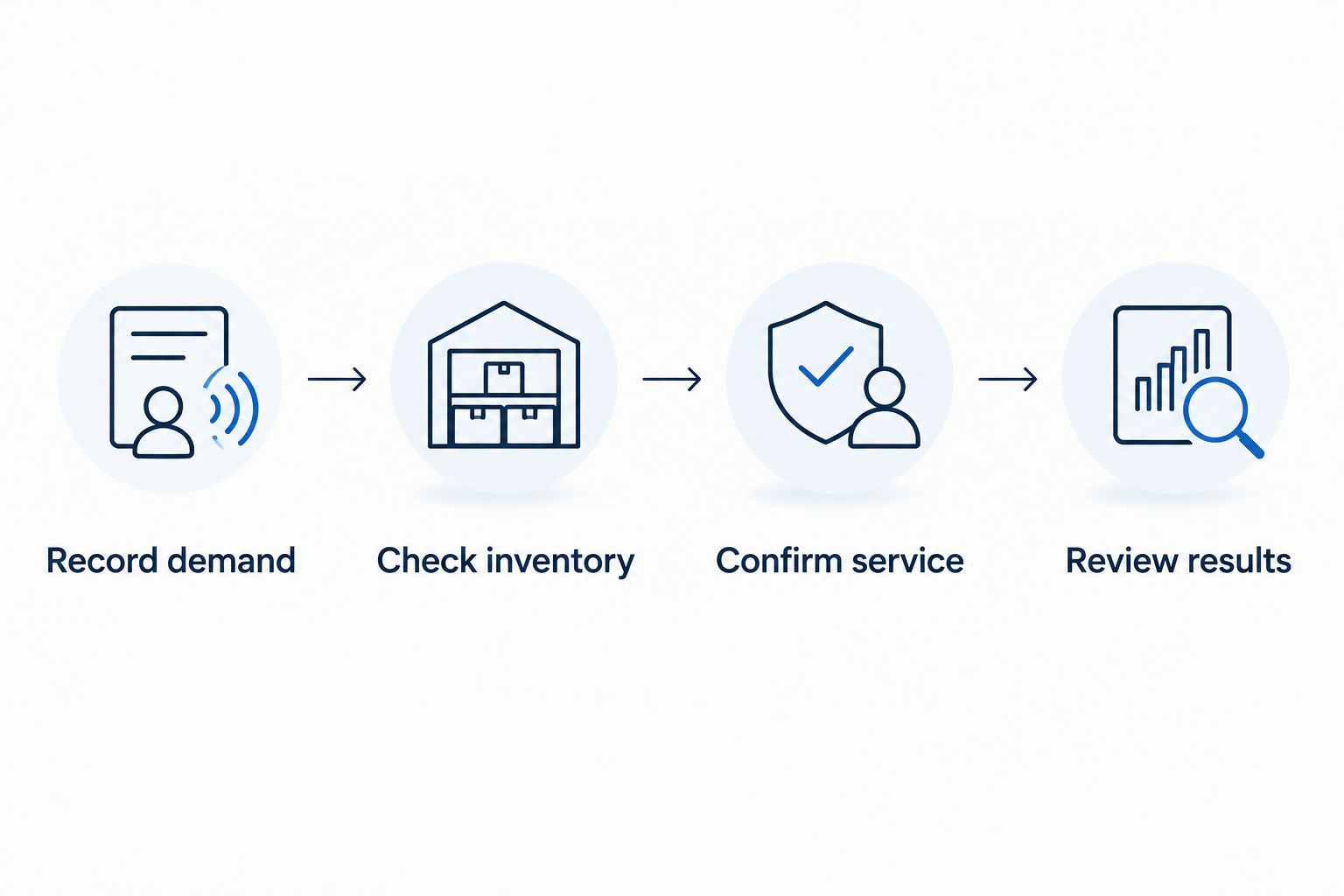
Use a short operational sequence. Gather the information first, confirm the arrangement second, and then tell staff what has changed.
Record demand
Track towel use through your operating schedule, including the classes or shifts that put the most pressure on stock. Note when staff refill shelves and whether they draw from a reserve.
Use actual activity from your gym. A membership target alone does not tell you how many members will use towels or when they will arrive.
Check inventory
Count clean towels ready for use, towels awaiting collection, and towels already away for washing. Keep those categories distinct so the same stock does not appear available in more than one place.
Flag worn items separately. The purpose is to establish what can support service now, not to produce the largest possible inventory total.
Confirm service
Send your provider the expected change, affected dates, location, and relevant access instructions. Ask for confirmation of collection timing, return timing, and any preparation requirements.
For your 2026 planning notes, keep the agreed arrangement somewhere the opening and closing teams can find it. A conversation remembered by one manager is not a usable handoff.
Review results
Compare the arrangement with what happens on the floor. Check whether clean towels arrive before the pressure point and whether staff can put them into circulation promptly.
If shortages continue, identify the cause before requesting another change. More stock, a different return time, and better internal restocking solve different problems.
What should I ask before increasing towel service?
Ask questions that produce an operational answer. A general assurance about handling busy periods is less useful than an agreed plan for your location.
Use this request outline:
- Location: State the collection address and any access restrictions.
- Demand change: Describe what is increasing and how you currently measure it.
- Critical period: Identify the class block or shift that needs the clean stock.
- Requested adjustment: Ask about larger collections, different timing, or both.
- Confirmation: Request the agreed collection and return details in writing.
- Review point: Set a point to reassess the temporary arrangement.
Ask separately about towel supply and washing. Also confirm what happens when your own schedule changes, including closures or altered reception hours.
For local service inquiries, provide the exact address rather than relying on a broad area name. Households and businesses in Suwanee, Snellville, Grayson, Loganville, or Buckhead should confirm the arrangement for their location and requested schedule.
Is a larger collection better than an extra pickup?
A larger collection fits a volume problem; an extra collection-and-return cycle addresses a timing problem. Neither is automatically the better choice.
If clean towels last comfortably until the regular return, discuss the added laundry volume first. If the shelf empties before that return, focus on timing and usable stock instead.
Avoid changing everything at once without recording why. A clear reason for each adjustment makes it easier to judge whether the new arrangement works—and whether you still need it after the seasonal rush.
Can I rely on same-day towel delivery during January?
Rely on same-day towel delivery only when your provider has explicitly confirmed it for your request. A recurring arrangement is not, by itself, a promise of emergency service.
Build your 2026 operating plan around the schedule you have agreed. If you want a backup option, ask about it separately before a shortage occurs.
Your staff also need a response for low stock that does not depend on an unconfirmed delivery. Identify who contacts the provider and who communicates any change to towel access at the gym.
When should I return to my regular towel schedule?
Return to the regular schedule when recorded demand and clean stock support it. Do not reduce service simply because January has ended.
Review the same information you used to request the increase: towel use, shortage periods, return timing, and reserve use. Confirm the revised arrangement before staff start following a different routine.
If some of the higher demand remains, discuss a continuing adjustment instead of treating every busy week as an exception. The goal is a schedule that matches the gym you are operating now.
Choose the right next step
For gym managers, the next step is a recurring towel-service inquiry with the location, expected workload, and critical return periods ready. For households, the next step is a wash-and-fold pickup request that fits the home routine.
Summa Laundry provides both wash-and-fold pickup and recurring commercial towel service. Keep the requests distinct: your gym needs a business restocking conversation, while your household needs a collection-and-return arrangement for personal laundry.
Plan your next laundry pickup
Ask about recurring gym towel service or arrange household wash-and-fold pickup.
FAQ
Can gym towel service scale up during busy season?
Yes, when the provider confirms the additional processing volume and collection-and-return schedule. Your gym also needs enough usable towels to cover demand between clean returns.
Does a bigger towel pickup prevent shortages?
A bigger towel pickup addresses additional laundry volume, not necessarily shortages. If clean towels run out before the next return, review return timing and on-site inventory.
Should I buy more towels before January?
Check usable inventory and the confirmed return schedule before buying more towels. Additional stock provides a buffer, but it does not correct a return schedule that misses your busiest periods.
Does recurring towel service include towel rental?
Do not assume recurring towel service includes towel rental. Confirm who supplies the towels and how replacement or damaged items are handled.
Can Summa Laundry help with recurring gym towel service?
Summa Laundry provides recurring commercial towel service for local businesses, including gyms. Confirm your address, seasonal workload, and requested schedule directly before relying on a change.
Can I book household laundry pickup instead of business towel service?
Yes, household wash-and-fold pickup is a separate service need from recurring gym towel service. Provide your home address and confirm the collection-and-return arrangement when booking.
One last thing
Check when returned towels actually reach the shelf—not just when they reach the building. A delivery waiting in a back room does not help the front desk serve the next class.
Assign the restocking handoff as carefully as the collection handoff. Your seasonal plan is complete only when clean towels are ready where members use them.