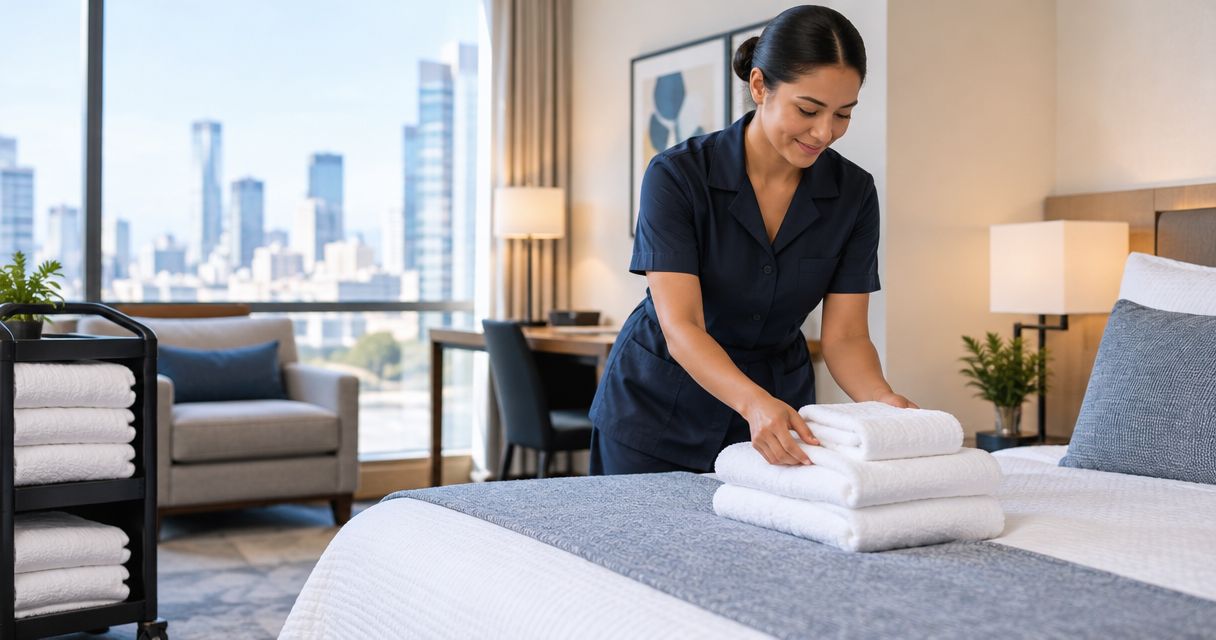
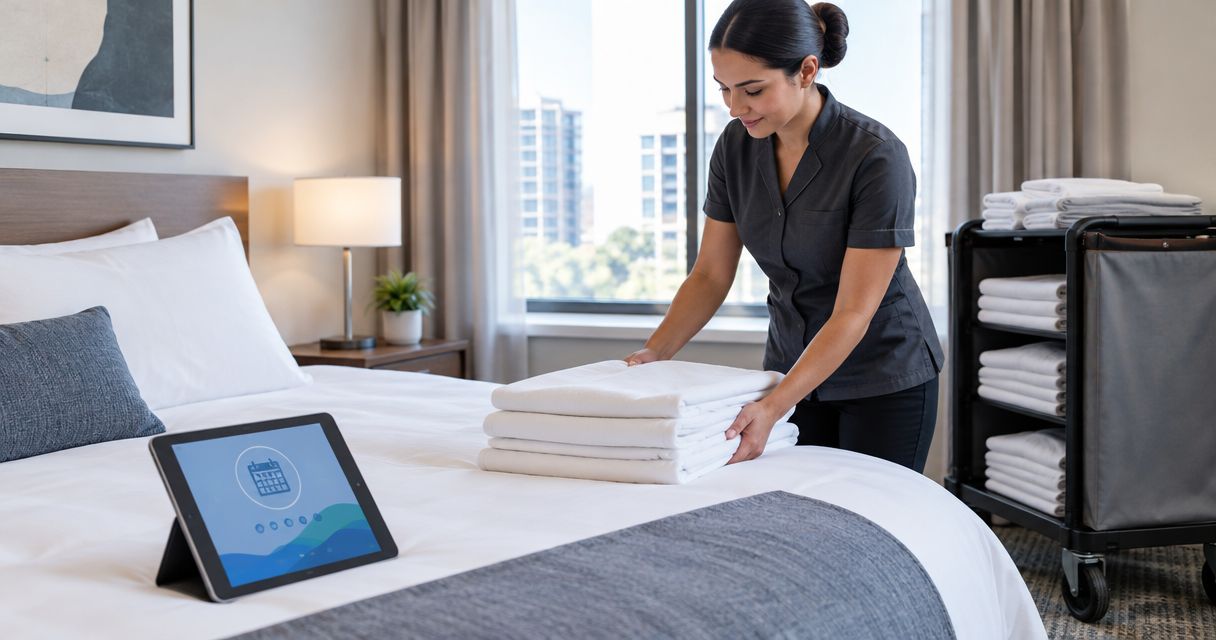
Instead of manually chasing laundry before every arrival, build a corporate housing linen service schedule backward from guest check-in, with confirmed pickup, clean-linen return, and room-staging deadlines. Keep a clean reserve separate from outgoing laundry so the next guest does not depend on the previous guest’s linens returning in time.
- Build your corporate housing linen service schedule backward from check-in, not forward from checkout.
- Summa Laundry wash-and-fold suits households and local businesses seeking pickup; confirm acceptance of your specific corporate housing linens.
- Track laundry pickup, clean return, and room staging as separate commitments.
- A reservation change requires a revised laundry plan, not just an updated calendar entry.
Why this matters
A laundry return and a guest-ready apartment are different milestones. Returned linens still need to be received, checked, assigned to the right unit, and put in place. A delivery scheduled for check-in time leaves no planned space for that work.
Make room readiness the deadline; make laundry return an earlier dependency. This is the operating rule to put in your 2026 turnover plan. Your property team controls the staging deadline, while the laundry provider must confirm the collection and return arrangements.
Summa Laundry’s services include wash-and-fold pickup and delivery plus recurring commercial towel service. Before assigning bedding or other corporate housing items to that service, confirm the exact items, address, handling requirements, and proposed schedule.
The same distinction helps households. Having clean clothes delivered is one task; having uniforms, workwear, and bedding put away before the next busy morning is another. Schedule around when you need items ready to use.
Before you start
- Gather reservation and access details. You need confirmed checkout and check-in times, unit identifiers, cleaning assignments, and permission to share relevant access instructions. Use one shared schedule that the property manager and turnover team can update.
- Confirm the laundry arrangement. Ask which items the provider accepts, when collection and return can be arranged, how bags should be identified, and who receives the return. For Suwanee, Snellville, Grayson, Loganville, or Buckhead, confirm the specific property address rather than assuming identical route arrangements.
- Resolve the hidden dependency: clean reserve stock. A same-day guest change does not establish a same-day laundry return. Count usable reserve linens before setup, and separate that count from stock currently on beds, awaiting collection, or being washed.
For a household, replace the reservation calendar with your work, school, and travel commitments. Keep the same access and receiving checks; someone still needs to get the returned laundry inside.
Reservation record
Use a shared worksheet or your existing task system. The bold labels below are suggested fields for your own template, not buttons or settings in a laundry booking platform.
- Create one record per turnover. Add Unit, Reservation reference, Checkout, Check-in, and Schedule owner. Use an internal reservation reference rather than placing unnecessary guest information on laundry bags or collection notes.
- Add a room-readiness deadline. Create Room ready by and set it before guest access begins. Ask the cleaning team how much time receiving, checking, and staging linens requires; do not insert an assumed universal allowance.
- Record the actual linen requirement. Add Items required, including sizes and quantities drawn from the unit’s inventory. Distinguish bath towels from bedding so acceptance and return checks cover the right items.
- Identify the clean reserve. Add Reserve location and Reserve checked by. Name the person responsible for checking that the stored set is complete and usable, not merely present.
- Name a backup owner. Record who handles schedule changes when the main contact is unavailable. Give that person access to the current record and the provider’s confirmed instructions.
Expected result: each turnover has one accountable owner, a defined linen requirement, and a deadline tied to room readiness rather than laundry collection.
For your 2026 worksheet, use complete dates and local times. A note that says Thursday is not enough when a stay moves into another week.
Pickup and return plan
Work backward from Room ready by, then check the proposed sequence with the laundry provider. A requested collection time is not a confirmed appointment.
- Set the receiving deadline. Add Clean return due, allowing time for your team’s actual receiving and staging work. Keep this separate from Check-in so an arrival change does not hide the remaining preparation tasks.
- Request the laundry arrangement. Share the property address, accepted item list, expected collection location, and required return deadline. Ask Summa Laundry whether the proposed laundry pickup and return arrangement fits the property’s needs; do not treat the inquiry as confirmation.
- Record the provider’s response. Add Pickup confirmed, Return confirmed, and Confirmation reference. Copy the agreed details accurately. Keep a request awaiting a response visibly different from an accepted arrangement.
- Assign the outgoing handoff. Name who removes used linens, checks pockets or mixed-in belongings, prepares accepted items, and places them at the agreed collection point. Follow the provider’s preparation instructions.
- Assign the incoming handoff. Name who receives the return and checks it against the unit requirement. Record where clean items go if delivery happens before the cleaning team arrives.
Expected result: the schedule contains a confirmed collection and return plan, with named people responsible at both ends.
The trade-off is straightforward. Backward planning exposes a deadline that cannot be met; it does not create a faster service window. Resolve that gap with confirmed reserve stock or a revised operating plan before accepting it as covered.
Readiness checks
A calendar reminder tells someone to look. A readiness check tells them what must be true before the unit is released.
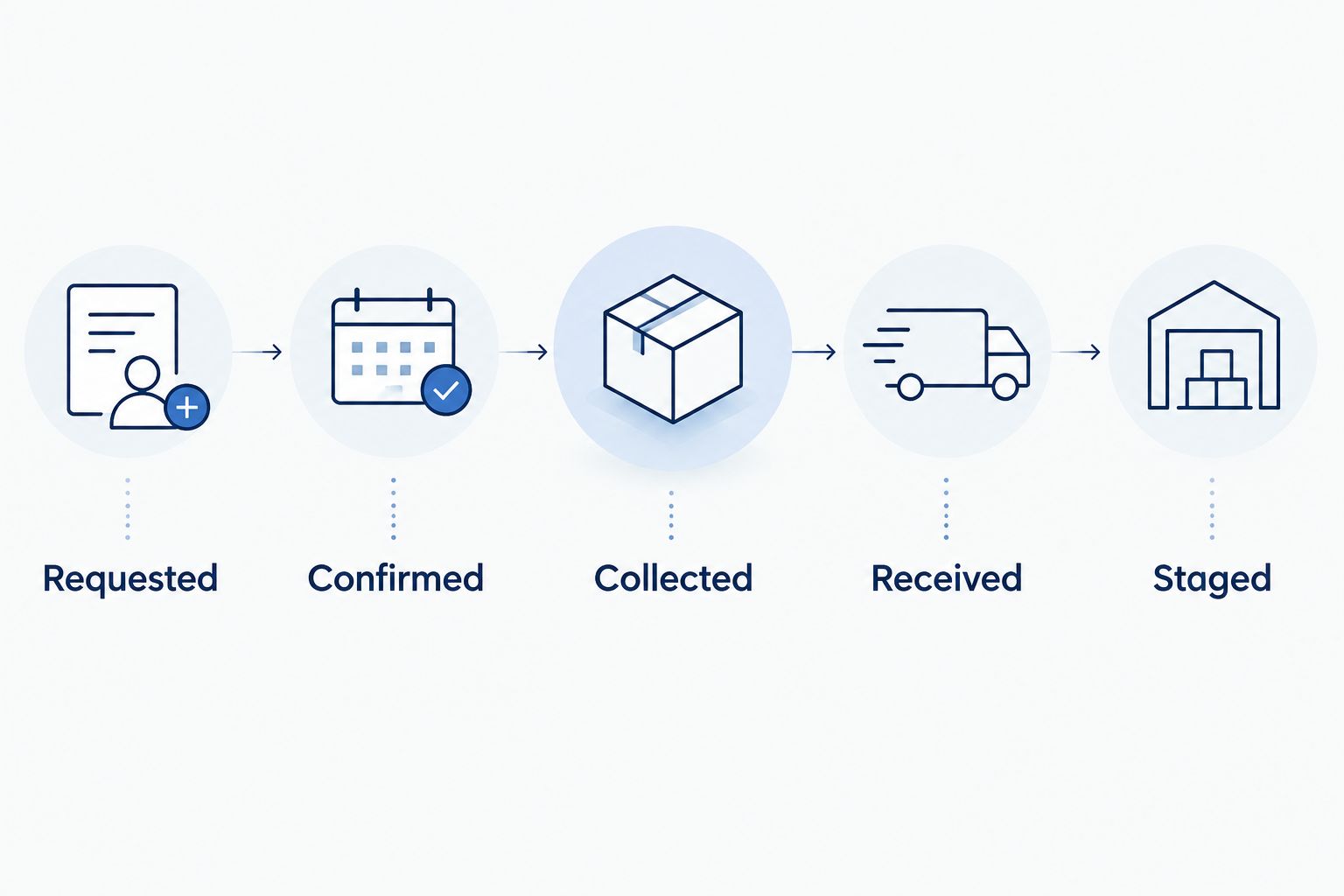
- Use clear status labels. Add Requested, Confirmed, Collected, Received, and Staged to your tracking template. Move the record only when the corresponding event has happened; a scheduled return is not a received return.
- Check completeness at receipt. Compare returned items with the unit’s requirement. Identify missing pieces, incorrect sizes, or items needing attention before the cleaning team starts making beds.
- Confirm physical staging. Mark Staged only after the required linens are in the unit and ready for the guest. Do not close the task because a bag reached the building’s reception area.
- Test three situations. Walk through one normal turnover, one earlier check-in, and one delayed collection. These are setup tests, not assumptions about service performance. Check whether each situation produces a clear next action and a responsible person.
Expected result: your team can distinguish laundry that is booked, laundry that has arrived, and a unit that is actually ready.
Use this sequence in the 2026 handover checklist: Requested, Confirmed, Collected, Received, Staged. Keep the provider’s confirmation alongside the record rather than buried in a separate conversation.
Schedule-change rules
Reservation changes need their own process. Updating the guest calendar alone does not change a provider’s confirmed collection or return arrangement.
- Record what changed. Add Change received, Previous deadline, and Revised deadline. Keep the previous information until everyone affected has acknowledged the replacement plan.
- Recheck the clean-stock position. Compare the revised room deadline with clean items physically ready for use. Do not count laundry in transit as reserve stock.
- Request revised service details. Contact the provider when collection, return, location, or item quantities need to change. Keep the existing confirmation visible until the revised arrangement is accepted.
- Notify the property team. Tell the cleaner, receiving contact, and schedule owner which deadline changed and which tasks remain open. Give each person the revised information, not just a general message that the booking moved.
- Close the change after acknowledgment. Mark the revision complete when the affected people have confirmed their responsibilities and the linen plan still meets room readiness.
Expected result: an earlier arrival, extended stay, or canceled departure produces a reviewed plan rather than a silent calendar edit.
An earlier check-in changes your deadline, not the provider’s commitment. Apply that rule consistently across your 2026 arrivals, including requests that seem like small adjustments.
Second workflow: recurring mid-stay towel changes
A longer stay creates a different scheduling job: replenish towels without waiting for checkout. Keep that routine separate from full turnover preparation, even when the same person manages both.
| Workflow | Best for | Main advantage | Limitation |
|---|---|---|---|
| Checkout-linked collection | Guest departures and unit resets | Connects outgoing laundry to a known event | Departure changes require a schedule review |
| Recurring towel pickup | Planned towel changes during longer stays | Creates a repeatable handoff routine | Does not cover every bedding or turnover requirement |
For recurring towel service, record the agreed collection location, accepted items, receiving contact, and next required replenishment. Ask the provider to confirm the recurring arrangement before telling residents or staff it is established.
When a stay extends, review both workflows. The departure-linked task needs a new date, while the towel routine needs an explicit decision to continue or stop. Do not let either follow an outdated reservation automatically.
Households can use the same separation: a regular wash-and-fold routine for everyday laundry and a separate reminder for bedding before visitors arrive. Summa Laundry wash-and-fold is best for households and local businesses seeking pickup rather than self-service laundry. Confirm the particular items and schedule before relying on that fit.
Troubleshooting
Check-in moves earlier than the confirmed return
Use verified clean reserve stock if it meets the unit’s requirement. Ask whether a revised return arrangement is possible, but keep the original commitment in place until a replacement is confirmed. Escalate any remaining readiness gap to the property manager.
The driver cannot access the collection point
Check the agreed location, building instructions, and responsible contact. Arrange a corrected handoff with the provider rather than assuming collection will happen later without confirmation. Review access notes before the next scheduled visit.
Linens return, but the unit still lacks a complete set
Compare the received items with Items required, including sizes. Use suitable reserve pieces and record the discrepancy for follow-up. Keep Received separate from Staged so a partial return cannot close the room-readiness task.
A canceled stay leaves laundry tasks active
Review each task individually. Canceling a reservation does not prove a collection request was canceled or that no laundry remains in process. Obtain acknowledgment of any requested service change and update the receiving team.
Customize your workflow
Start with one property and its real handoffs before copying the template across a portfolio. Check whether the schedule reflects what happens on site: where bags wait, who accepts returns, and who verifies the finished room.
Then expand your 2026 plan by address. Grouping nearby units helps organize your own records, but it does not establish a shared pickup arrangement. Confirm each location and any proposed consolidation with the provider.
For households, the next step is to request pickup around a practical receiving window. For property managers, gyms, salons, and spas, the next step is to inquire about recurring towel service and explain the actual usage pattern. Summa Laundry serves both household and business laundry needs; the right request starts with the items and address, not an assumed service promise.
Confirm your laundry schedule
Share your address, items, and required return deadline before building the pickup into your plan.
FAQ
How do I build a corporate housing linen service schedule?
Work backward from the room-readiness deadline, then confirm collection and clean-linen return with the provider. Assign separate owners for outgoing laundry, receiving, and final staging.
Should laundry delivery happen at guest check-in?
Schedule linen return before room readiness, not at guest check-in. Your team needs time to receive, inspect, and put the linens in place.
Can Summa Laundry handle corporate housing bedding and towels?
Summa Laundry offers wash-and-fold pickup and delivery plus recurring commercial towel service. Confirm acceptance of your specific bedding and towel items, the property address, and the required schedule before booking around them.
What should I do when a guest checks in earlier?
Recheck the clean reserve and request any necessary schedule changes immediately. An earlier guest arrival does not change a previously confirmed laundry commitment without the provider’s agreement.
Does a same-day turnover require same-day laundry service?
A same-day turnover can use a separate clean reserve rather than depending on the outgoing linens returning that day. Count and check that reserve before treating the turnover as covered.
Can I schedule towel changes during a longer corporate housing stay?
You can plan a separate recurring towel workflow and ask the provider to confirm the arrangement. Keep its collection, return, and stop dates separate from the final checkout task.
Can households use this laundry scheduling method?
Households can work backward from when clothes or bedding must be ready to use. Replace guest check-in with a workday, school commitment, trip, or visitor arrival, and confirm pickup and return before relying on the plan.
One last thing
Count complete usable sets, not bags. A returned bag can contain clean laundry without containing everything needed for a particular bed or bathroom. Make the final check against the unit’s actual requirements before releasing the room.