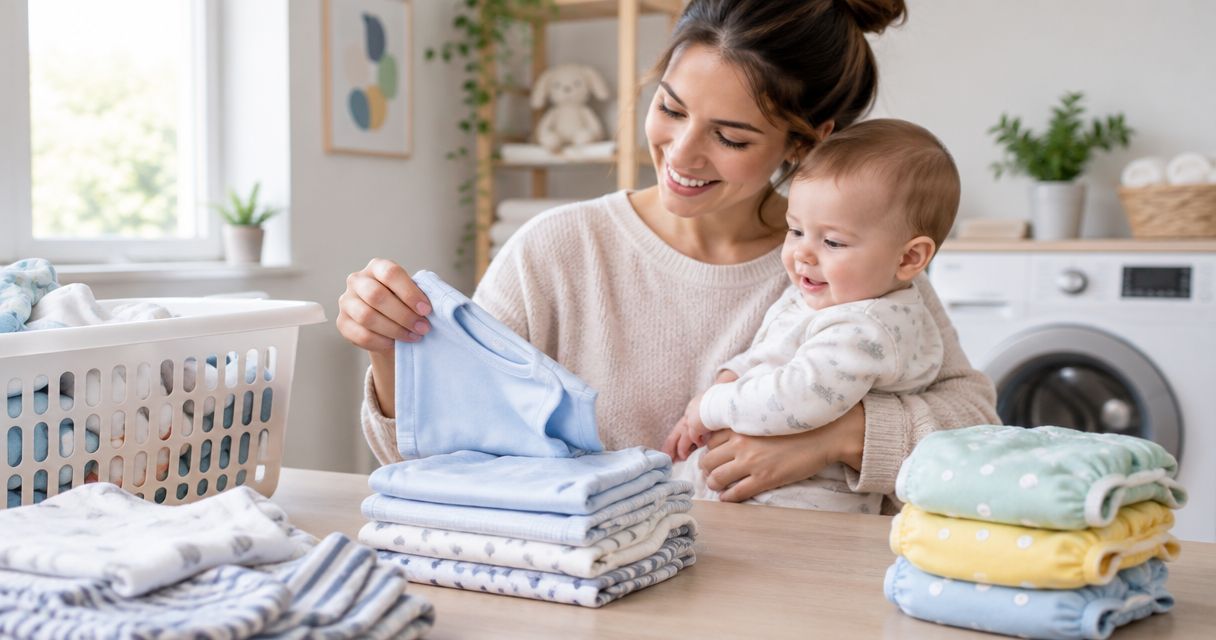
Wash-and-fold service is suitable for baby clothes when the provider follows the garment labels and confirms your detergent and handling requirements. Cloth diapers need separate approval: never put used diapers into an ordinary laundry pickup without confirming acceptance and the cleaning process. For your 2026 booking, treat baby clothing and reusable diapers as different service requests.
- Is wash and fold safe for baby clothes? Confirm detergent, care instructions, and handling before booking.
- Summa Laundry offers household wash-and-fold pickup; ask directly about baby clothing requirements before sending a bag.
- Used cloth diapers require explicit acceptance and a cleaning process suited to the diaper manufacturer's instructions.
- A clean smell does not establish that detergent preferences or garment care instructions were followed.
Why this matters
Stop treating every item in the nursery hamper as the same load. A cotton bodysuit, a sleep sack, and a reusable diaper cover can have different washing and drying instructions.
The useful question is not whether a service advertises gentle cleaning. It is whether the provider can follow the instructions your particular items need. Start with the available laundry services, then confirm any requirements that are not stated.
Keep an item out of the pickup bag until you know the service accepts it and can follow its care instructions. That rule protects your clothes and prevents a routine booking from becoming an unsuitable special-care request.
Is wash-and-fold service safe for baby clothes and cloth diapers?
Baby clothes and cloth diapers require different booking decisions. Ordinary washable clothing can fit a wash-and-fold routine; used diapers require a provider that explicitly accepts them and can explain the appropriate handling process.
Use this comparison to sort the items before you book. These are screening criteria, not promises about any provider's capabilities.
| Item | Best for | Benefit of outsourcing | Limitation to resolve first |
|---|---|---|---|
| Everyday washable baby clothes | Households reducing routine laundry | Removes washing, drying, and folding from your task list | Confirm detergent and care-label requirements |
| Sleepwear and sleep sacks | Items with instructions the provider can follow | Keeps regularly used clothing in the laundry routine | Check restrictions on additives and drying |
| Cloth diapers and reusable covers | A provider that explicitly accepts diaper laundry | Outsources an additional household task if suitable service exists | Confirm acceptance, preparation, washing, and drying separately |
| Washable baby towels and washcloths | Families sending routine washable textiles | Reduces the pile of small household linens | Flag special care needs and visibly soiled items |
Do not treat the word baby as a washing instruction. Read the label on each type of item, especially anything with waterproof layers, elastic, fasteners, or special finishes.
A service that handles your everyday clothing is not automatically a diaper service. The same distinction applies to commercial towel providers: accepting towels does not establish acceptance of items contaminated with stool.
Baby clothes: confirm the detergent and drying instructions
Begin with the care labels and any instructions you already follow at home. Tell the provider what you need before pickup, rather than leaving a note inside a closed bag and assuming it will be seen.
If your household uses fragrance-free detergent, ask whether that exact requirement can be followed. Fragrance-free and unscented are not interchangeable descriptions; the Environmental Protection Agency's Safer Choice guidance distinguishes products without fragrance materials from products that can contain ingredients used to mask odors.
Do not assume that a product described as gentle, natural, or intended for babies meets your requirements. Ask about the actual detergent and any added softener, scent product, or dryer sheet.
Drying deserves equal attention. A wash setting that matches the label does not fix a drying method that conflicts with it. Send a clear instruction for items that need air drying, or keep those items at home if the provider cannot accommodate them.
For a baby with eczema, a known contact allergy, or clinician-directed laundry requirements, use the instructions your clinician gives you. A laundry provider can explain its process; it cannot decide which products are appropriate for your child's medical needs.
Cloth diapers: get explicit acceptance before pickup
Do not include used cloth diapers in a standard wash-and-fold bag without approval. Ask about diapers by name, including the covers and inserts you use, instead of asking only whether the service takes baby laundry.
A complete answer should address both acceptance and preparation. You need to know which items the provider accepts, how it wants them contained, and what you must do before handing them over.
Follow the diaper manufacturer's instructions for removing solid waste and laundering. Do not improvise a bleach treatment, soak, detergent dose, or drying method because a general article recommends it; diaper materials and construction differ.
Request 3 written confirmations before arranging diaper pickup:
- Acceptance: The provider accepts the specific used diapers, inserts, and covers you intend to send.
- Preparation: You know how to prepare, contain, and identify the items for collection.
- Care process: The proposed washing and drying methods match the manufacturer's instructions.
If the provider cannot answer those questions, keep diapers out of that order. You can still outsource accepted everyday clothing while managing diapers separately.
For your 2026 service search, a clear refusal is more useful than a vague promise to handle everything. It tells you where the service ends before your laundry leaves home.
Why the right laundry process varies
There is no single baby-laundry setting that fits every household. These factors determine what you need to confirm:
- Fabric and construction: Cotton clothing, waterproof covers, elastic, and decorative details can carry different care instructions.
- Type of soiling: Everyday wear and items contaminated with stool require different acceptance questions.
- Skin-related requirements: A documented allergy or clinician's advice changes the instructions you need the provider to follow.
- Detergent and additives: Your request needs to cover the whole process, not just the main detergent.
- Drying restrictions: Heat settings and air-drying requirements affect whether an item belongs in a standard order.
- Provider capabilities: A request is useful only when the provider confirms it can follow it.
Write down the requirements that actually apply to your household. A short, specific list is easier to confirm than a general request to be extra careful.
How to prepare baby laundry for pickup
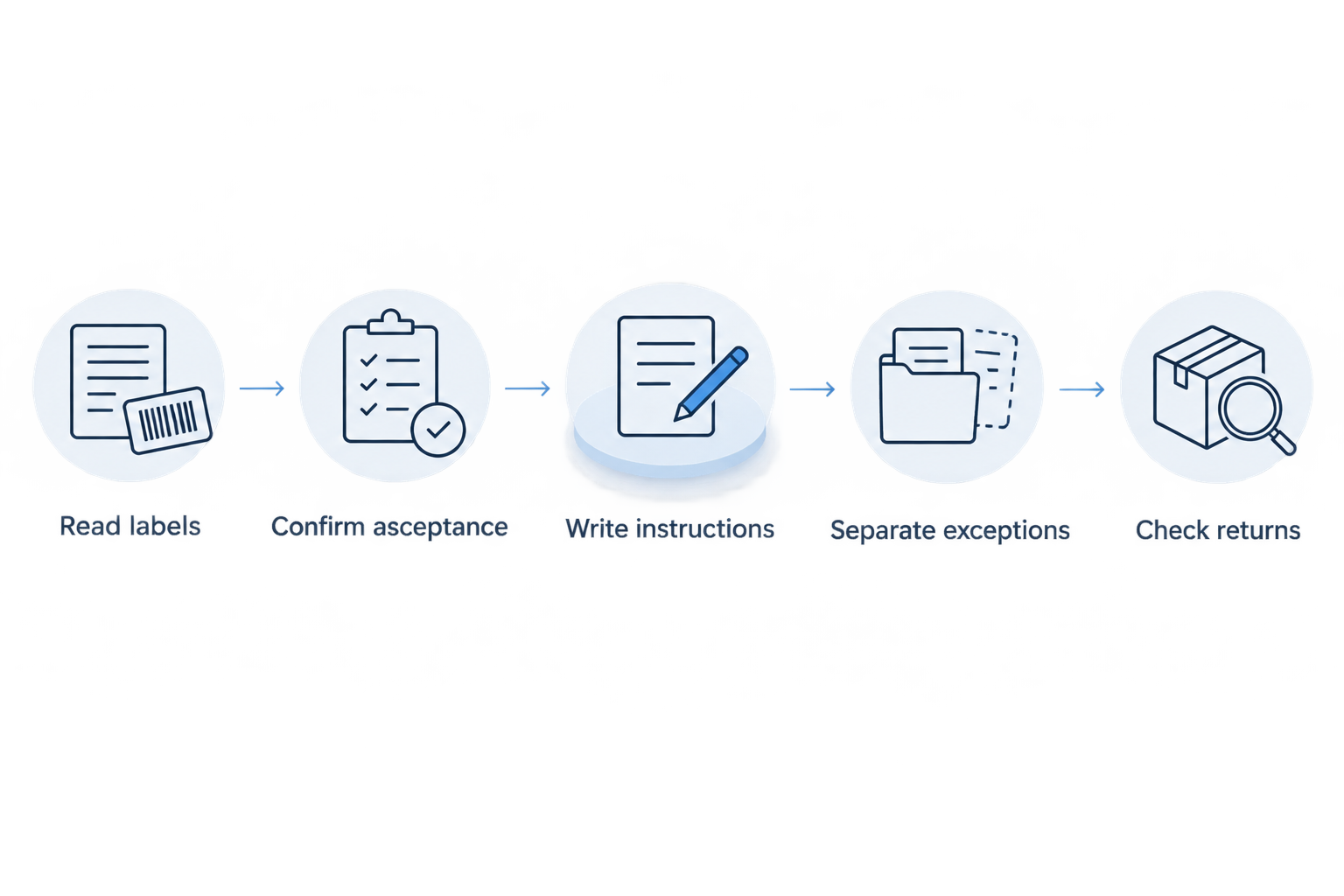
Use this 2026 pickup checklist before handing over your first order. The goal is simple: make the instructions clear and keep unapproved items out.
- Read labels. Identify the items that need different washing, drying, or additive restrictions.
- Confirm acceptance. Describe baby clothes, unusual soiling, and any proposed diaper items accurately.
- Write instructions. Send detergent and handling requirements through the provider's agreed communication method.
- Separate exceptions. Keep unapproved diapers, special-care items, and anything with unresolved instructions out of the order.
- Check returns. Review the returned laundry before making the arrangement routine.
This sequence works because the important decisions happen before collection. A bag label helps identify instructions, but it does not replace the provider's agreement to follow them.
For ordinary clothing, consider starting with 1 small test order of accepted, replaceable items. That lets you review folding, dryness, item identification, and communication without sending every outfit your baby needs.
A test order is a service check, not a medical safety test. Appearance and smell cannot establish the cleaning process or determine whether a product is appropriate for sensitive skin.
What should you check when the laundry comes back?
Check the returned items against the instructions you agreed on. Look for damp areas, unexpected fragrance, visible residue, damage, or missing pieces, and contact the provider about any problem before repeating the order.
For items that should be fully dried, do not put damp laundry straight into storage. Ask the provider how it will resolve the issue instead of simply accepting the next delivery on the same terms.
Keep care concerns specific. Saying that a sleep sack required air drying gives the provider something concrete to address; saying that the order did not feel baby-safe does not identify the problem.
If your child develops skin symptoms, ask a pediatric clinician for advice. Do not use a change in fragrance, detergent branding, or laundry provider as a substitute for medical assessment.
Can you send baby clothes with the household laundry?
Accepted baby clothes do not automatically require a separate service order. The decision depends on compatible care instructions, your household's requirements, and the provider's handling process.
Ask whether the provider can apply your instructions to the whole order or needs certain items identified separately. Do not assume that placing clothes in different bags means they will be washed in separate machines or loads.
If separation matters to you, ask exactly what separation means in that service. Confirm whether it concerns collection, washing, drying, folding, or return packaging.
Do cloth diapers need a specialist laundry service?
Cloth diapers need explicit acceptance and an appropriate process, whether or not the provider calls itself a specialist. A general wash-and-fold description is not enough to establish either point.
Compare the provider's proposed care process with the diaper manufacturer's instructions. If you cannot reconcile them, choose another arrangement for the diapers while keeping ordinary clothing pickup separate.
Does baby laundry need to be sterilized?
Routine household laundry is not the same as sterilization. The Centers for Disease Control and Prevention's household cleaning guidance recommends following care labels, using appropriate detergent, and drying items completely; it does not make a folded laundry return a sterile product.
If your child has medical needs that change normal household laundry practices, ask the care team for specific instructions. Then confirm those instructions with the provider before booking, rather than asking for an undefined sanitizing upgrade.
Choosing local pickup for your household or business
Summa Laundry's wash-and-fold service is best for local households seeking pickup and delivery for routine laundry. Baby-specific detergent requests and cloth-diaper acceptance still need direct confirmation before you send those items.
Summa Laundry also offers recurring commercial towel service for local businesses. That is a separate service need, not evidence that the business accepts diapers, provides medical textile processing, or follows a particular baby-laundry protocol.
Households in Suwanee, Snellville, Grayson, Loganville, and Buckhead should confirm the pickup arrangements for their address and describe special requirements. Businesses seeking towels should describe the textiles, the type of soiling, and their recurring pickup needs instead.
For your 2026 booking, contact the team with a short description of the items and the instructions that matter. Ask for confirmation before adding anything outside routine clothing or towel laundry.
Confirm your laundry requirements
Ask about baby clothing instructions or discuss recurring commercial towel pickup.
FAQ
Is wash and fold safe for baby clothes?
Wash-and-fold service is suitable for baby clothes when the provider confirms it can follow the care labels and your detergent requirements. Ask before booking, especially when your child has clinician-directed skin-care needs.
Can I put dirty cloth diapers in my laundry pickup bag?
Do not put used cloth diapers in a routine pickup bag without explicit approval. Confirm acceptance, preparation, containment, and the washing and drying process first.
Do I need special baby detergent for a laundry service?
Do not choose detergent solely because it carries a baby label. Confirm your household's actual requirements with the provider and follow a clinician's advice when your child has skin-related medical needs.
Can baby clothes be washed with adult clothes?
Baby clothes do not automatically need a separate service order. Compatible care instructions, household requirements, and the provider's confirmed process determine whether combining the order makes sense.
Does Summa Laundry accept cloth diapers?
Confirm cloth-diaper acceptance directly with Summa Laundry before scheduling those items. Household wash-and-fold and commercial towel service do not establish a diaper-laundering service.
What should I do if returned baby clothes smell strongly scented?
Contact the provider if the scent conflicts with your agreed instructions, and keep the affected items out of use until the concern is resolved. Ask a pediatric clinician about any skin symptoms rather than relying on smell to assess safety.
Can a towel pickup service also handle diapers for my business?
Commercial towel service does not automatically include diaper laundry. Describe the items and contamination accurately, then obtain explicit acceptance before arranging collection.
One last thing
The most useful instruction is the one the provider confirms before pickup. For 2026, keep a reusable message with your detergent requirements, drying restrictions, and excluded items so you do not have to reconstruct the request every time.
Outsource the routine pile. Keep unresolved special-care items at home until you have a clear answer.