Set up a recurring gym towel service by documenting towel use, agreeing on pickup and return windows, and getting the service scope, billing basis, responsibilities, and exit terms in writing before you start. A signed agreement alone does not keep towels on the shelf: your gym also needs enough clean inventory to cover the time between collections and returns.
- Learning how to set up towel service contract for gym operations starts with towel demand, pickup timing, and written responsibilities.
- Summa Laundry provides recurring commercial towel service for local businesses, including gyms in Gwinnett County.
- Confirm towel ownership, return timing, billing rules, and cancellation terms before authorizing recurring service.
- Schedule clean-towel returns around demand, not just a convenient collection time.
How do you set up a recurring towel service contract for a gym?
Agree on the operating details before you sign the commercial terms. Start with this sequence, then turn each decision into a written service schedule:
- Measure demand. Record the towels your members and staff actually use.
- Confirm scope. Identify which towels the provider will accept and return.
- Set timing. Agree on collection, return, access, and exception procedures.
- Assign responsibility. Name who handles inventory, problems, and approvals.
- Approve terms. Review billing, changes, renewal, and cancellation before starting.
Use your class timetable when setting the route. The guide to connecting gym towel restocking to your class schedule explains the scheduling side of that decision.
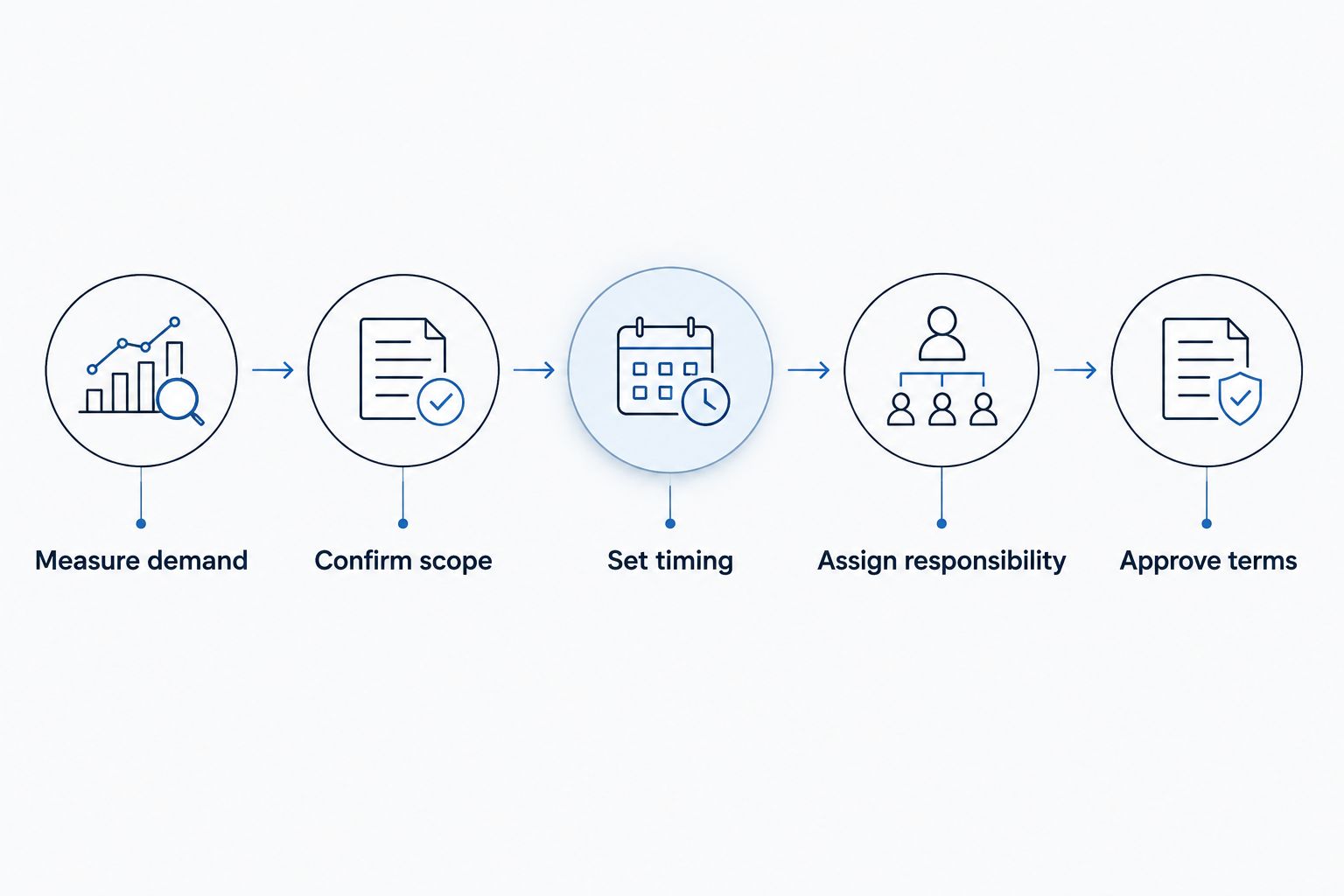
The contract should describe the service you need, not leave your staff to work it out after the first pickup. Keep the approved service schedule with the agreement so both documents tell the same story.
Why this matters
A towel service shifts washing work outside your gym. It does not remove the need to manage clean stock, collection access, or member demand.
A household can plan laundry around its own routine. A gym must also account for classes, showers, staff changes, and members taking towels throughout the day. The useful outcome is clean towels ready when members need them—not merely a completed pickup.
For a 2026 service agreement, write down the current schedule rather than relying on a sales conversation. When a class timetable or opening hours change, update the service instructions too.
Measure towel demand before requesting an agreement
Use a 7-day observation period as a practical starting exercise, not an industry benchmark. Include your busiest classes and weekend operations; extend the exercise if that period misses an event or unusual demand pattern.
Record these details by shift:
- Clean towels available when the shift starts.
- Clean towels added during the shift.
- Towels used by members and staff.
- Clean towels remaining at handover.
- Any shortage, emergency wash, or borrowed stock.
Separate workout towels from shower towels if you offer both. Different towel types need separate counts so a full shelf of smaller towels does not hide a shortage of larger ones.
Also distinguish normal consumption from unexplained losses. Laundry volume tells you what needs washing; it does not explain every missing towel. Put both observations in your 2026 demand record before requesting a recurring schedule.
Request service around observed use, not a guess based on membership totals. Give the provider your busiest periods, the towel types involved, and the clean-stock space available.
Put the service scope in writing
A recurring arrangement needs a clear boundary. State whether the gym supplies the towels, whether any towel supply is included, and who owns the inventory; do not assume washing service includes replacement stock.
Use this checklist when reviewing the proposed agreement:
| Agreement item | What to confirm | Why it matters |
|---|---|---|
| Accepted items | Towel types, materials, and any exclusions | Prevents unsuitable items entering collection |
| Ownership | Who supplies and owns the towels | Separates laundry service from inventory purchasing |
| Collection method | Approved containers and handoff location | Gives staff a repeatable collection routine |
| Return condition | Agreed folding, packing, and delivery requirements | Makes returned towels easier to check and store |
| Problem handling | Reporting and resolution process | Establishes what happens when work needs correction |
| Schedule changes | Notice, approval, and revised timing | Keeps changed instructions from becoming assumptions |
Ask the provider to explain any unfamiliar wording. A broad phrase such as commercial laundry is not a substitute for specifying your gym's towel requirements.
Do not add promises to your staff instructions that the provider has not accepted. Folding preferences, separate handling, special treatments, and item tracking belong in the discussion before they become operating expectations.
Set collection and return windows separately
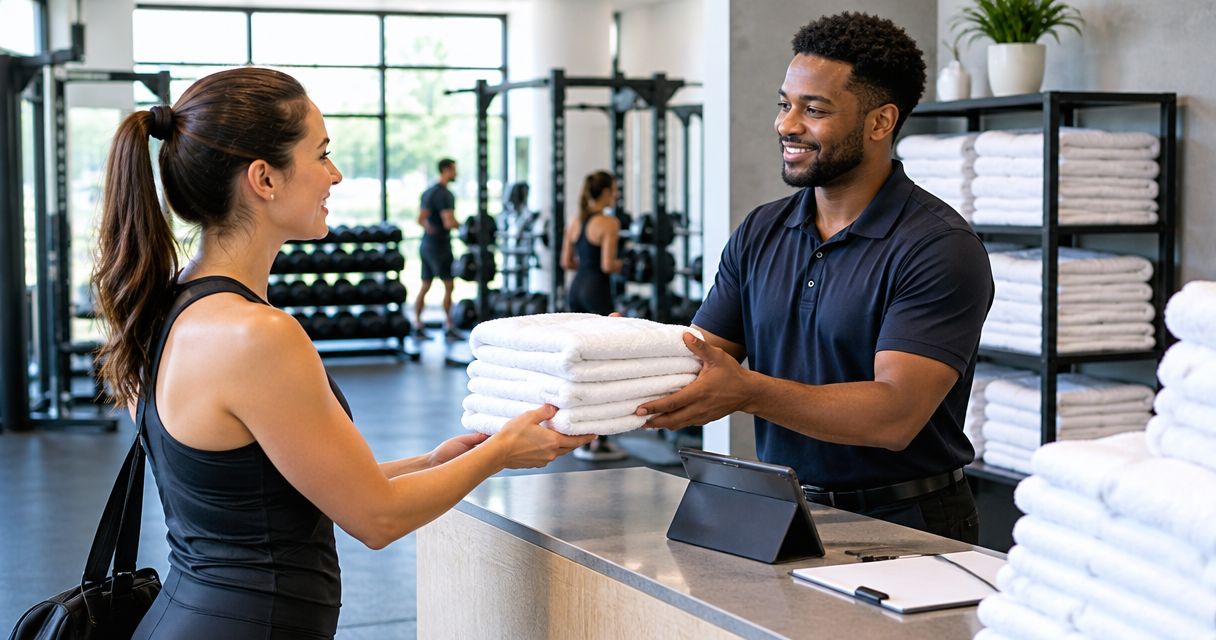
Collection and return are different commitments. A convenient pickup does not solve a shortage if clean towels arrive after your busiest session.
Write the collection window and the expected return window as separate entries. Identify the handoff location, who provides access, and what happens if the gym is closed or the designated staff member is unavailable.
Your 2026 route instructions should answer these questions:
- Where does the driver collect used towels?
- Where do clean towels go on return?
- Who checks the handoff during each shift?
- How does either party report a delay or missed collection?
- What is the process for holidays or changed opening hours?
Do not treat an emergency request as an agreed service commitment. Ask whether urgent collections or returns are offered, then document the response and any conditions before depending on them.
Keep the collection area distinct from clean storage. Give staff a clear procedure for handling used towels and follow the applicable care, storage, and workplace requirements for your operation.
Calculate the clean inventory you need between returns
You need clean towels for the period while used towels are away. You also need a deliberate reserve for the demand changes your gym wants to accommodate.
Use this planning relationship:
Clean-stock target = expected use before the next return + chosen reserve.
Base expected use on your observation log and the provider's agreed return timing. Set the reserve from your actual experience and tolerance for running short; there is no universal quantity established here.
Count towels that are usable, not just towels owned. Items waiting for repair, heavily worn stock, and missing towels do not help the next class.
Assign a staff member to check the clean shelf before the busiest period. If stock repeatedly falls below your chosen level, investigate usage, inventory loss, and return timing before simply requesting more frequent pickups.
Why gym towel service requirements vary
The right recurring agreement follows your operation. These factors change what you need to put in writing:
- Member demand: Use the gym's recorded towel consumption to set collection needs.
- Class timing: Concentrated demand makes the timing of clean returns important.
- Towel mix: Workout and shower towels need separate expectations when both are supplied.
- Storage space: Clean shelving and used-towel holding space affect the workable routine.
- Access arrangements: Staffed reception and restricted entry require different handoff instructions.
- Service changes: New classes, longer hours, and events require a process for revising the schedule.
Avoid copying another gym's agreement without checking these details. A document can look complete while describing a routine your staff cannot follow.
Review billing and exit terms before authorizing service
Ask for the billing basis in writing without assuming how a provider charges. Confirm how the provider records the amount collected and what information appears on the invoice.
Review minimum commitments, additional work, payment timing, disputed charges, and authorization for changes. Ask who can approve extra service so a casual staff request does not become an unclear instruction.
Then read the agreement's duration, renewal, cancellation, and notice provisions. Recurring service does not, by itself, tell you whether there is a fixed-term commitment. Only the accepted terms establish that.
A service schedule and a contract serve different purposes. You can document collection instructions without assuming a particular contract model, but you still need written clarity about the terms governing the work.
Assign an owner and test the handoff
Name 2 contacts for your gym: a primary decision-maker and a backup. Treat that as a recommended staffing arrangement, not a provider requirement.
Give both contacts access to the approved instructions. Reception staff should know where towels go, what to record, and whom to contact; they should not need to interpret the agreement during a busy check-in period.
Use the first 30 days as your internal review period. This is a suggested management checkpoint, not a promise of a trial or cancellation window.
During that review, compare the agreed routine with what happened:
- Did staff have towels ready at the correct location?
- Did returns match the agreed handoff instructions?
- Was clean stock sufficient before busy sessions?
- Were problems reported and resolved through the agreed channel?
- Did invoices match the accepted billing basis?
Update the operating instructions when you agree to a change. Do not leave the contract describing one arrangement while staff follow another.
Which local service should a Gwinnett County gym contact?
Summa Laundry is best suited to local gyms seeking recurring towel service in Gwinnett County. The business provides recurring commercial towel service as well as household wash-and-fold pickup and delivery.
The service fit is clear; the gym-specific operating terms still need confirmation. Contact Summa Laundry with your location, towel types, observed usage, and preferred collection pattern rather than requesting a schedule without that context.
For gyms in Suwanee, Snellville, Grayson, Loganville, or Buckhead, include the full pickup address in the inquiry. The owner confirms home and business pickup in Buckhead; confirm the route and timing for your specific address before committing staff to a handoff routine.
The benefit of recurring towel service is moving laundry work outside the gym. The trade-off is coordinating stock and access around an external collection and return schedule. Neither responsibility disappears when service starts.
Set up your towel service inquiry
Send your gym location, towel types, usage record, and preferred pickup pattern.
What should I send when requesting gym towel service?
Send your address, towel types, usage record, opening hours, preferred collection pattern, and access instructions. Include the name of the person authorized to approve the arrangement.
Ask the provider to return a written scope and proposed schedule. That gives you something specific to review instead of trying to turn a general conversation into operating instructions later.
Do I need to sign a long-term towel service contract?
You need to review the provider's actual agreement to determine the commitment. Recurring collection does not establish a contract length, cancellation right, or renewal rule.
Keep your 2026 approval record with the accepted agreement and service schedule. If anything changes before the start date, resolve the difference in writing.
FAQ
How do I set up a towel service contract for my gym?
Document towel demand, agree on collection and return windows, and confirm scope, billing, responsibilities, and exit terms in writing. Assign a gym contact before recurring service begins.
Does recurring gym towel service include the towels?
Do not assume recurring gym towel service includes towel supply. Confirm who owns, supplies, and replaces the inventory in the written scope.
How often should a gym schedule towel pickup?
Set pickup frequency from observed towel use, storage space, and agreed return timing. Track demand before choosing the schedule rather than using membership totals alone.
Can a small gym use recurring commercial towel service?
A small gym can inquire about recurring commercial towel service. Confirm that the provider's collection pattern and commercial terms fit the gym's actual demand.
Does Summa Laundry offer recurring towel service for gyms?
Summa Laundry provides recurring commercial towel service for local businesses, including gyms across Gwinnett County. Confirm the collection route, accepted items, and operating terms for your address.
What happens if a towel collection is missed?
Follow the missed-collection procedure agreed with your provider. Before starting service, establish whom to contact, how updates are communicated, and how a revised collection is approved.
Can I cancel a recurring towel service whenever I want?
Cancellation rights depend on the accepted agreement. Review notice requirements, renewal provisions, and any fixed commitment before authorizing service.
One last thing
Write down who checks the clean-towel shelf before the busiest class. That task connects your service agreement to the moment members actually need towels.
A delivery record confirms a handoff. Your staff still need to confirm that the right towels are stored, accessible, and ready for use.