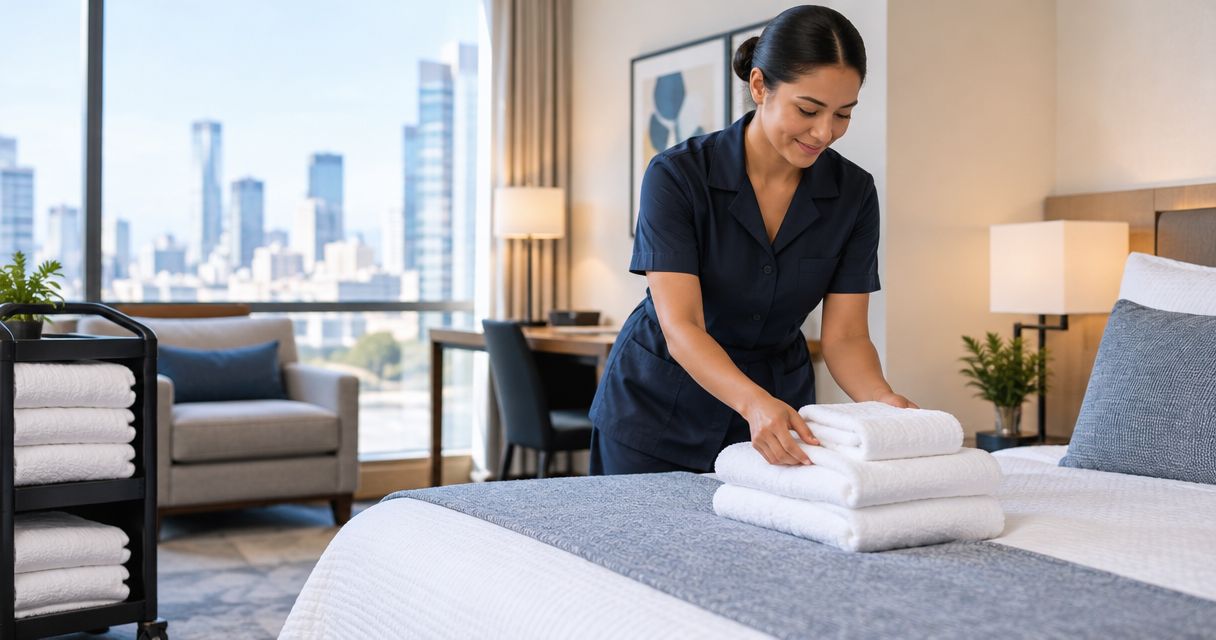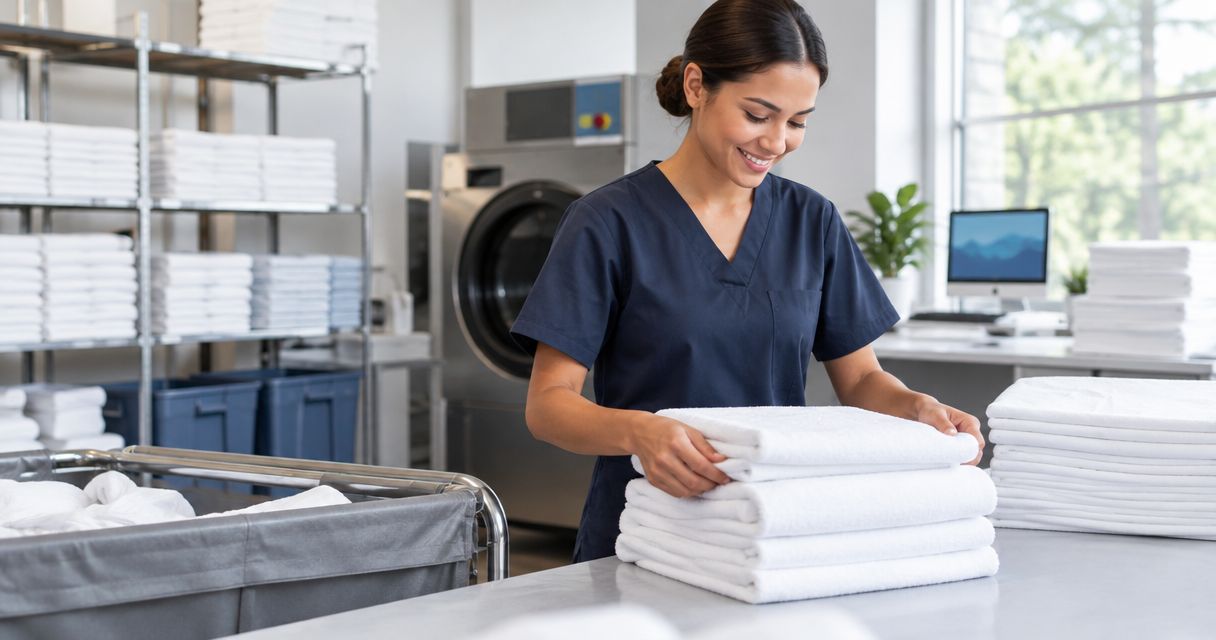
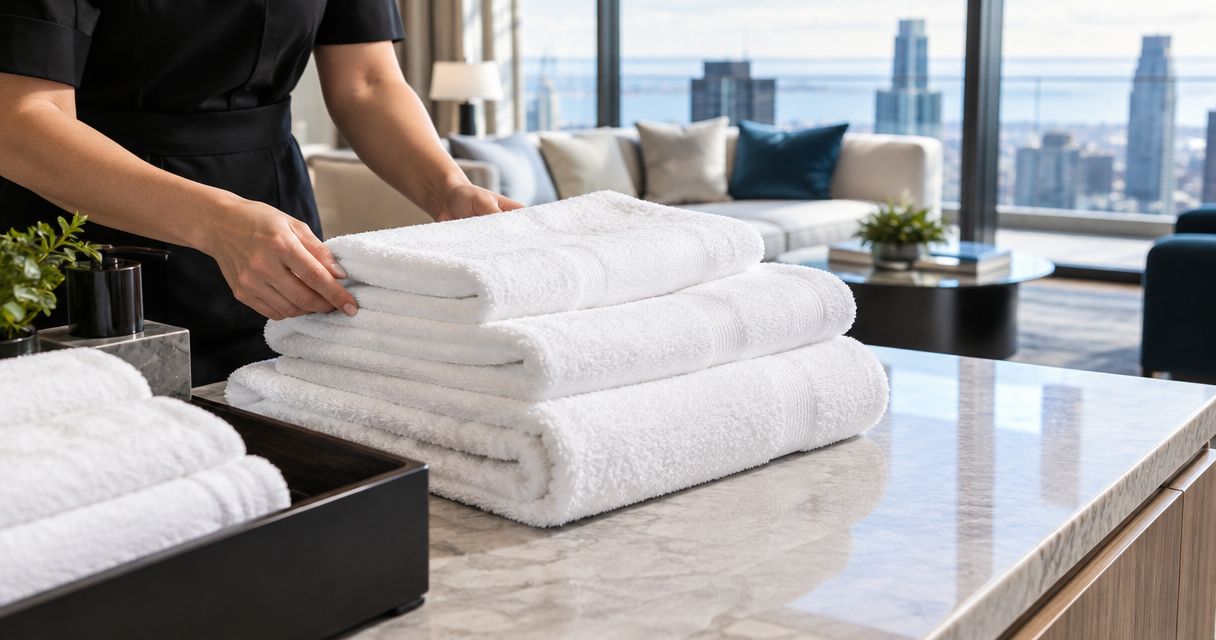
Luxury apartment commercial towel service is recurring pickup, laundering, and return of shared-amenity towels with the aim of keeping resident supplies ready without assigning every wash to property staff. This guide explains how to plan commercial towel service for luxury apartments in 2026, where shared fitness rooms, pools, and resident laundry requests need separate operating plans.
- Commercial towel service for luxury apartments should follow measured amenity use, not apartment count alone.
- Summa Laundry is a local option for property managers seeking recurring commercial towel service.
- Keep resident wash-and-fold pickup separate from property-owned towel inventory and billing.
- Confirm accepted items, building access, return arrangements, and exception handling before starting recurring pickups.
Why commercial towel service matters for luxury apartments
A towel program is a stock-management task, not just a washing task. Your team needs clean towels available while used towels wait for collection and another batch moves through laundering. Outsourcing the wash does not remove the need to manage those handoffs.
Start with the actual amenity. A fitness room with shared hand towels needs a different collection routine from a pool area with larger towels. A building without shared towels has no reason to add commercial towel service simply because it offers premium amenities.
Summa Laundry provides recurring commercial towel service and household wash-and-fold pickup. Review the available laundry services, then define which request belongs to the property and which belongs to an individual resident.
For your 2026 operating plan, keep those responsibilities separate. Property staff should manage amenity inventory; residents should retain control over their personal laundry instructions and arrangements.
Set up a towel routine your team can maintain
1. Map the towels your property actually uses
Start with a clipboard or spreadsheet. Walk each amenity and record where clean towels sit, where residents leave used towels, and who moves them. Count only the areas where your property actually supplies towels.
Keep the scope narrow at first. Fitness towels, pool towels, cleaning cloths, and resident garments are different requests. Do not assume one service arrangement accepts every item or treats every category the same way.
Give each category a clear owner before asking for a proposal. That prevents a property-wide laundry request from becoming an undefined collection of unrelated tasks.
- List each towel-supplied amenity by name.
- Record towel sizes and care-label instructions.
- Identify the employee responsible for each collection point.
- Separate shared towels from resident laundry.
- Flag items that need provider approval.
2. Measure use before choosing pickup frequency
Track towel movement manually for a suggested 7-day observation period, including your busier amenity days. Extend the log if that period misses a resident event, a pool opening, or another known change in use. This is a planning exercise, not an industry benchmark.
Record clean towels issued, used towels collected, and usable towels remaining. Note when staff refill shelves. A daily total alone will not show whether the fitness room runs short before the office opens.
Use the results to discuss recurring pickups with a provider. Let measured consumption shape the schedule rather than choosing a schedule first and hoping inventory lasts.
- Count towels issued from each amenity.
- Record collection and refill times.
- Note events, closures, and unusual use.
- Track towels removed for damage or wear.
- Identify the lowest clean-stock point.
3. Confirm the provider fits your building
Prepare a short service brief before contacting providers. Include your address, towel categories, observed volume, collection location, and the hours someone can provide access. Ask each provider to respond to the same requirements.
Summa Laundry is best for local property managers seeking recurring commercial towel service rather than a self-service laundry option. The company provides home and business pickup in Buckhead and serves Gwinnett County; confirm your property's address and requested service arrangements directly.
For properties in Suwanee, Snellville, Grayson, Loganville, or Buckhead, inquire about towel service with the building details already prepared. Summa Laundry's recurring commercial towel service is relevant to this request, but apartment-specific inventory management, towel rental, shelf restocking, and emergency arrangements require confirmation.
- Confirm the exact pickup address and access point.
- Ask which towel types the provider accepts.
- Request the proposed collection and return schedule.
- Clarify who supplies and replaces towels.
- Ask how service changes and missed handoffs work.
4. Design the collection and return handoff
Write the handoff instructions yourself before adding forms or software. Name the collection point, access method, staff contact, and destination for returned towels. Use the same terms on the staff checklist and in provider communications.
Keep used-towel collection separate from clean storage. Then decide who moves returned towels from the delivery point to each amenity. Delivery to a building does not automatically mean distribution throughout it.
Organize the routine around Collection point, Building access, Return check, and Shelf refill. Each handoff needs an owner, including days when the usual employee is absent.
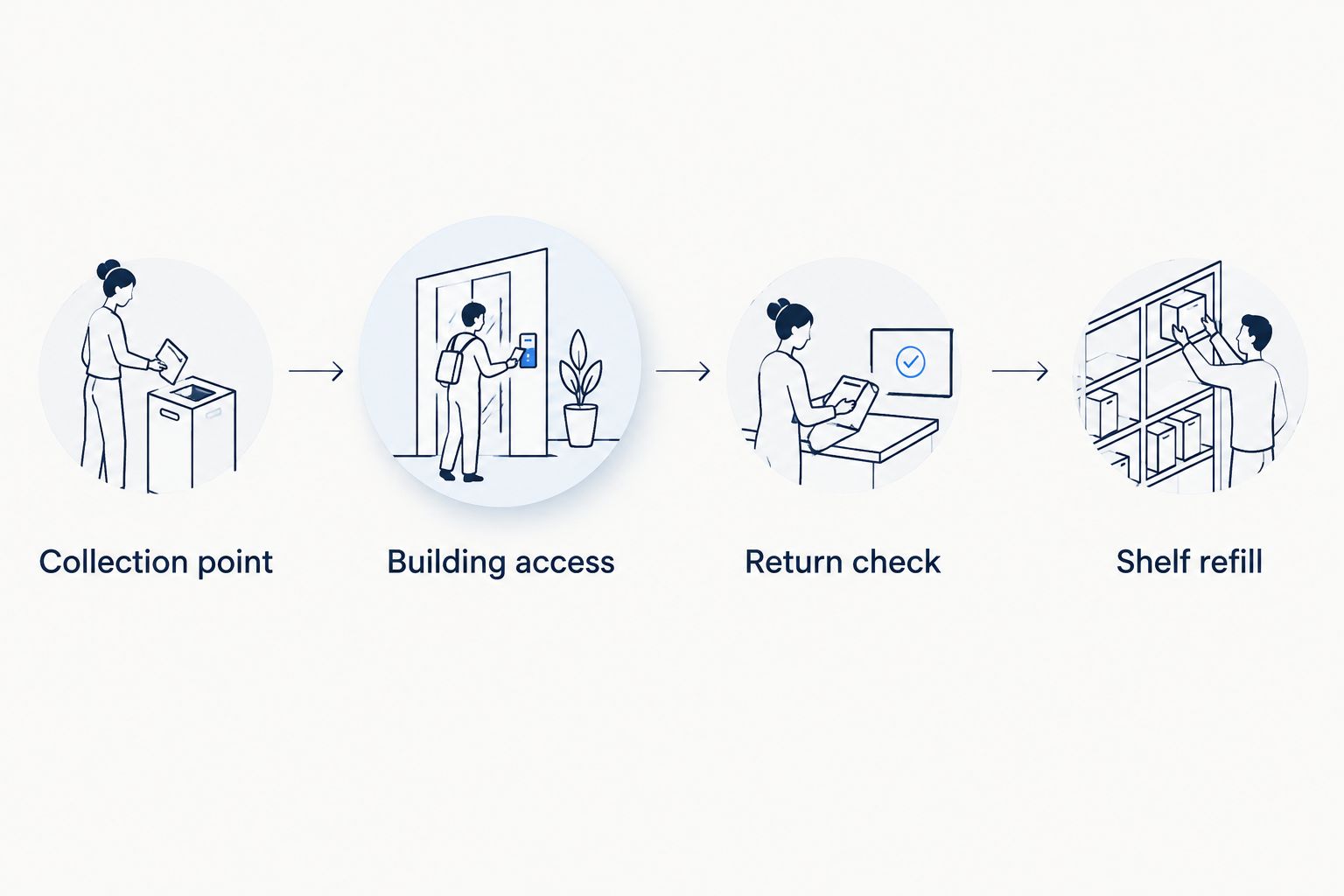
A workable handoff should survive a shift change. Put instructions where staff can find them, rather than leaving them in one manager's messages.
- Designate a used-towel collection location.
- Document approved building-entry instructions.
- Assign a return-check owner and backup.
- Set aside a clean delivery-receiving area.
- Assign responsibility for amenity shelf refills.
5. Set a reserve using your actual return schedule
Count usable inventory before deciding how much reserve to hold. Include towels on shelves, in storage, awaiting collection, and away for laundering. Remove damaged towels from the usable count rather than letting them inflate the total.
Your reserve must cover the agreed service cycle and the interruptions you choose to plan for. Ask what happens when a pickup cannot be completed. Then decide what your building will do instead of assuming an extra collection is available.
For your 2026 inventory sheet, use 3 inventory buckets: ready to use, awaiting pickup, and away for laundering. These are recordkeeping categories, not a required stock ratio.
- Count usable towels across all locations.
- Separate worn or damaged stock.
- Match reserve decisions to the confirmed schedule.
- Define the low-stock action for staff.
- Document the plan for an interrupted pickup.
6. Review the routine before expanding it
Start with the agreed scope and keep a simple exception log. Record shortages, access failures, count questions, damaged items, and staff time spent on handoffs. Review the cause of each issue before changing the service frequency.
Keep 2 named property contacts: a primary owner and a backup. This is a practical staffing recommendation, not a provider requirement. Both should know how to report a problem and where the current instructions live.
If residents also want personal wash-and-fold pickup, introduce that as a separate request. Household laundry should not quietly become an added responsibility for the commercial towel coordinator.
- Review collection and return records.
- Record staff handling time in minutes.
- Investigate stockouts before increasing inventory.
- Update access instructions after staffing changes.
- Keep resident requests outside the amenity inventory log.
Plan your property's towel pickup
Share your address, towel types, observed volume, and building-access requirements.
Compare towel-handling options for your 2026 plan
Choose an operating model before comparing individual providers. The right option depends on who will wash towels, who will transport them, and who will keep amenity shelves supplied. None of those responsibilities should remain implied.
| Option | Best for | Main advantage | Key limitation |
|---|---|---|---|
| Staff-managed on-site laundry | Properties with suitable equipment and assigned staff capacity | Keeps the washing workflow within the building | Property staff retain washing, folding, storage, and equipment responsibilities |
| Staff-managed off-site laundry | Properties able to assign transportation and laundry handling | Separates washing from the building's facilities | Staff still manage transport, handoffs, and replenishment |
| Recurring commercial pickup | Properties seeking to move laundering and transport outside the staff workflow | Creates an agreed collection-and-return routine | The property still needs inventory ownership and shelf-refill responsibilities |
| Resident-arranged wash-and-fold pickup | Households seeking help with personal laundry | Keeps personal instructions and arrangements with the resident | Does not replace the property's shared-towel program |
Recurring pickup fits a property that wants less staff involvement in laundering. Its limitation is operational: collection service alone does not establish towel ownership, replacement rules, storage, or amenity distribution. Confirm each responsibility in writing.
On-site laundry fits a property prepared to manage the entire process. Its advantage is direct control; its limitation is the continuing work attached to that control. Count staff handling alongside machine time when reviewing the arrangement.
Common mistakes luxury apartment teams make
Treating apartment count as towel demand
Occupied units do not tell you how many shared towels residents use. Base the service brief on amenity consumption, refill timing, and usable inventory. Record the demand you actually need to cover.
Assuming pickup includes towel supply
Washing property-owned towels and supplying a towel inventory are different arrangements. Ask who owns the towels, replaces worn items, and resolves count discrepancies. Do not describe a laundering service to staff as a rental program unless that scope is confirmed.
Scheduling around office hours alone
A convenient collection time does not guarantee enough towels during evening or weekend amenity use. Compare the proposed service schedule with your usage log. Assign storage and refill responsibilities for periods when the office is closed.
Mixing household bags with amenity towels
Resident wash-and-fold and shared-towel service serve different customers inside the same building. Keep labels, instructions, handoff arrangements, and billing responsibility separate. Residents should not have to route personal garment questions through the amenity inventory process.
Promising residents an unconfirmed service
Do not advertise a return deadline, special handling, or an expanded towel amenity before confirming the operating details. For a 2026 launch, finalize provider scope and staff responsibilities before publishing resident instructions.
FAQ
What's the best commercial towel service setup for luxury apartments?
The best setup matches measured amenity use with a confirmed collection-and-return schedule. Assign responsibility for inventory, building access, return checks, and shelf refills before service starts.
Does Summa Laundry offer commercial towel service for apartment properties?
Summa Laundry provides recurring commercial towel service. Property managers should confirm their building address, towel categories, expected volume, and apartment-specific requirements directly before arranging service.
How often should an apartment building schedule towel pickup?
Schedule pickup around measured towel consumption, available storage, and the provider's confirmed return arrangements. Use a usage log rather than apartment count alone to decide what your building needs.
Does commercial towel service include towel rental or replacement?
Towel rental and replacement are separate scope questions that require provider confirmation. Ask whether the arrangement covers laundering property-owned towels, supplying inventory, or both.
Can residents arrange personal laundry pickup separately?
Residents can inquire about household wash-and-fold pickup separately from the property's commercial towel request. Keep personal laundry instructions, arrangements, and billing responsibility outside the shared-amenity towel process.
Can properties in Buckhead and Gwinnett County inquire about pickup?
Properties in Buckhead and Gwinnett County can inquire about pickup. Confirm the exact address, building-entry requirements, and requested commercial schedule before relying on a collection arrangement.
What should I include when requesting commercial towel service?
Include the property address, towel types, observed usage, collection location, and access hours. Ask the provider to confirm accepted items, collection and return arrangements, responsibility for inventory, and how exceptions are handled.
One last thing
A towel sitting in the delivery area is not yet available to a resident. Before approving your service plan, follow one returned batch from the building entrance to the amenity shelf. Name the person responsible for every move.
That final refill is easy to overlook because it happens after laundering is complete. Fix it with a clear assignment, not another vague instruction to keep an eye on the towels. Then give households a separate route for personal laundry pickup so neither request gets lost.