Yes—wash-and-fold services can handle machine-washable sheets and bedding, including comforters that meet the provider’s equipment and care requirements. A washable label does not guarantee acceptance: confirm bulky-item handling, drying instructions, and the return schedule before you book.
- Wash and fold bedding sheets comforters: follow care labels and confirm bulky-item acceptance before booking.
- Machine-washable sheets are straightforward; filled comforters need additional washing and drying checks.
- Summa Laundry offers local wash-and-fold pickup and recurring commercial towel service; ask about specific bedding before sending it.
- Households and businesses should confirm item handling and return arrangements before releasing their only clean replacement set.
Can wash-and-fold service handle bedding, sheets, and comforters?
Yes, when the item’s care instructions match the service’s washing and drying process. Sheets, removable duvet covers, and filled comforters need different checks. Start with the wash-and-fold services you need, then identify every bedding item rather than describing the order as ordinary laundry.
Use this 2026 bedding checklist to separate routine washable linens from items that need approval.
| Bedding item | Best for | Main benefit of wash-and-fold | Limitation to confirm |
|---|---|---|---|
| Machine-washable sheets and pillowcases | Regular household changes and rental turnovers | Moves washing, drying, and folding off your task list | Fabric-specific settings and whether pressing is separate |
| Removable duvet covers | Washing the outer cover separately from the insert | Avoids treating the entire bedding assembly as one item | Closures, trims, and care-label requirements |
| Machine-washable comforters | Bulky bedding that the provider accepts | Removes a difficult washing and drying job from home | Equipment capacity, filling, and complete drying |
| Quilts and decorative bedspreads | Items explicitly approved after a care review | Gives you a handling decision before washing | Fragile seams, dyes, embellishments, and age |
| Dry-clean-only bedding | Specialist assessment rather than routine wash-and-fold | Keeps unsuitable items out of a standard wash | Requires a provider that accepts the specified care method |
The table is a screening guide, not a promise that every laundry provider accepts every category. Ask about the actual item, not just its bed size. A thick comforter and a thin cover for the same bed create different handling needs.
Why this matters
Stop treating every item on a bed as the same laundry job. A sheet is an unfilled fabric layer; a comforter contains filling that also has to dry. That difference matters when you choose a service and plan when the bed will be usable again.
For households, the practical benefit is getting bedding off the weekend chore list. The trade-off is that you need a confirmed handoff and return plan instead of starting a load whenever you want.
For businesses, the decision connects directly to clean stock. Airbnb hosts and property managers need linens ready for the next changeover, while gyms, salons, and spas need towel replenishment around their working schedules. A towel arrangement does not automatically establish how a provider handles bedding.
Sheets and pillowcases: check fabric care first
Machine-washable sheets and pillowcases fit the basic wash-and-fold process when the provider accepts their care requirements. Read the attached label before packing. Do not assume that everything in a matching-looking set tolerates the same wash temperature or drying method.
Tell the provider about stains, loose stitching, tears, and any sensitivity to fragrance. Ask whether requested detergent or handling preferences are supported rather than treating a booking note as confirmation.
Wash-and-fold is not the same as pressed linen service. If you want a crisp presentation for a guest bedroom, rental property, or treatment room, ask what finishing is included. Folded does not necessarily mean ironed.
Households should also decide how they want sets identified. Businesses should explain any property, room, or size distinctions before pickup. Ask whether the provider supports those distinctions; do not assume separate bags guarantee separate processing or return packaging.
Comforters and duvet inserts: confirm acceptance before packing
A comforter needs more than a quick check for visible dirt. Its shell, filling, construction, and care label all affect the washing decision. A machine-washable label still leaves the provider to confirm that the item fits its equipment and process.
Send a clear description and, if the provider accepts photos, an image of the care label. Mention the stated bed size, filling material, and any damaged seams. Do not guess at the filling if the label is unreadable.
Complete drying is especially important for filled bedding. A dry outer surface does not establish that the filling is dry throughout. Ask how the service handles bulky items and whether the comforter has a different return arrangement from sheets.
For your 2026 booking, get acceptance before placing a comforter in the pickup bag. A scheduled pickup is not confirmation that every item inside is suitable for washing. Keep an alternative bedding plan until the provider confirms the return.
Quilts, weighted blankets, and dry-clean-only bedding
Do not put an heirloom quilt, weighted blanket, or decorative bedspread into routine laundry without discussing it first. Construction matters as much as fabric. Weak seams, decorative attachments, or special filling can change the care requirements.
Weighted blankets need a specific review of both the manufacturer’s directions and the provider’s equipment restrictions. If the cover removes, check its label separately from the inner blanket. Acceptance of the cover does not establish acceptance of the insert.
Dry-clean-only bedding belongs outside a standard water-wash order unless a qualified provider explicitly accepts the specified care method. Do not interpret pickup-and-delivery service as evidence of dry-cleaning capability.
When a label is missing or unreadable, describe that problem before collection. Get a handling decision before surrendering an irreplaceable item. Convenience is not a reason to guess at its care.
Why bedding handling varies
Bedding acceptance varies because the items themselves require different treatment. These are the checks that matter for both a household order and a business linen request:
- Care instructions: Washing, bleaching, drying, and ironing directions limit the processes suitable for the item.
- Bulk and filling: A comforter needs room for washing and drying; bed size alone does not describe its bulk.
- Condition: Tears, weak seams, loose trim, and existing damage need disclosure before handling.
- Stains and contamination: Explain what happened, including oils or bodily fluids, so the provider can decide whether it accepts the item.
- Finishing needs: Routine folding and a pressed guest-ready presentation are different requirements.
- Return requirements: A household bed change and a scheduled guest arrival need different planning, even when the fabric is identical.
For business towels, describe their actual use. A gym towel, salon towel, and spa treatment linen can carry different residues. Ask about acceptance and handling instead of assuming all commercial laundry follows one process.
How should I prepare bedding for pickup?
Use this preparation sequence for your 2026 household pickup or business linen inquiry. Follow the provider’s packing directions wherever they differ, and resolve item acceptance before leaving anything out for collection.
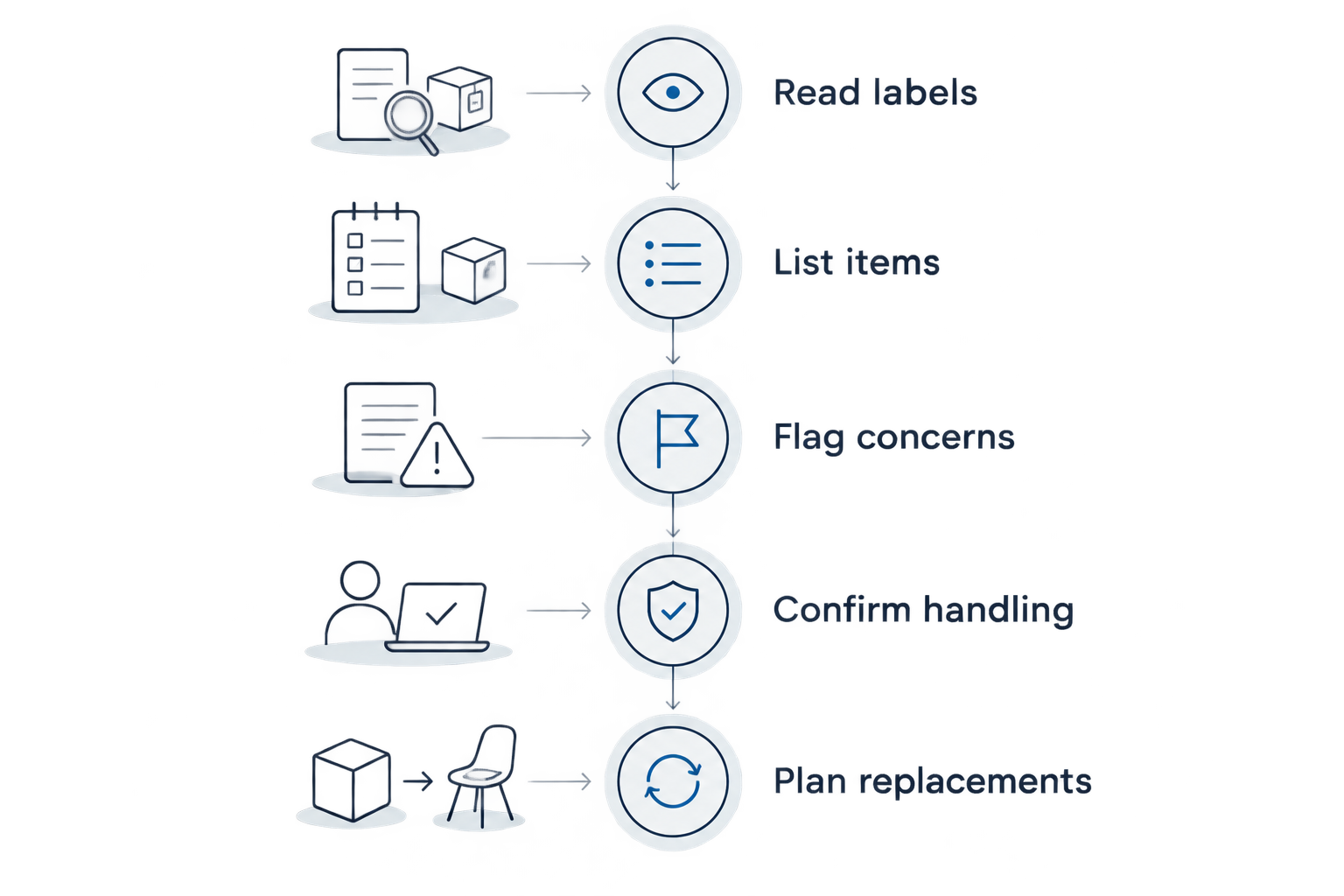
- Read labels. Check every distinct item, including covers and inserts. Keep anything requiring unconfirmed care out of the routine order.
- List items. Record what you are sending. For a business, include the property or department information needed to discuss the order accurately.
- Flag concerns. Explain stains, damage, filling, and special-care instructions before pickup. Ask the provider to confirm any requested accommodation.
- Confirm handling. Ask about accepted items, packing requirements, finishing, and return arrangements. Separate household bedding questions from recurring business towel requirements.
- Plan replacements. Keep enough clean bedding or towels on hand to cover the confirmed service interval and your own change schedule.
Do not seal damp bedding away for storage while waiting for collection. Tell the provider if an item is wet or heavily soiled and request specific packing instructions. Keep loose objects out of pillowcases and duvet covers, and check removable covers for anything caught inside.
For businesses, make the handoff understandable to someone other than the person who booked it. Identify the collection point and the person responsible for receiving the return. Ask the provider to agree to those arrangements rather than relying on an informal note.
What should households ask before booking?
Your 2026 household booking should resolve the actual chore: sheets alone, a complete bedding change, or a bulky comforter. Start with the item list, then ask whether the service accepts each item and its care instructions.
Next, explain when you need the bedding back. Do not assume household laundry and bulky bedding share an identical return schedule. Get the agreed timing before stripping the only bed you can use.
Summa Laundry wash-and-fold pickup is best for households seeking local laundry collection rather than an in-person laundry errand. For bedding, use the contact page to ask about your specific sheets, comforter, or special-care item before booking.
For Suwanee, Snellville, Grayson, and Loganville, confirm pickup coverage for your exact address. Home and business pickup is also offered in Buckhead; confirm the arrangements for your location and order. City coverage does not answer item-acceptance questions.
What should businesses ask about bedding and recurring towels?
Build your 2026 business inquiry around what gets used, where it gets collected, and when clean stock is needed. For an Airbnb host or property manager, list sheets, pillowcases, covers, inserts, and towels separately. Ask which categories the provider accepts before treating them as one recurring order.
For gyms, salons, and spas, recurring towel service addresses towel replenishment—not an automatic commitment to process every fabric used on-site. Describe treatment linens, decorative covers, or heavily soiled items separately. Ask for an explicit handling decision.
Summa Laundry commercial towel service serves local businesses seeking recurring towel collection. Businesses with bedding should confirm that scope separately; recurring towel service alone does not establish acceptance of comforters, quilts, or specialty linens.
Give the provider your operating schedule and explain the consequences of a missed return. Then ask what pickup frequency, return arrangements, and order identification it can support. Do not promise guests or staff a delivery window that has not been confirmed.
Confirm your laundry needs
Ask about bedding acceptance, household pickup, or recurring business towel service.
Can I send sheets and towels together?
Ask before combining sheets and towels in the same pickup bag. Acceptance in one collection does not necessarily mean the items should be washed, dried, or packaged together.
For a household, explain any fabric-care differences and your sorting preferences. For a business, identify which towels and linens belong to each location, and confirm whether the provider supports that tracking.
Do comforters come back on the same schedule as sheets?
Confirm the comforter’s return schedule separately from the sheets. Bulk, care instructions, and the provider’s accepted process determine whether the same arrangement applies.
Keep a usable replacement available until the return is agreed. Rental operators should make that decision against the next guest changeover, not just the pickup date.
FAQ
Can wash-and-fold service wash my comforter?
Wash-and-fold service can wash a comforter when its care label permits the process and the provider accepts its size, filling, and condition. Confirm acceptance before including it in a pickup.
Do I need to remove sheets from the bed before pickup?
Prepare sheets for collection according to the provider’s instructions; do not assume pickup includes stripping beds. Ask how sheets, pillowcases, and covers should be packed.
Can I send a duvet cover without the insert?
A removable duvet cover can be assessed separately from its insert. Check the cover’s own care label and confirm the provider’s packing requirements.
Will wash-and-fold make my sheets look ironed?
Wash-and-fold does not automatically include ironing or pressing. Ask about finishing before booking if a crisp guest-room presentation is part of your requirement.
Can an Airbnb host send bedding with recurring towels?
An Airbnb host should confirm bedding acceptance separately from recurring towel service. Provide an item list and explain the next guest changeover before agreeing to collection and return arrangements.
Can I send bedding with a dry-clean-only label?
Do not include dry-clean-only bedding in routine wash-and-fold without explicit approval for the specified care method. Laundry pickup does not establish that a provider offers dry cleaning.
What should I ask Summa Laundry before a bedding pickup?
Ask Summa Laundry whether it accepts your exact bedding item, care instructions, and required return arrangement. Households should identify bulky comforters; businesses should distinguish bedding from recurring towel needs.
One last thing
Keep the care label attached and readable. It is more useful than a general description such as soft, thick, or expensive. If you remove packaging from new bedding, save the care information before the first wash.
Before putting returned bedding away, check that it is dry throughout, especially around filled sections and seams. If anything feels damp, do not seal it into storage; contact the provider for instructions.