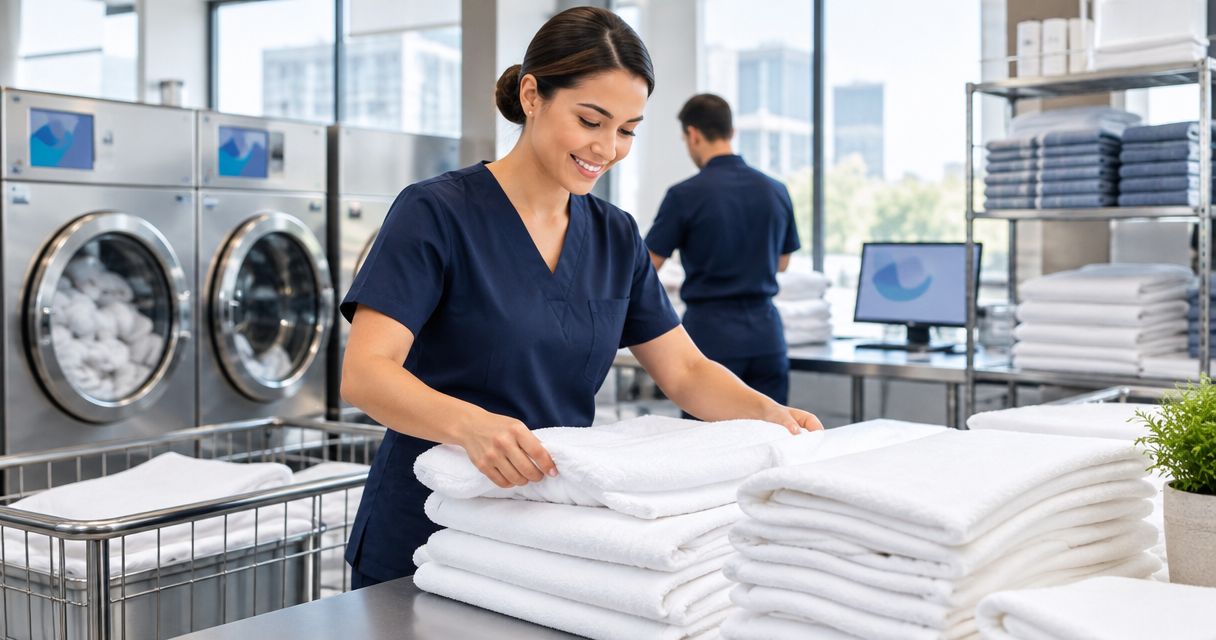
Best local towel-service starting point: Summa Laundry. Best for property-owned bedding: a commercial linen processor. Best for outsourced linen inventory: a linen rental service. The right commercial laundry service for corporate housing depends on whether you need recurring towels, turnover linens, or residents’ personal wash-and-fold.
- Summa Laundry is the local starting point for recurring commercial towels; confirm corporate housing requirements before booking.
- Choose a commercial laundry service for corporate housing by separating towels, bedding, and residents’ personal clothing.
- Commercial linen processing suits property-owned bedding; linen rental suits operators seeking an inventory-and-laundry arrangement.
- Use a pilot property to check handoffs, returned items, and scheduling before expanding service.
Why this matters
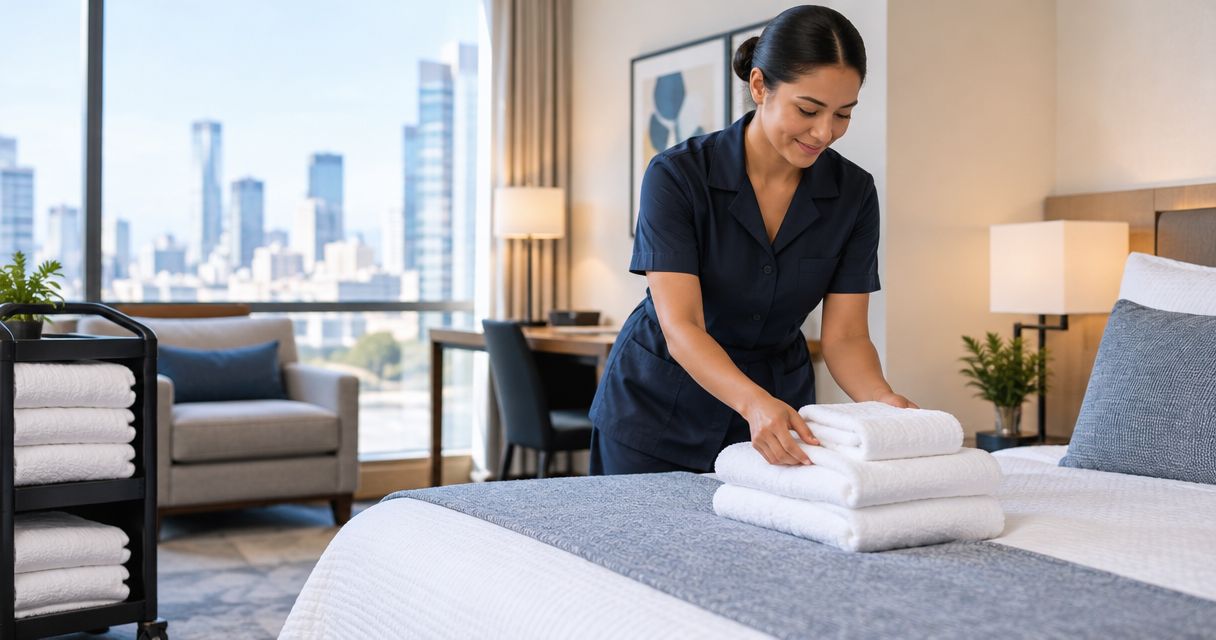
Corporate housing creates separate laundry jobs. Your property team needs clean towels and bedding for arrivals, while residents need a way to handle personal clothing during longer stays. A towel-service agreement does not automatically cover sheets, and a household wash-and-fold booking does not establish a commercial linen program.
For your 2026 shortlist, start with the work you need done. Then compare providers against that scope. Do not buy an all-purpose promise when your operation needs clearly defined responsibilities.
The ranking below compares service models rather than pretending every laundry business offers the same thing. The first recommendation addresses a verified local service; the remaining options explain what to request when your needs extend beyond recurring towels.
What makes the best corporate housing laundry service?
Use these criteria before comparing proposals:
- Item acceptance: Get explicit confirmation for towels, sheets, duvet covers, blankets, and personal clothing. Treat each category separately.
- Address coverage: Confirm the actual building, collection point, and delivery point—not just a city name.
- Return schedule: Match the agreed return to housekeeping and resident needs. Ask how schedule changes are handled.
- Property identification: Establish how bags, units, and returned items stay identifiable throughout the handoff.
- Inventory responsibility: Decide whether your business owns the linens or wants a provider-managed rental arrangement.
- Exception handling: Ask who resolves missing pieces, rejected items, stains, and access problems.
A useful 2026 proposal answers these questions in writing. A general statement about serving businesses is not enough to establish the fit for your property.
Corporate housing laundry options at a glance
| Rank and option | Best for | Standout feature | Key limitation |
|---|---|---|---|
| 1. Summa Laundry | Local recurring towel needs | Laundry pickup, wash-and-fold, and recurring commercial towel service | Confirm corporate housing linen scope and address-specific arrangements |
| 2. Commercial linen processor | Operators keeping their existing bedding | Processing property-owned linens under an agreed scope | Inventory ownership and replenishment remain separate responsibilities |
| 3. Linen rental service | Operators seeking an inventory-and-laundry arrangement | Combines linen supply with laundering when included in the agreement | Item selection and replacement terms require careful review |
| 4. Resident wash-and-fold pickup | Residents outsourcing personal laundry | Separates personal clothing from the property’s turnover workflow | Does not replace a commercial bedding agreement |
| 5. Managed on-site laundry | Properties wanting laundry handled within the building | Keeps the workflow centered on the property’s laundry space | Depends on suitable facilities and clearly assigned operating duties |
1. Summa Laundry: best for local recurring commercial towels
Summa Laundry provides laundry pickup, wash-and-fold, and recurring commercial towel service across Gwinnett County. Home and business pickup in Buckhead is also confirmed. That makes the business a relevant starting point when your corporate housing requirement is recurring towel collection rather than an assumed full-service linen rental program.
For properties in Suwanee, Snellville, Grayson, or Loganville, provide the exact address and requested service scope. Ask which items the team accepts, where collection happens, and how the return schedule would work. Do not extend towel-service coverage to bedding without confirmation.
Summa Laundry pros:
- Offers recurring commercial towel service.
- Provides wash-and-fold for household laundry needs as a separate service use.
- Has a local service focus across Gwinnett County, with Buckhead home and business pickup confirmed.
Summa Laundry cons:
- Corporate housing bedding acceptance needs confirmation before inclusion in your plan.
- Linen rental, property-level item tracking, and commercial exception terms must be established separately rather than assumed.
Best for: Local operators seeking recurring towel service, alongside households or residents seeking personal wash-and-fold pickup.
Verdict: Buy only after confirming the property address, accepted items, and recurring handoff arrangement.
2. Commercial linen processor: best for property-owned bedding
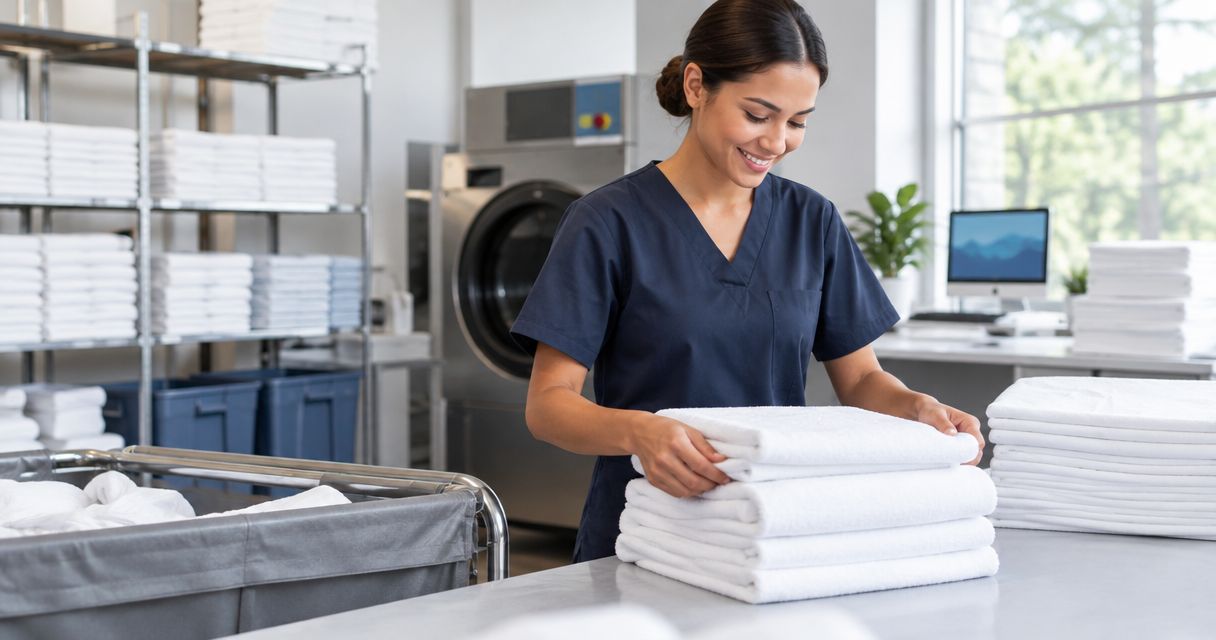
A commercial linen processor is the service model to request when you own sheets, pillowcases, and other property linens and want them laundered. Ask prospective providers to specify exactly which bedding categories they handle and how they return them.
This model keeps inventory decisions with your business. You choose what belongs in each unit, while the processing agreement defines the laundry work. Do not assume pressing, stain treatment, specialty-item handling, or unit-specific packaging is included.
Commercial linen processor pros:
- Lets you keep your existing linen selection.
- Creates a distinct service scope for property bedding.
- Allows you to request a return format that matches housekeeping’s workflow.
Commercial linen processor cons:
- Your team still needs to manage linen counts and replacement purchases.
- Different fabrics and bulky items require explicit acceptance rather than a blanket assumption.
Best for: Corporate housing providers with their own bedding and a need for outsourced laundering.
Verdict: Buy when bedding acceptance, return timing, and inventory identification match your operating requirements.
3. Linen rental service: best for outsourcing linen inventory
A linen rental service is the model to investigate when you want a provider to supply linens as well as arrange laundering. Request a proposal that distinguishes the supplied inventory from collection, cleaning, delivery, and replacement responsibilities.
The key decision is control. Compare the offered items with your property standards, then review what happens when pieces become worn, stained, or missing. A rental arrangement is not interchangeable with washing linens you already own.
Linen rental service pros:
- Offers a way to combine linen supply and laundering in one agreement.
- Gives operators an alternative to purchasing every replacement themselves.
- Makes inventory responsibility a central part of the provider discussion.
Linen rental service cons:
- Offered fabrics, sizes, and finishes require approval before commitment.
- Loss, damage, replacement, and exit terms need close review.
Best for: Operators seeking an inventory-and-laundry arrangement rather than processing alone.
Verdict: Hold until you have reviewed sample items and the complete responsibility schedule.
4. Resident wash-and-fold pickup: best for personal clothing
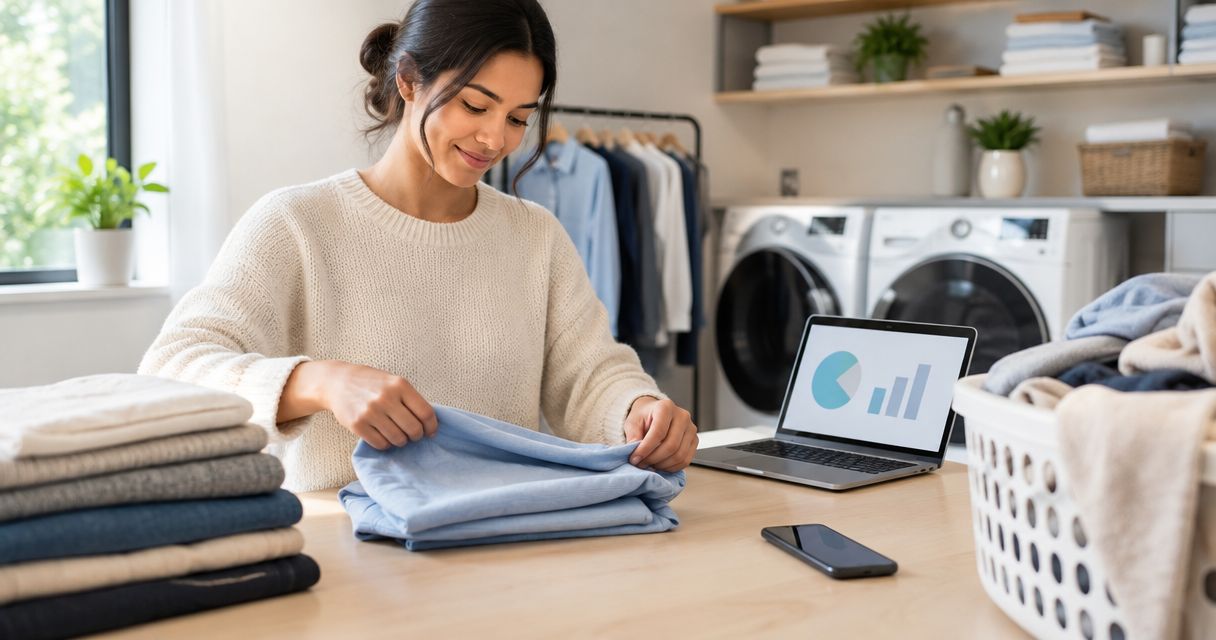
Resident wash-and-fold pickup addresses the household side of corporate housing: everyday clothing that residents would otherwise wash themselves. Keep this workflow separate from property towels and turnover bedding, even when one business is considered for both jobs.
Give residents clear instructions about booking, collection access, item acceptance, and payment responsibility. Your property should not leave guests guessing whether personal laundry is included in their accommodation or arranged independently.
Resident wash-and-fold pickup pros:
- Gives residents a practical alternative to doing their own everyday laundry.
- Separates personal clothing from housekeeping’s property inventory.
- Supports household needs without requiring a commercial linen agreement for every resident.
Resident wash-and-fold pickup cons:
- Requires clear responsibility for resident bookings and handoffs.
- Does not establish acceptance of dry-clean-only garments or other specialist items.
Best for: Professionals and families staying in corporate housing who want personal laundry handled separately.
Verdict: Buy for resident convenience; skip it as a substitute for a property bedding program.
5. Managed on-site laundry: best for properties with suitable facilities
Managed on-site laundry means assigning the laundry operation to a team working within the property’s facilities. Consider this model only after checking the space, equipment, staffing responsibilities, and accepted workload.
Keeping laundry on the property does not remove the work. Someone must collect, sort, wash, dry, inspect, fold, store, and distribute each load. Your agreement should identify who owns each task and who responds when equipment or staffing interrupts the routine.
Managed on-site laundry pros:
- Keeps the laundry workflow within the property.
- Gives management a direct view of storage and handoff practices.
- Allows the process to be designed around existing facilities.
Managed on-site laundry cons:
- Requires suitable equipment, workspace, and operating arrangements.
- Leaves facility problems tied to the property unless another arrangement is agreed.
Best for: Operators with suitable laundry facilities and a clearly assigned management role.
Verdict: Hold until a facility review confirms that the space and responsibilities fit the workload.
How we ranked these options
The ranking prioritizes service fit: accepted items, local collection, return scheduling, identification, inventory responsibility, and exception handling. It is a decision guide, not a claim that unrelated service models deliver identical results.
For a 2026 selection, recurring towels and personal clothing belong in different service discussions from bedding processing or rental. Choose the narrowest model that covers the actual job, then add another workflow only where needed.
Turn the shortlist into a workable pickup routine
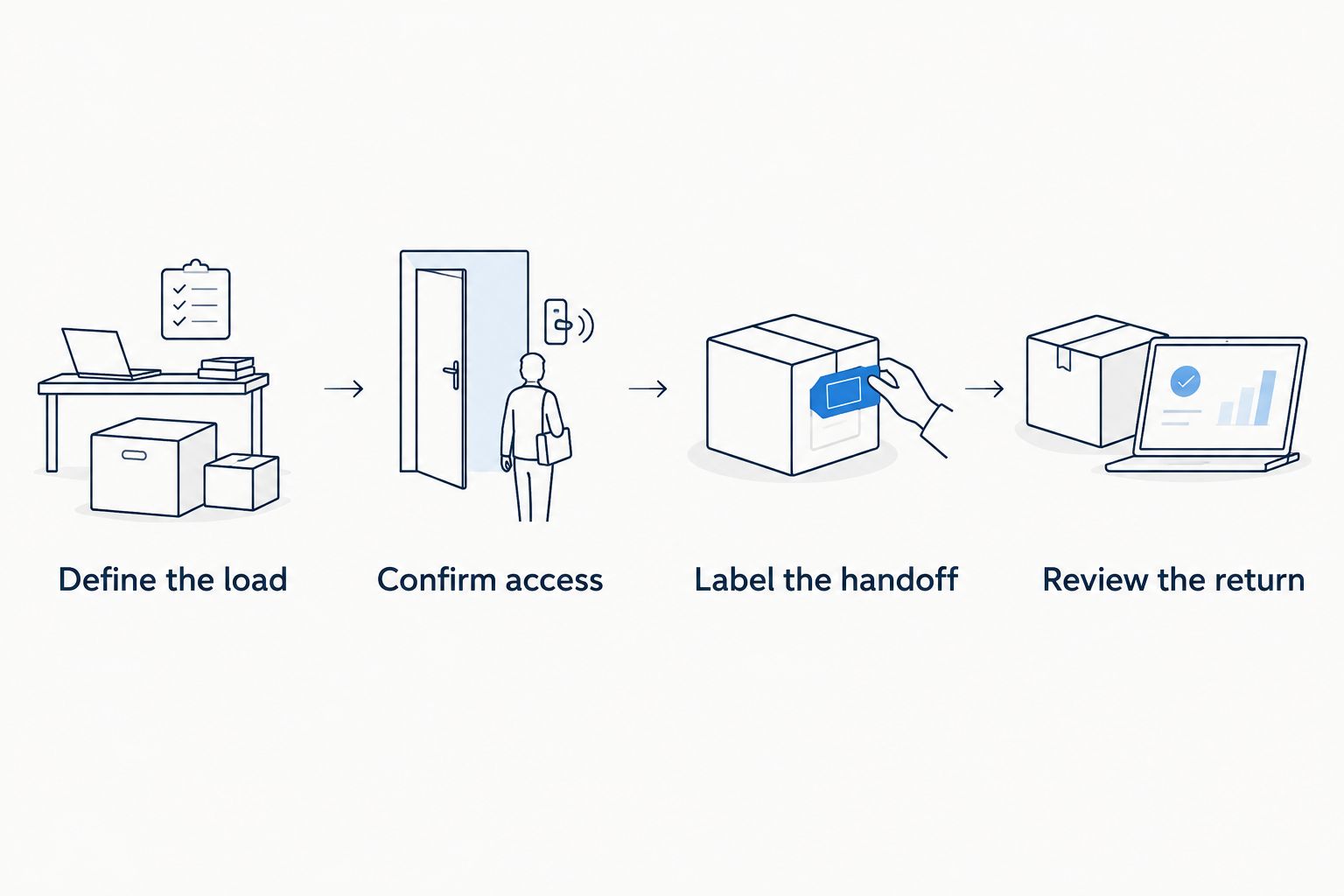
Use 1 pilot property before expanding a new arrangement. The purpose is to check your actual access instructions, item separation, return process, and staff handoffs—not to infer performance from a sales description.
Define the load
Create 2 separate workflows: property inventory and resident clothing. Within property inventory, identify towels and bedding individually. List fabric-care restrictions and ask the provider to accept or decline each category.
Confirm access
Name the collection location, building access method, and responsible contact. Decide what happens if a resident is absent or the usual storage room is inaccessible. Keep the instructions usable by someone who has never visited the property.
Label the handoff
Use 3 handoff records: collection, return, and exceptions. Each record should identify the property and the relevant bags or items. Agree on the format with the provider rather than assuming an item-tracking system exists.
Review the return
Check returned items against the agreed scope before expanding service. Record misdirected bags, unresolved exceptions, or packaging that creates extra sorting work. Resolve those issues while the pilot is still limited.
For resident-facing instructions, use this guide to prepare laundry for pickup and delivery. Keep property-specific access details in your own instructions so residents know exactly where their bags belong.
Discuss your laundry needs
Ask about recurring commercial towels or household wash-and-fold pickup for your exact address.
Which corporate housing laundry service should you choose?
Summa Laundry is the local starting point for corporate housing operators seeking recurring commercial towel service. Confirm the address and requirements before making it part of your property routine.
If your main problem is bedding, request a commercial linen-processing proposal. If your main problem is owning and replenishing linens, investigate rental. If residents need everyday clothing washed, give them a separate wash-and-fold route.
For your 2026 decision, choose based on the load—not the broadest service description. A clearly bounded arrangement is easier to manage than an agreement built on assumptions.
FAQ
What’s the best commercial laundry service for corporate housing?
The best commercial laundry service for corporate housing is the one that explicitly accepts your items and meets your property’s handoff requirements. Summa Laundry is a local starting point for recurring commercial towels; confirm bedding requirements separately.
Can corporate housing residents book personal laundry separately?
Residents can use a separate wash-and-fold arrangement when the provider accepts their address and laundry. Clarify who books, who pays, and where personal bags are collected so clothing stays separate from property inventory.
Does commercial towel service include sheets and bedding?
Commercial towel service does not establish that sheets and bedding are included. Ask the provider to confirm each linen category before adding it to a collection.
Is linen rental better than washing linens we already own?
Linen rental suits operators seeking supplied inventory, while processing suits operators keeping their existing linens. Compare item selection, replacement responsibility, return arrangements, and exit terms before choosing.
Can a corporate housing property arrange laundry pickup in Buckhead?
Summa Laundry confirms home and business pickup in Buckhead. Provide the exact property address, item list, and requested collection arrangement to confirm the fit.
How do we compare corporate housing laundry proposals in 2026?
Compare proposals against the same item list and operating requirements. Check collection access, return scheduling, property identification, inventory ownership, and how exceptions are resolved.
Should we test a laundry provider before adding every property?
Start with a pilot property before expanding a new laundry arrangement. Use the pilot to check handoffs, item identification, returned loads, and the process for resolving exceptions.
One last thing
Design the return before the pickup. Decide where clean items belong, who receives them, and how housekeeping recognizes the right property’s load. Collection removes dirty laundry; a clear return process makes the service usable.