
Barbershop towel service is recurring collection, washing, and return of shop towels with the aim of keeping clean towels ready without adding laundry to your closing routine. This 2026 guide explains how to measure usage, compare service options, and arrange pickups around appointments, hot-towel treatments, and cleanup.
- Towel service for barbershops should match actual towel use, pickup access, and clean-storage capacity.
- Summa Laundry offers recurring commercial towel service; confirm your shop’s address, towel types, and collection requirements before booking.
- Compare commercial laundry options on handling, staff work, and return arrangements—not just the washing itself.
- Keep a clean reserve and separate used towels from folded stock.
Why towel service matters for barbershops
A barbershop needs towels throughout the working day, not just when someone has time to run a load. Face towels, towels used during shampooing, and cleanup cloths also have different jobs. Your laundry arrangement needs to reflect those differences.
The practical question is who owns the work. Someone must collect used towels, prepare them for washing, dry them fully, fold them, and restock each station. Outsourcing changes that workflow; it does not remove your responsibility for clean storage and sensible stock control.
Start with the operational questions in this commercial laundry services guide, then apply them to your shop. For your 2026 plan, judge a service by whether its collection and return arrangements fit your opening hours and towel demand.
Choose a towel routine that keeps staff serving clients instead of finding the next clean towel. The steps below show how to build it before committing to a provider.
How to set up towel service for your barbershop
Measure your actual towel use
Start manually. Keep a simple paper tally or spreadsheet for 7 operating days, including your busiest day. Record towels used, not just appointments booked: different services consume different amounts, and cleanup adds another category.
Separate routine demand from unusual events. A spill, an extra treatment, or a heavily soiled towel should not disappear into one unexplained total. Record the reason so you can distinguish ordinary use from exceptions.
Count clean towels at opening and closing. That gives you a cross-check against the used-towel tally and shows where stock is moving between stations, storage, and laundry.
Do not borrow another shop’s towel allowance. Your service menu, staffing pattern, and handling habits determine your requirement. A smaller shop with towel-heavy treatments needs a different routine from a shop using fewer towels per appointment.
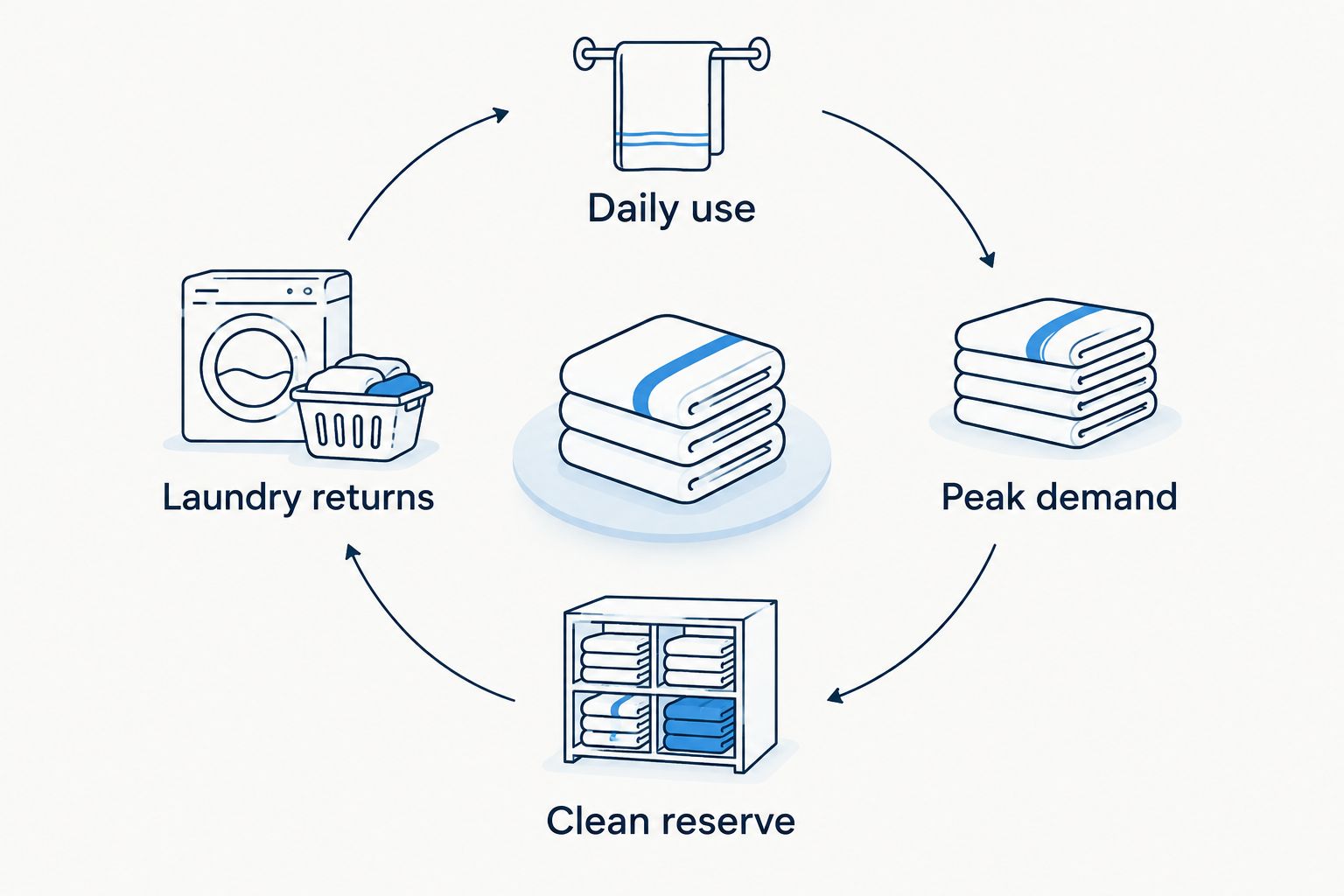
- Record Daily use by towel type.
- Note Peak demand on busy days.
- Count your Clean reserve before opening.
- Track Laundry returns separately from purchases.
- Mark towels removed because of damage or persistent staining.
Map the full laundry cycle
Write down what happens between a towel leaving the barber’s station and returning to the clean shelf. Include collection, storage, handoff, processing, return, and restocking. A provider’s washing arrangements cover only part of that cycle.
Use your daily-use record to check whether clean stock lasts through the agreed return point. Include the period after collection, when dirty towels have left but their replacements have not arrived. Do not assume pickup means an immediate exchange.
For your 2026 setup, define a minimum clean-stock threshold rather than relying on someone noticing an empty shelf. Set that threshold from observed usage and the service arrangement you confirm.
Your map should also identify who acts when an appointment runs late or the person handling the handoff is absent. A clear backup responsibility prevents an otherwise workable process from depending on one employee.
- Identify where Daily use leaves each station.
- Use Peak demand to check the busiest stretch.
- Protect the Clean reserve from routine overuse.
- Record when Laundry returns reach the shelf.
Confirm the local service fit
Once you know your usage, compare handling the laundry yourself with recurring collection. Summa Laundry provides recurring commercial towel service and household wash-and-fold pickup. Your next step is to ask whether your barbershop’s towel types, volume, and handling requirements fit the service.
Summa Laundry is best for local businesses seeking recurring towel service rather than self-service washing. Confirm the details before treating it as your shop’s finished laundry plan.
For shops in Suwanee, Snellville, Grayson, Loganville, or Buckhead, provide the exact business address. The owner confirms home and business pickup in Buckhead, but a city name alone does not establish a collection schedule for your premises.
Explain what touches each towel, including shaving products, oils, hair color, or cleaning products where relevant. Describe the actual work rather than asking only whether the provider washes barbershop towels. Commercial fit depends on the items and requirements involved.
- Give your exact pickup address and access instructions.
- Share your measured towel use and busiest days.
- Identify towel materials and product residues.
- Ask whether washing shop-owned towels is supported.
- Confirm collection, return, folding, and issue-reporting arrangements.
Separate towels by purpose and condition
Start with clear containers and labels in the shop. Keep used towels apart from clean folded stock, and separate floor-cleaning cloths from towels used on clients. Make the distinction easy for a new employee to follow.
Check towel care labels and the provider’s acceptance instructions before combining items. A towel carrying product residue needs an accurate description; it should not enter a general bag simply because it looks similar to the others.
Commercial laundering is not the same as sterilization. Do not treat returned towels as sterile or assume a hot-towel warmer replaces cleaning. Follow applicable sanitation requirements and equipment instructions for your service procedures.
Ask your provider how to handle any item outside the normal load. Do not invent a special bagging method or promise staff that every stain or contamination type is accepted. Keep questionable items separate until you receive instructions.
- Separate client towels from floor and cleaning cloths.
- Keep clean stock away from used-towel containers.
- Identify items with unusual residues before handoff.
- Follow acceptance instructions for wet or heavily soiled items.
- Remove damaged towels from client-facing use.
Assign the pickup and return handoff
Give the handoff a named owner and a backup. A written instruction sheet is enough to start: where bags wait, who releases them, where returned towels go, and who checks them. Keep it accessible without sharing unnecessary building information.
For a 2026 service inquiry, ask about your real opening pattern. A shop that opens later, closes midweek, or operates inside another business needs arrangements that account for access. Do not assume a driver can enter a locked suite or leave clean towels outside.
Check the return before distributing towels across stations. Look for visible soiling, damage, unexpected dampness, or a discrepancy in the agreed record. Report a problem promptly and keep affected items separate while it is resolved.
Agree on the communication route in advance. Staff should know whom to contact about a missed handoff or an item concern without searching through an old booking conversation during appointments.
- Name a primary handoff contact and backup.
- Document pickup access and return placement.
- Agree on the handoff record or identification method.
- Check returned towels before restocking stations.
- Keep service messages in one accessible place.
Review the routine against shop demand
Begin with a 2-week review after the routine starts. Use it to identify empty shelves, excess piles, handoff problems, and staff work that the new arrangement has not removed. This is a review interval, not a provider turnaround promise.
Keep the assessment simple. Spend 10 minutes comparing your usage record with actual collections and returns. Look for repeated problems rather than redesigning the system around a single unusual day.
If clean stock falls short, identify the cause before buying more towels. Demand, missing stock, delayed restocking, and a mismatch between collection and return can produce the same empty shelf. They need different fixes.
Update your 2026 plan when you add a barber, change opening hours, or introduce a towel-heavy treatment. Recurring service works best when the arrangement follows the shop’s current activity, not an old estimate.
- Compare clean-stock lows with your busy periods.
- Record staff time still spent managing laundry.
- Review damaged or retired towels separately.
- Discuss schedule changes with the provider.
- Adjust your reserve using observed demand.
Discuss your shop’s towel routine
Ask Summa Laundry about recurring commercial towel service for your address and towel requirements.
Compare barbershop towel service options
The best option is the one your team can run consistently. Compare responsibility as well as washing: who transports the towels, checks returns, maintains equipment, and handles a disruption?
These are service models, not claims that every provider offers each arrangement. Confirm the scope directly before choosing.
| Option | Best for | Main advantage | Key limitation |
|---|---|---|---|
| In-house washing | Shops able to assign laundry work and maintain equipment | Direct control over the washing schedule | Staff retain washing, drying, folding, and maintenance duties |
| Staff-managed drop-off | Shops with a workable transport routine | Washing happens off-site | Someone still handles transport and collection |
| Recurring commercial pickup | Shops seeking to remove transport and washing from staff duties | Collection becomes part of a planned routine | Your stock must cover the confirmed collection-to-return cycle |
| Towel rental with laundering | Shops seeking supplied towels as well as washing | Can combine towel provision and processing | Ownership, replacement responsibilities, and terms require clarification |
Summa Laundry’s recurring towel service belongs in the commercial pickup comparison. Do not assume towel rental, emergency exchanges, or replacement stock are included. Ask about those needs explicitly.
Common mistakes barbershops make
Counting appointments instead of towels
An appointment total does not tell you how many towels reached the laundry container. Shampooing, hot-towel treatments, and cleanup change the requirement. Measure towel use by service and purpose before setting your routine. Revisit the tally when your service mix changes.
Keeping only enough stock for an ordinary day
An average-day estimate leaves no room for the busiest period or the time between collection and return. Build the reserve around your observed peak and confirmed laundry cycle. Keep reserve towels identifiable so routine restocking does not quietly consume them.
Mixing cleaning cloths with client towels
A floor cloth and a face towel do not have the same job, even when they share a color or size. Separate them at the point of use. Explain the distinction to staff and describe both categories to the provider before arranging service.
Assuming collection includes towel replacement
Washing your towels, renting towels, and replacing worn towels are different arrangements. Clarify ownership and replacement responsibility before removing the laundry task from your internal checklist. You still need a process for retiring towels that no longer belong in client-facing use.
Giving one employee all the instructions
A reliable routine should survive a day off. Record access, bag identification, return placement, and the service contact where the team can find them. Assign a backup rather than leaving another barber to improvise during a full appointment book.
FAQ
What is towel service for barbershops?
Towel service for barbershops is an arrangement for collecting, washing, and returning shop towels. Confirm whether the provider washes your existing towels or supplies towels under a separate rental arrangement.
What is the best towel service option for a small barbershop?
Recurring commercial pickup is the best fit when a small barbershop wants to remove transport and washing from staff duties. In-house washing remains an option when the shop can consistently assign the work and maintain the equipment.
Does Summa Laundry offer commercial towel service?
Summa Laundry offers recurring commercial towel service. Ask about your exact address, barbershop towel types, usage, and handling requirements before arranging collection.
How many towels does my barbershop need?
Base your towel stock on measured usage, peak demand, and the confirmed collection-to-return cycle. Track actual towels used rather than applying a generic allowance per appointment.
Can used barbershop towels go in one laundry bag?
Follow the provider’s acceptance and separation instructions rather than putting every used textile into one bag. Keep floor-cleaning cloths separate from client towels and identify unusual residues before handoff.
Does a hot-towel warmer clean dirty towels?
A hot-towel warmer is not a substitute for laundering dirty towels. Follow the equipment instructions and applicable sanitation requirements for the treatments you provide.
Is recurring towel service the same as towel rental?
Recurring towel service and towel rental are different arrangements. Confirm who owns the towels, who replaces worn items, and exactly what the service includes.
One last thing
Your clean-towel shelf is only useful if staff know when to act. Mark a minimum-stock line or designate a separate reserve area, then assign responsibility for checking it before the busiest part of the day. That turns a vague concern into a visible task.
For your 2026 routine, start with the towel count and the handoff—not a guessed pickup frequency. Give the provider those details, confirm the arrangement, and keep staff focused on clients.