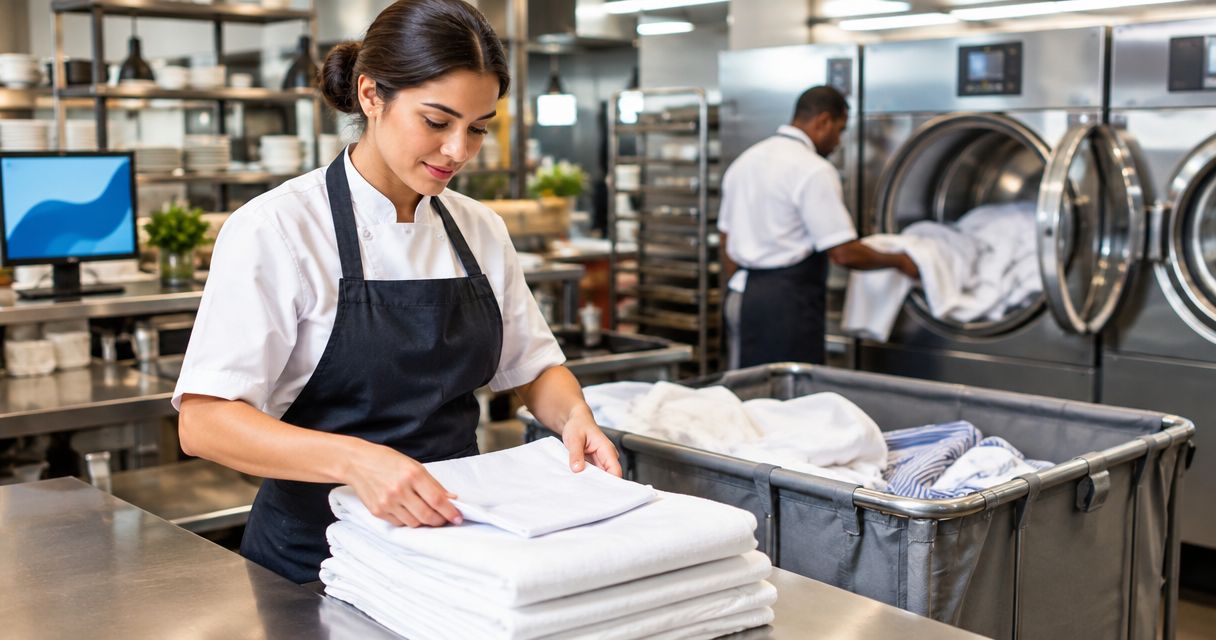
Commercial laundry service for restaurants is outsourced washing and return of approved restaurant textiles, with the aim of keeping clean stock ready without assigning laundry to kitchen staff. This 2026 guide explains how to separate towel service from full linen service, compare providers, and set pickup requirements around your operating hours.
- Choose commercial laundry service for restaurants by accepted textiles, pickup arrangements, and clean-stock requirements—not a general laundry label.
- Summa Laundry provides recurring commercial towel service; confirm restaurant textiles and soil conditions before arranging pickup.
- Separate kitchen towels, dining linens, and uniforms in your service request so the provider can assess each category.
- Keep enough clean stock to cover the confirmed laundry cycle and your own contingency plan.
Why commercial laundry matters for restaurants
Restaurant laundry is an operating task, not just a pile of fabric. A kitchen towel, dining napkin, apron, and tablecloth serve different purposes. Your provider needs to know what each item is and how it is used before accepting the work.
The practical goal is simple: stop making the closing shift responsible for tomorrow's clean stock. Outsourcing removes washing from that shift only when the provider accepts your textiles and the collection schedule fits your service hours.
Summa Laundry provides wash-and-fold pickup and delivery plus recurring commercial towel service for local businesses. Home and business pickup in Buckhead is confirmed; for Suwanee, Snellville, Grayson, and Loganville, ask about your specific address and collection arrangements.
Summa Laundry is best for local businesses seeking recurring towel service; restaurant textile acceptance still needs confirmation. Do not treat general wash-and-fold service as evidence that a provider accepts greasy kitchen towels, restaurant uniforms, or table linens.
For your 2026 operating plan, choose the service around the work you need removed. A household booking covers personal washing. A restaurant inquiry needs accepted textile categories, a collection handoff, clean-stock planning, and a named staff contact. Those are different briefs.
Set up restaurant laundry without disrupting service
Identify every textile you want collected
Start with a manual inventory. Walk through the kitchen, dining room, staff changing area, and storage shelves. Write down what you own, where it is used, and which items currently create extra work at closing.
Do not combine everything under the label restaurant laundry. A provider assessing towels needs a different brief from one assessing tablecloths or employee clothing. Separating the categories also lets you outsource only the task that causes the most disruption.
Record condition as well as item type. Note grease, food residue, stains, fabric damage, and any care labels. This is information for the provider to assess, not permission to send every item in the same bag.
- List kitchen towels separately from dining-room textiles.
- Count aprons and uniforms by garment type.
- Record tablecloth and napkin fabrics where known.
- Identify items with special care instructions.
- Mark damaged items before they leave your premises.
Measure use before choosing a pickup schedule
Use a paper sheet or spreadsheet before buying a tracking system. Assign one person to record clean items issued and used items collected. Track a 7-day period as an initial planning exercise, then repeat it if that period does not represent your normal operation.
That is a suggested observation window, not an industry benchmark. The point is to replace guesses with your own restaurant's usage. Note private events, unusually quiet shifts, and other conditions that change the count.
Keep towels, napkins, and uniforms in separate columns. A single total hides which category runs out first. Also record when staff interrupt other work to wash, dry, or fold items; that identifies the task you actually want to remove.
- Count clean stock at the start of each shift.
- Record items issued by textile category.
- Note event-related increases separately.
- Log emergency washing and supply shortages.
- Identify the busiest collection and return windows.
Confirm acceptance before arranging service
Prepare a 1-page service brief yourself. Send it before handing over laundry. The brief should describe textiles, soil conditions, your address, access arrangements, and the return requirements you need the provider to meet.
For restaurants considering Summa Laundry commercial towel service, use that brief to ask whether the proposed items are accepted. The confirmed offer includes recurring towel service; it does not establish acceptance of every restaurant textile or soil condition.
Ask for a clear response against each category. A broad answer about commercial laundry is less useful than an explicit answer about your actual towels. Keep the response with your 2026 service records so a different manager can follow the same arrangement.
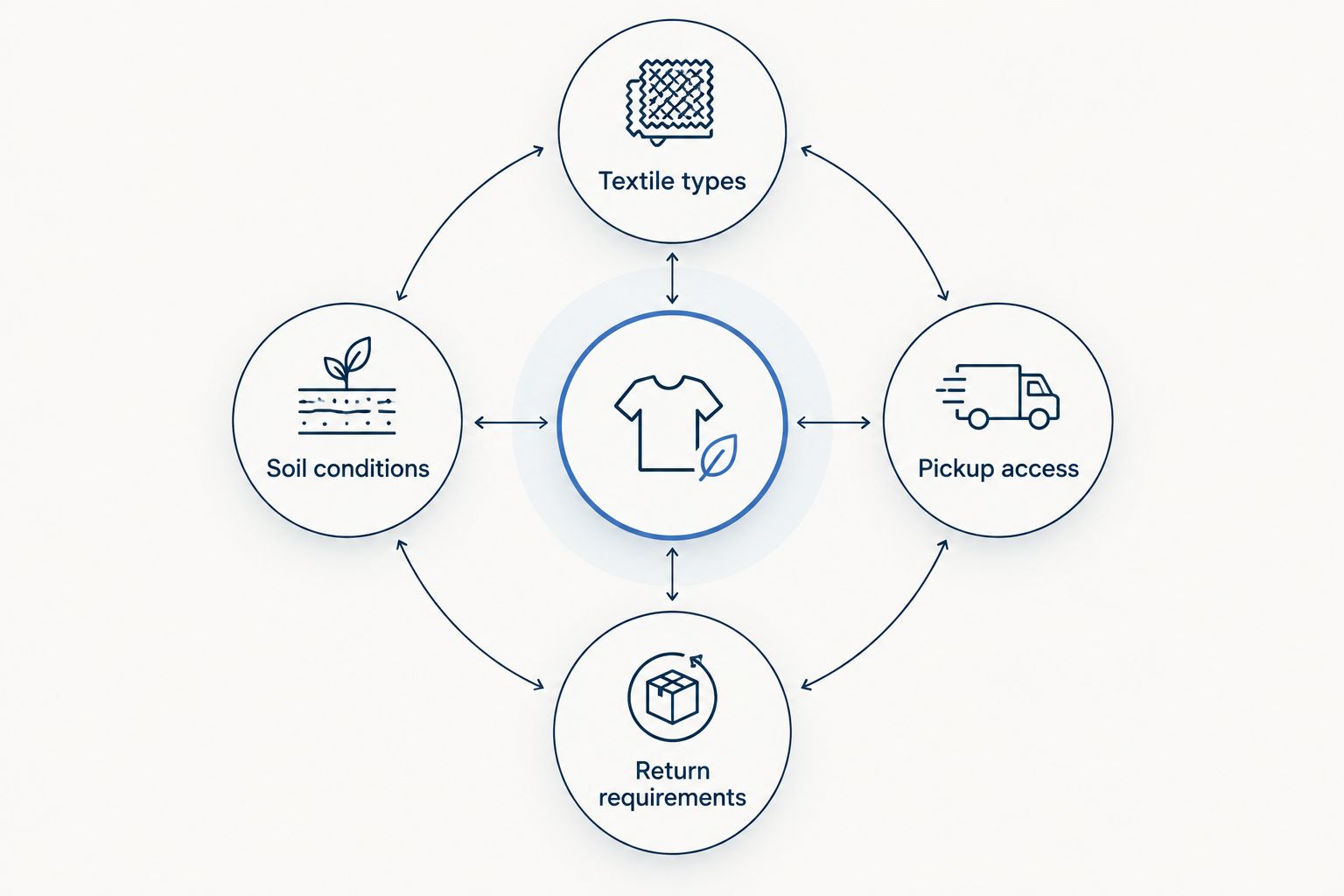
- Textile types: identify each category you want handled.
- Soil conditions: describe grease, food residue, and stains.
- Pickup access: explain the entrance and staff handoff.
- Return requirements: state where clean items must arrive.
- Exceptions: ask which items must stay out of the collection.
Separate collection from clean storage
Map the dirty-to-clean handoff on paper. Decide where staff place used textiles, who prepares the collection, and where returned items belong. Give each location a clear purpose rather than letting bags accumulate wherever space is available.
Use separate storage for clean and used items. Keep clean textiles protected from splash, grease, and handling during kitchen work. Follow your restaurant's applicable food-safety procedures for wiping cloths; receiving freshly washed cloths does not replace correct handling during service.
Make the arrangement usable by the closing team, not just the manager who set it up. A short instruction sheet should explain which items go where and who deals with exceptions. Ask the provider about its collection requirements before selecting containers.
- Designate a used-textile collection location.
- Keep returned clean items in separate protected storage.
- Confirm the provider's bag or container requirements.
- Assign responsibility for preparing the handoff.
- Post the accepted-item list where staff collect laundry.
Build clean-stock coverage around the confirmed cycle
Count available clean stock before the first collection. Then compare that stock with your observed use and the provider's confirmed collection and return arrangements. Do not borrow a turnaround claim from another provider or assume a household schedule applies to commercial towels.
Your restaurant needs enough usable stock for the agreed cycle plus whatever contingency you choose. Base that decision on your usage records, service hours, and ability to respond if a collection or return needs changing. There is no universal stock multiplier that fits every restaurant.
When reviewing commercial laundry turnaround options, distinguish the advertised schedule from the arrangement confirmed for your address and textiles. The latter is what belongs in your operating plan.
- Record the agreed collection and return windows.
- Calculate expected use between clean-stock deliveries.
- Set aside a clearly identified contingency supply.
- Name the person who monitors remaining stock.
- Define what staff should do if stock falls short.
Check service terms before making it recurring
Read the current service information, then ask the provider to resolve anything unclear. Keep a written record of the arrangement rather than relying on what a staff member remembers from a phone call.
For your 2026 comparison, focus on the full job: accepted items, preparation, collection, return, and exception handling. Ask how the service is charged without assuming a particular pricing basis. Do not treat household booking terms as commercial terms.
Assign a 15-minute review after the first completed service cycle. That is a suggested management check, not a promised service duration. Inspect the returned items, compare the handoff with your brief, and decide whether the arrangement fits before expanding it.
- Confirm the charging basis and what the service includes.
- Ask how schedule changes and missed handoffs are handled.
- Clarify how damaged or unsuitable items are reported.
- Check whether any ongoing commitment applies.
- Record the approved arrangement for the duty manager.
Give one person ownership of the routine
Choose one staff role to manage laundry, with a backup for days off. The owner does not need to wash anything. The owner needs to monitor stock, prepare the collection, check returns, and communicate changes.
Keep the routine short. A long procedure that nobody reads is less useful than a clear collection checklist beside the storage area. Review it when you change opening hours, add events, or introduce a new textile category.
Watch the handoff as closely as the washing result. If staff leave bags in the wrong location or put rejected items into the collection, the arrangement needs correction. Fix the specific failure rather than changing providers without identifying the cause.
- Assign a primary contact and a backup.
- Keep provider instructions beside the collection area.
- Check returned items before putting them into service.
- Record shortages, damage, and collection exceptions.
- Update the brief when your textile use changes.
Ask about commercial towel service
Confirm your restaurant's textiles, pickup address, and recurring service requirements before booking.
Compare restaurant laundry options in 2026
Choose the narrowest service that covers the work you need done. Outsourcing towels does not require outsourcing every uniform or dining linen. Equally, a towel-only arrangement does not solve a tablecloth shortage.
The options below describe service models, not verified offers from named competitors. Ask each provider to confirm its actual scope before treating it as a suitable restaurant service.
| Option | Best for | Practical advantage | Key limitation |
|---|---|---|---|
| In-house washing | Restaurants choosing to retain direct control | You manage handling and scheduling yourself | Staff still own washing, drying, folding, and equipment upkeep |
| General wash-and-fold pickup | Items the provider explicitly accepts for ordinary wash-and-fold | Collection removes the trip to drop off laundry | A general laundry offer does not establish restaurant textile acceptance |
| Recurring commercial towel service | Businesses whose main recurring need is towels | The service scope matches a defined textile category | Acceptance of restaurant grease and soil conditions needs confirmation |
| Restaurant linen service | Restaurants seeking table linens or a wider linen arrangement | You can request a service built around dining-room textiles | Owned-linen washing, rental, replacement, and collection terms need separate checks |
Summa Laundry commercial towel service belongs in the towel-service comparison, not an assumed full restaurant-linen package. Its stated service gives local businesses a relevant inquiry route. Its limitation for this decision is that the supplied service description does not confirm restaurant-specific textiles or processing requirements.
If you need tablecloth rental, replacement stock, or uniform handling, put those requirements in the brief. Do not silently add them to a towel inquiry and expect the same arrangement to cover them.
Common mistakes restaurants make
Treating every cloth as the same laundry job
Kitchen towels, dining napkins, aprons, and tablecloths are not interchangeable requests. Mixing them in the initial inquiry makes acceptance harder to establish. Name each textile category and describe its use before collection.
Choosing a schedule without counting stock
A convenient collection window is not enough if clean towels run out before the return. Count actual use first, then match stock coverage to the confirmed cycle. Include event days instead of planning entirely around a quiet shift.
Assuming pickup solves wiping-cloth handling
Off-site washing does not manage what happens to a cloth while staff use it during food preparation. Keep your applicable food-safety procedures in place. Train staff on those procedures separately from the laundry collection routine.
Expecting household terms to cover restaurant work
A home wash-and-fold booking does not define commercial textile acceptance, soil handling, or recurring collection arrangements. The same business can serve households and businesses without those jobs having identical requirements. Use the correct inquiry for each need.
Leaving the handoff without an owner
Bags left in the wrong place and returns that nobody checks are process problems. Assign responsibility before the first pickup. Give the backup contact the same accepted-item list and collection instructions as the primary contact.
FAQ
What's the best commercial laundry service for restaurants?
The best service is the one that explicitly accepts your restaurant's textiles and meets your collection, return, and clean-stock requirements. Compare towel service separately from table-linen washing, rental, and uniform handling.
Does Summa Laundry handle restaurant towels?
Summa Laundry provides recurring commercial towel service, but restaurant towel acceptance needs direct confirmation. Describe the textile types, grease, food residue, and pickup address before arranging service.
Can a restaurant use ordinary wash-and-fold pickup?
A restaurant can use ordinary wash-and-fold pickup only for items the provider accepts under that service. Do not assume acceptance of greasy kitchen towels, tablecloths, aprons, or uniforms from a general wash-and-fold description.
How often should a restaurant arrange laundry pickup?
Choose pickup frequency from your observed textile use, available clean stock, and the provider's confirmed return arrangements. Record usage through normal and busy shifts before committing to a recurring schedule.
Is towel service the same as restaurant linen rental?
No, towel service and restaurant linen rental describe different requirements. Ask whether a provider washes your owned items, supplies rental linens, handles replacements, or offers only specific textile categories.
Does restaurant laundry service replace wiping-cloth sanitation procedures?
No, restaurant laundry service does not replace the food-safety procedures that apply while wiping cloths are in use. Keep collection instructions separate from staff procedures for handling cloths during food preparation.
Can I arrange home pickup as well as business towel service?
Yes, Summa Laundry offers household wash-and-fold pickup and delivery as well as recurring commercial towel service. Request each service separately so household items and business textile requirements are assessed correctly.
Can I request business pickup in Buckhead or Gwinnett County?
Home and business pickup in Buckhead is confirmed, and the stated service area includes Gwinnett County. For Suwanee, Snellville, Grayson, Loganville, or another local address, confirm the specific pickup arrangement before booking.
One last thing
Your first laundry decision is what to exclude, not how often to collect. A clear rejected-item list prevents staff from adding an unsuitable apron, cloth, or damaged textile to an otherwise accepted collection.
Before starting your 2026 arrangement, put the accepted-item list beside the collection point and the clean-stock checklist beside storage. Those instructions connect the provider's agreement to the people working the shift. Start with the textile category that creates the clearest recurring burden, confirm the fit, and expand only after checking the completed service cycle.